Origins of Civilisation · Near Avella, Washington County, Pennsylvania, USA

Meadowcroft Rockshelter

The longest-fought pre-Clovis site in North America, and the one that finally shifted the field.

Mainstream: c. 13,000-16,000 years ago (lowest deep dates debated)Alternative: c. 16,000-19,000+ years ago40.29°, -80.49°

At a glance

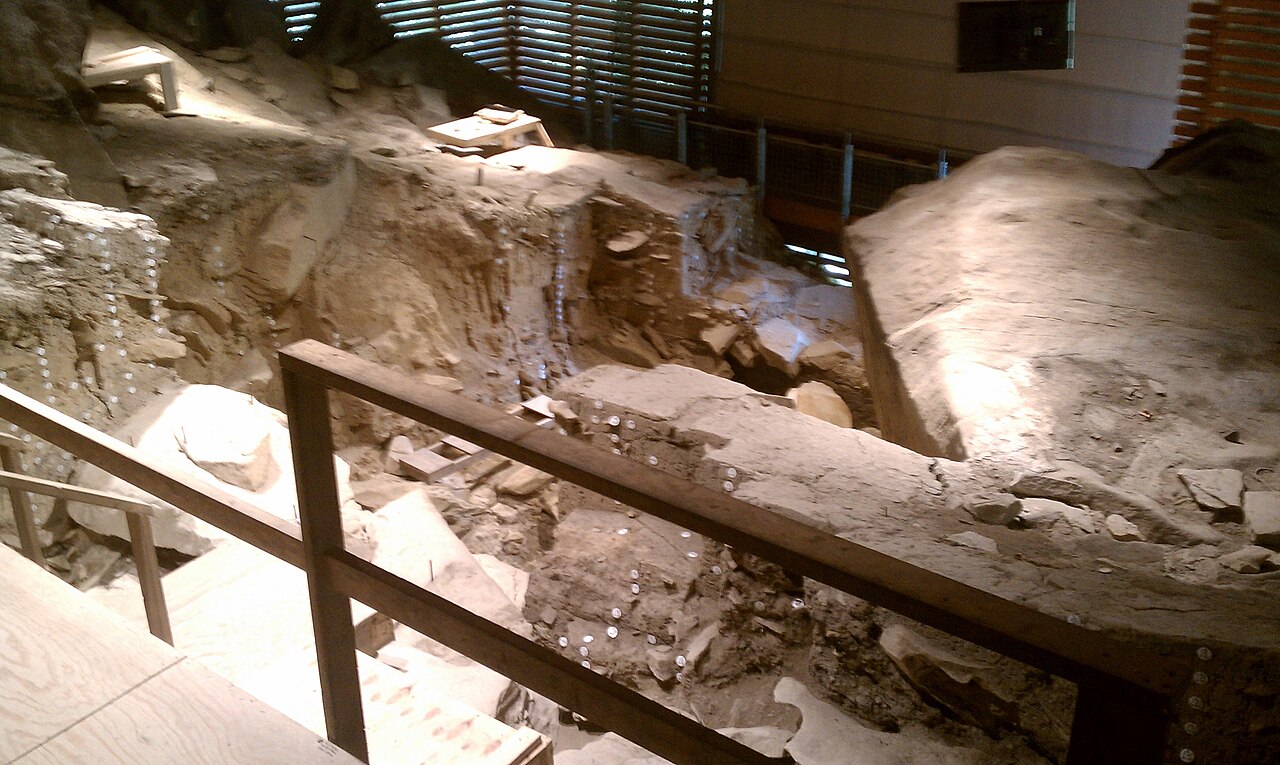
Meadowcroft Rockshelter
Photo: Jbarta · CC0

Meadowcroft Rockshelter, on Cross Creek in southwestern Pennsylvania, is among the most important and most argued-over archaeological sites in the Americas. Excavated from 1973 by James Adovasio and a University of Pittsburgh team, it produced a deep, finely stratified sequence with radiocarbon dates suggesting human occupation well before the Clovis horizon. For decades it was the front line of the pre-Clovis debate; today it is one of the sites credited with breaking the Clovis barrier.

See it on the globe →
The mainstream view

What archaeology says

Meadowcroft's stratigraphy is a textbook example of careful excavation: eleven cultural strata, a large series of radiocarbon dates in correct stratigraphic order, and no obvious mixing. The lowest cultural material yielded dates that push human occupation back to at least around 16,000 years, and arguably earlier, comfortably pre-Clovis. Over time, as other secure pre-Clovis sites accumulated - Monte Verde in Chile above all - the discipline came to accept that people were in the Americas before Clovis, and Meadowcroft's respectability rose accordingly.

The long-standing objection concerned contamination. Southwestern Pennsylvania has coal-bearing bedrock, and critics led by geoarchaeologist Vance Haynes worried that ancient "dead" carbon from coal or groundwater-borne particulates could have infiltrated the samples, making them appear older than they were. Adovasio's team responded with additional geochemical and hydrological analyses arguing that no such contamination occurred and that the plant and pollen assemblages were consistent with the dated ages.

The current mainstream position is that Meadowcroft is a genuine pre-Clovis site, with the deepest dates still carrying a residual question mark rather than outright rejection. It is no longer the lonely outlier it once was.

Key evidence cited
  • Eleven cultural strata with a large radiocarbon series in correct stratigraphic order.
  • Lowest cultural material dates to at least roughly 16,000 years, comfortably pre-Clovis.
  • Plant, pollen and faunal assemblages are internally consistent with the dated ages.
  • Independent geoarchaeological analyses found no evidence of the feared coal contamination.
  • Acceptance rose as other secure pre-Clovis sites such as Monte Verde accumulated.
The alternative view

What the skeptics propose

For proponents of a longer American chronology, Meadowcroft is less an alternative claim than a vindication story. Adovasio spent years being told his impeccable stratigraphy must be wrong because it contradicted the Clovis-first consensus, and he has written pointedly about how the profession treated a well-run excavation as guilty until proven innocent simply because its dates were unwelcome. That experience is frequently cited as evidence of how strongly the discipline once policed the date barrier.

The more radical reading emphasises the deepest, oldest dates - approaching and possibly exceeding 19,000 years, with some carbon even older - and argues they hint at an occupation older than even the current pre-Clovis consensus comfortably allows. In this framing Meadowcroft is not just pre-Clovis but potentially far earlier, and the coal-contamination argument is seen as a rescue device to keep the dates within acceptable limits.

The current standing is favourable: Meadowcroft is accepted as pre-Clovis by most of the field, while the very oldest dates remain a point of genuine, unresolved discussion.

Key evidence cited
  • The deepest dates approach or exceed 19,000 years, older than the comfortable consensus.
  • The stratigraphy is unusually clean, undermining claims of large-scale mixing.
  • Adovasio argues the contamination objection was never demonstrated, only asserted.
  • The site's long persecution is cited as a case study in how the Clovis barrier was defended.
  • Some carbon from the lowest levels is older still, hinting at deeper occupation.

Genuinely open questions

  1. Do the very oldest dates reflect true occupation or a small residual coal-carbon effect?
  2. How much earlier than 16,000 years does secure human use of the shelter extend?
  3. Does Meadowcroft fit a coastal-migration model, and if so how did people reach inland Pennsylvania so early?
  4. Can new dating on curated samples finally resolve the deepest layers?

Worth knowing

Meadowcroft is not just a dig but a public visitor attraction, and the excavation is preserved under an enclosure - so tourists can stand and look at the very stratigraphy that took twenty years of academic warfare to make respectable.