Origins of Civilisation · Hilvan, Şanlıurfa Province, Turkey

Nevalı Çori

The drowned village that had T-shaped pillars and a cult building a decade before anyone had heard of Göbekli Tepe.

Mainstream: c. 8600–7500 BC (Pre-Pottery Neolithic B)Alternative: Heir to a tradition reaching back before the end of the Ice Age37.53°, 38.61°

At a glance

Nevalı Çori
Photo: Cobija · CC BY-SA 4.0

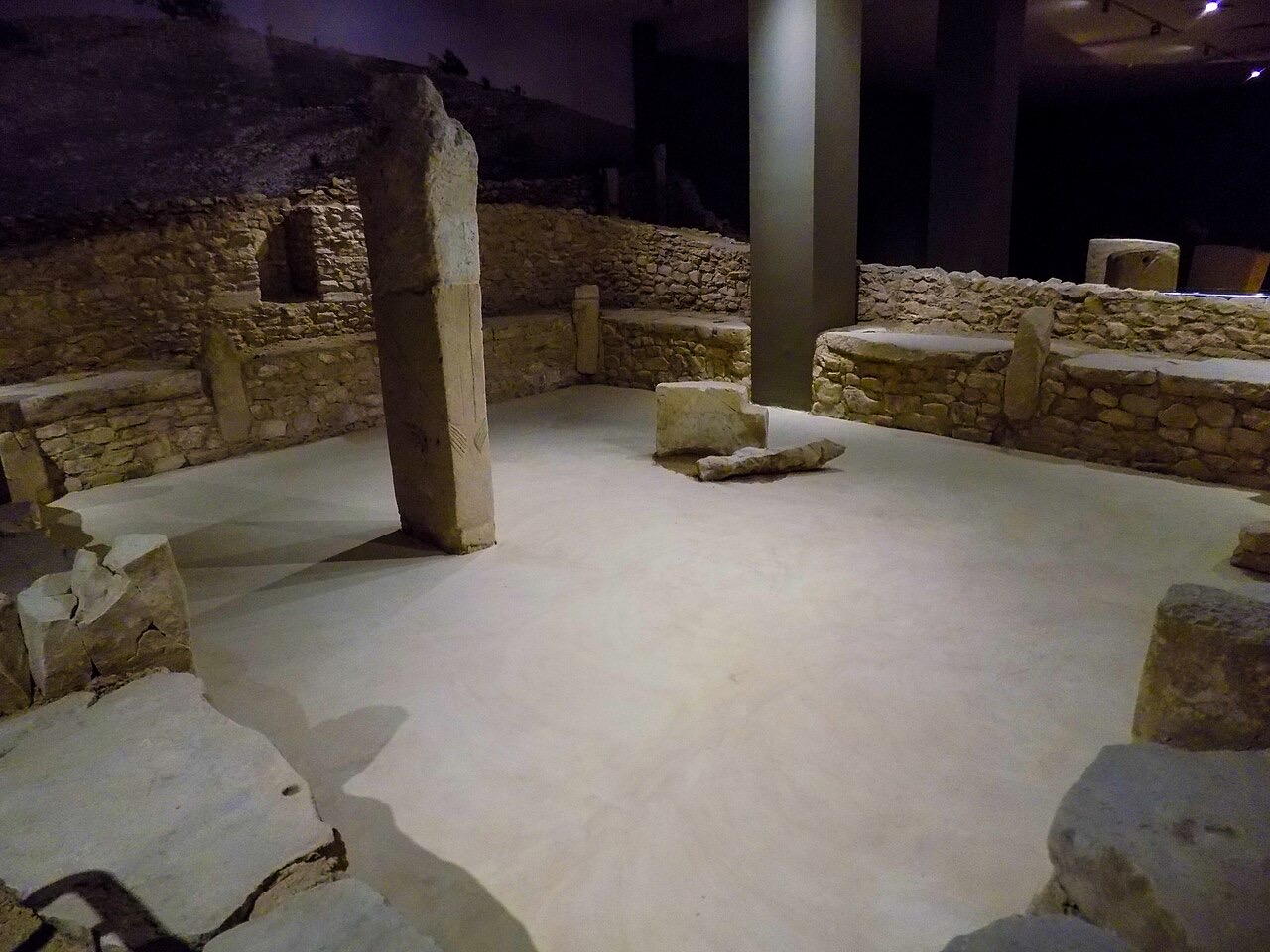
Nevalı Çori was an early Neolithic settlement on the Kantara stream, a tributary of the Euphrates in southeastern Turkey. Excavated between 1983 and 1991 by Harald Hauptmann of the University of Heidelberg as a rescue project ahead of the Atatürk Dam, it produced some of the oldest monumental architecture and life-sized stone sculpture then known anywhere: a semi-subterranean cult building with a polished terrazzo floor, T-shaped limestone pillars carved with arms and hands, a human head with a snake curling over the scalp, and some of the earliest evidence for domesticated einkorn wheat. In 1992 the rising reservoir swallowed the site permanently, just as its significance was becoming clear.

See it on the globe →
The mainstream view

What archaeology says

For archaeologists, Nevalı Çori is a keystone of the Pre-Pottery Neolithic B period in Upper Mesopotamia, radiocarbon dated to roughly 8600-7500 BC. It was a genuine village of rectangular domestic buildings with distinctive channelled foundations, whose inhabitants cultivated einkorn wheat; genetic studies later traced domesticated einkorn to the nearby Karacadağ hills, making this region a strong candidate for one of the birthplaces of farming.

The famous cult building, rebuilt in at least two phases, contained T-shaped monolithic pillars set into benches around the walls and two free-standing central pillars, with carved arms and hands showing that the pillars were stylised human beings. When Klaus Schmidt, who had worked at Nevalı Çori under Hauptmann, began excavating Göbekli Tepe in 1995, he immediately recognised the same T-pillar tradition on a grander and older scale. Mainstream scholars therefore see Nevalı Çori not as an anomaly but as one node in a wider Taş Tepeler world of early Neolithic communities in the region that combined village life, early cultivation and communal ritual buildings.

The sculpture from the site, including a bald life-sized limestone head with a serpent-like plait and composite bird-human figures, is read as evidence of a rich symbolic and probably shamanic belief system among early farming communities, not of any lost advanced civilisation.

Key evidence cited
  • Radiocarbon dates place the settlement firmly in the Pre-Pottery Neolithic B, c. 8600-7500 BC
  • Rectangular houses with channelled foundations show a developed village architecture typical of the period
  • Domesticated einkorn wheat at the site, with wild progenitors traced genetically to the nearby Karacadağ range
  • T-shaped pillars with carved arms match those later found at Göbekli Tepe, Karahan Tepe and other Taş Tepeler sites
  • Hundreds of small clay figurines and limestone sculptures fit a local, evolving symbolic tradition
  • Continuity of tool types and building techniques with neighbouring PPNB sites argues for local development, not outside importation
The alternative view

What the skeptics propose

Alternative writers treat Nevalı Çori as an early clue that the story of civilisation starts far earlier than the textbooks allowed. Graham Hancock, in Magicians of the Gods and elsewhere, folds Nevalı Çori and Göbekli Tepe into his argument that survivors of a civilisation destroyed at the end of the Younger Dryas, around 9600 BC, transferred skills in monumental stone-working and astronomy to hunter-gatherer populations of Anatolia. On this reading the sophistication of the terrazzo floors, sculpture and pillar architecture appears too suddenly to be a purely local invention.

Andrew Collins, in Göbekli Tepe: Genesis of the Gods, gives Nevalı Çori a starring role, arguing that its snake-headed carvings and bird-man imagery preserve memories of a revered elite he links to the Watchers of the Book of Enoch, and that the cult building was aligned on the star Deneb in Cygnus, encoding a sky-religion older than farming itself.

More soberly, some researchers simply argue that Nevalı Çori shows ritual and monumentality driving the Neolithic revolution rather than following it, inverting the old economic model, and note with regret that whatever else the site could have told us now lies under the Atatürk reservoir, a genuine and permanent loss of evidence that both camps lament.

Key evidence cited
  • Monumental cult architecture and life-sized sculpture appear with little visible local precedent
  • Polished terrazzo floors imply pyrotechnic and engineering skill surprising for the tenth millennium before present
  • The snake-crowned head and bird-man sculptures echo later Near Eastern myths of serpent beings and Watchers, as argued by Andrew Collins
  • Proposed alignment of the cult building towards Cygnus suggests deliberate astronomical orientation
  • The T-pillar cult spans centuries and multiple sites, consistent, alternative writers argue, with a transmitted body of knowledge
  • Flooding of the site in 1992 means key evidence can never be re-examined, leaving early interpretations frozen

Genuinely open questions

  1. Was the cult building a temple, a communal house, or something without a modern category?
  2. How did the T-pillar tradition spread between Nevalı Çori, Göbekli Tepe and the other Taş Tepeler sites?
  3. What did the drowned, unexcavated parts of the settlement contain?
  4. Did ritual gathering drive the adoption of farming here, or the reverse?

Worth knowing

Klaus Schmidt, the excavator who made Göbekli Tepe world-famous, trained at Nevalı Çori — when he first saw T-pillars protruding at Göbekli Tepe he knew exactly what they were because he had already dug them at the drowned village.