Ancient Engineering · Midyat, Mardin Province, Turkey

Matiate Underground City, Midyat

Found by accident under a Turkish old town in 2020 — a hidden city that may have sheltered 60,000 people, with 97% still unexcavated.

Mainstream: c. 2nd century AD for earliest confirmed use (Midyat itself attested in Assyrian records from the 9th century BC)Alternative: c. 3000 BC or earlier (the widely publicised '5,000-year-old city' claim, so far unsupported by excavated finds)37.42°, 41.37°

At a glance

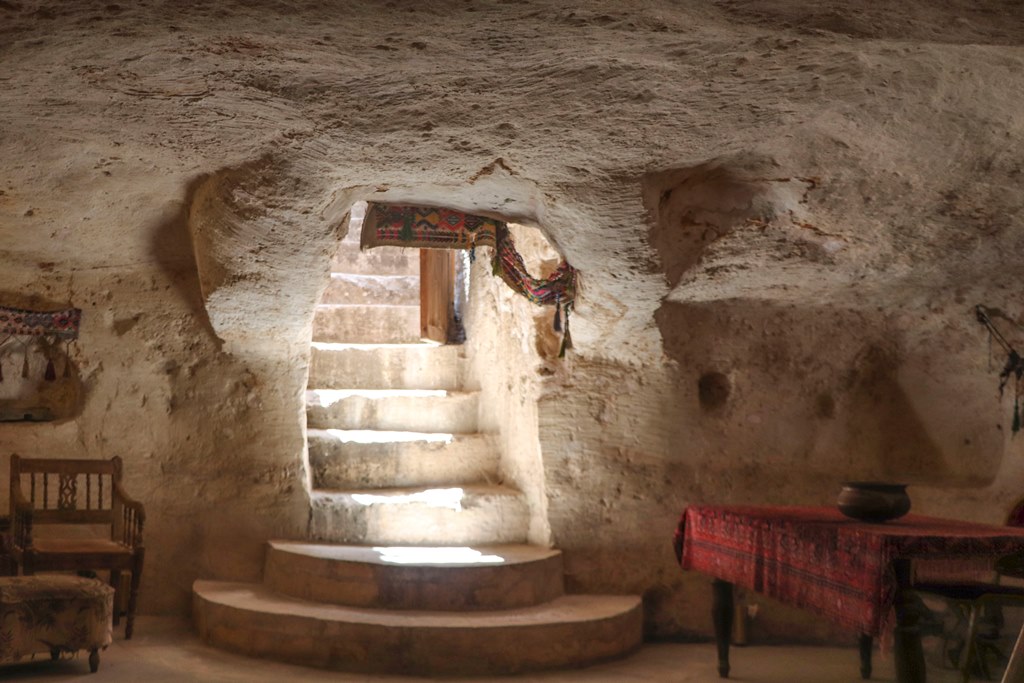
Matiate Underground City, Midyat
Photo: Clemens Schmillen · CC BY-SA 4.0

In 2020, workers cleaning and restoring historic houses in the old town of Midyat, in Turkey's southeastern Mardin Province, broke through into a limestone cave passage that turned out to be the doorway of an entire buried settlement. Named Matiate — the ancient Assyrian name for Midyat, meaning 'city of caves' — the complex has so far yielded around 49 rooms, roughly 120 metres of connected tunnels and an excavated area of more than 8,000 square metres, including places of worship, wells, grain silos, wine-making installations, cisterns and tombs. The truly startling part is the projection. Excavators estimate that what has been opened represents only about 3% of the whole system, which appears to run beneath much of the modern town. If the full extent is confirmed, Matiate could have housed 60,000 to 70,000 people, which would make it the largest known underground settlement on Earth — larger even than Cappadocia's famous Derinkuyu. Unlike the vertically stacked cities of Cappadocia, Matiate spreads horizontally beneath a living town whose above-ground architecture continues the same stone-carving tradition, and residents had long used odd cellar chambers beneath their houses without realising they connected into a single vast network.

See it on the globe →
The mainstream view

What archaeology says

The excavation is directed by Gani Tarkan, formerly head of the Mardin Museum, working with the Midyat municipality and Turkey's Ministry of Culture and Tourism under its Heritage for the Future programme. The datable material recovered so far — oil lamps, bronze coins, glass and stone beads, spindle whorls and hand mills — points to intensive use from roughly the 2nd century AD onwards, with the complex remaining in use in some form for perhaps 1,900 years, later serving as wine cellars, stables and catacombs beneath the town.

Tarkan's working interpretation is that Matiate began as a refuge. In the 2nd and 3rd centuries AD Christianity was not yet a lawful religion in the Roman Empire, and families fleeing persecution — along with Jews and others caught in the region's upheavals — appear to have carved out concealed living space where whole communities could shelter, worship and store food. The Tur Abdin plateau around Midyat later became one of the great heartlands of Syriac Christianity, and the underground city's chapels and silos fit a pattern of communal refuge known across Anatolia. Excavation resumed in stages through 2023–2025 with the aim of opening the first sections to visitors, and archaeologists stress that conclusions remain provisional while so little of the complex has been dug.

Key evidence cited
  • Oil lamps, bronze coins and beads recovered in excavation date occupation from about the 2nd century AD onwards
  • Chapels, silos, wells and wine-making installations match known patterns of communal refuge settlements in Anatolia
  • Excavation director Gani Tarkan links the complex to Christians and Jews sheltering from Roman persecution
  • The Tur Abdin region's later history as a Syriac Christian heartland supports a refuge-and-monastic use sequence
  • Continuous later reuse as cellars, stables and catacombs explains the complex's preservation beneath the living town
The alternative view

What the skeptics propose

Almost from the moment of discovery, Turkish officials and much of the press promoted Matiate as a '5,000-year-old underground city', a figure that would push its origins back to around 3000 BC — long before any excavated artefact so far published. Supporters of the older date point out that Midyat appears in Assyrian royal inscriptions of the 9th century BC as Matiate, 'city of caves', which arguably implies that a famous cave settlement already existed there nearly three millennia ago; on this reading the Roman-era finds simply represent the latest occupants of a far older refuge.

A second strand folds Matiate into the wider alternative debate about Anatolia's underground cities. Writers such as Graham Hancock and Andrew Collins have long argued that the sheer scale of complexes like Derinkuyu suggests origins deeper in prehistory than the conventional Phrygian-to-Byzantine timeline — with some proponents linking subterranean refuge-building to the Younger Dryas period around 10,800 BC, when, on the comet-impact hypothesis, survivors might have sheltered underground from a hostile climate. Matiate's projected 60,000-plus capacity is cited as evidence that underground urbanism in the region was a tradition of enormous antiquity and sophistication.

Sceptics respond that carved voids in soft rock cannot be dated directly, and that every stratified find at Matiate so far sits comfortably in the Roman and later periods; the Assyrian name proves only that caves existed, not an organised underground city. Mainstream archaeologists also note that refuge-quarrying is well documented historically in the region, requiring no lost civilisation — though they concede that with 97% of the site unexcavated, the question of when the first chambers were cut remains genuinely open.

Key evidence cited
  • Assyrian inscriptions of the 9th century BC already call the place Matiate, 'city of caves', implying a much older cave settlement
  • Turkish officials themselves have repeatedly promoted a 5,000-year age for the city
  • Only about 3% has been excavated, so the earliest phases may simply not have been reached yet
  • The projected 60,000–70,000 capacity would exceed Derinkuyu and suggests a deep-rooted regional tradition of underground urbanism
  • Rock-cut chambers cannot be radiocarbon dated, leaving the true age of the first cuttings unproven either way

Genuinely open questions

  1. How far does the network actually extend beneath modern Midyat, and does it really approach the projected 60,000-person capacity?
  2. Were the first chambers cut in the Roman era, or do earlier Iron Age or even Bronze Age phases lie deeper in the unexcavated 97%?
  3. How did tens of thousands of people ventilate, water and provision an underground city with no obvious vertical shaft system like Cappadocia's?

Worth knowing

Residents of Midyat had been using odd cave rooms under their houses as cool cellars for generations — without realising the 'cellars' all connected into what may be the largest underground city ever found.