What archaeology says
Systematic excavation of Myra and its harbour Andriake has been led since 2009 by Professor Nevzat Cevik of Akdeniz University, whose team has uncovered the theatre with its trove of Hellenistic terracotta figurines, a Byzantine chapel preserved to its roofline beneath the alluvium, and, in work publicised in 2025, an unusual Roman thermal and healing complex built over natural hot springs. The tombs themselves are dated mainly to the 5th and 4th centuries BC on the evidence of their Lycian-language inscriptions, sculpted reliefs in late Classical style, and parallels with dated monuments at Xanthos and Limyra.
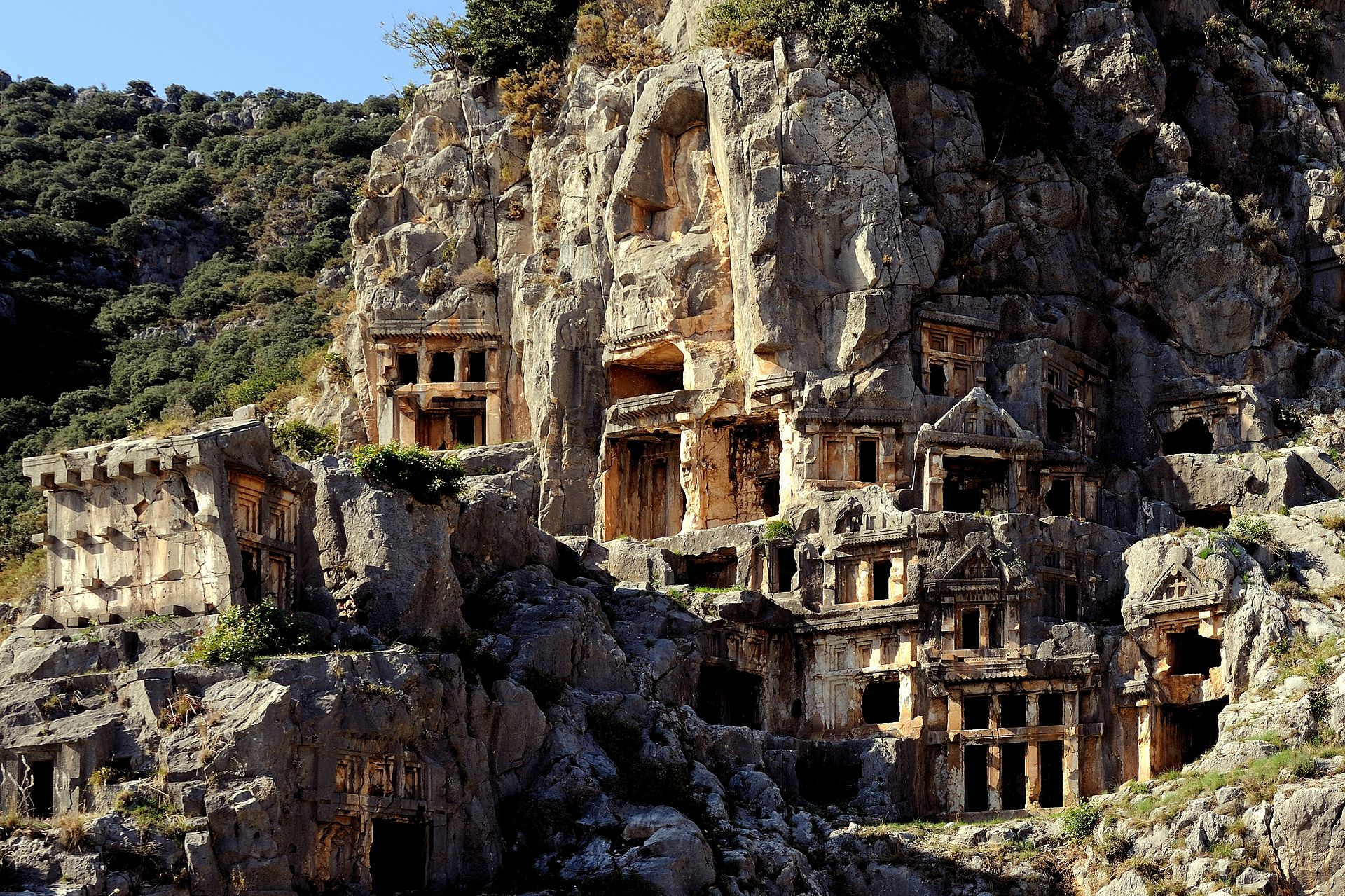
Archaeologists read the house-shaped facades as literal translations of Lycian domestic timber architecture into stone — the tomb as an eternal dwelling for the dead. Reliefs at Myra show funerary banquets and family groups, and inscriptions record fines payable to the city for violating a tomb, showing these were legally protected family properties. The famous winged figures of Lycian funerary art, best known from the Harpy Tomb at Xanthos (now in the British Museum), are interpreted by most scholars as sirens or harpy-like psychopomps gently carrying the small figures of the dead — matching later Greek accounts of Lycian belief that winged spirits bore souls to the afterlife, and offering one explanation for why tombs were cut as high up the cliff as possible.
Modern work concentrates on conservation and recording: the facades are suffering salt weathering and earthquake cracking, and Turkish teams have been documenting the necropoleis with laser scanning while restoring the theatre with original stones under the Heritage for the Future programme.
- Lycian-language tomb inscriptions and Classical-style reliefs date the necropoleis to the 5th–4th centuries BC
- Facades faithfully copy Lycian timber house construction, supporting the 'eternal dwelling' interpretation
- Charles Fellows in 1840 recorded surviving red, yellow and blue paint, confirming the tombs were brightly finished, not austere
- Nevzat Cevik's excavations since 2009 tie the tombs into a well-dated urban sequence from Classical Lycia to Byzantium
- Inscriptions recording fines for tomb violation show the tombs functioned as protected family property within civic law