What archaeology says
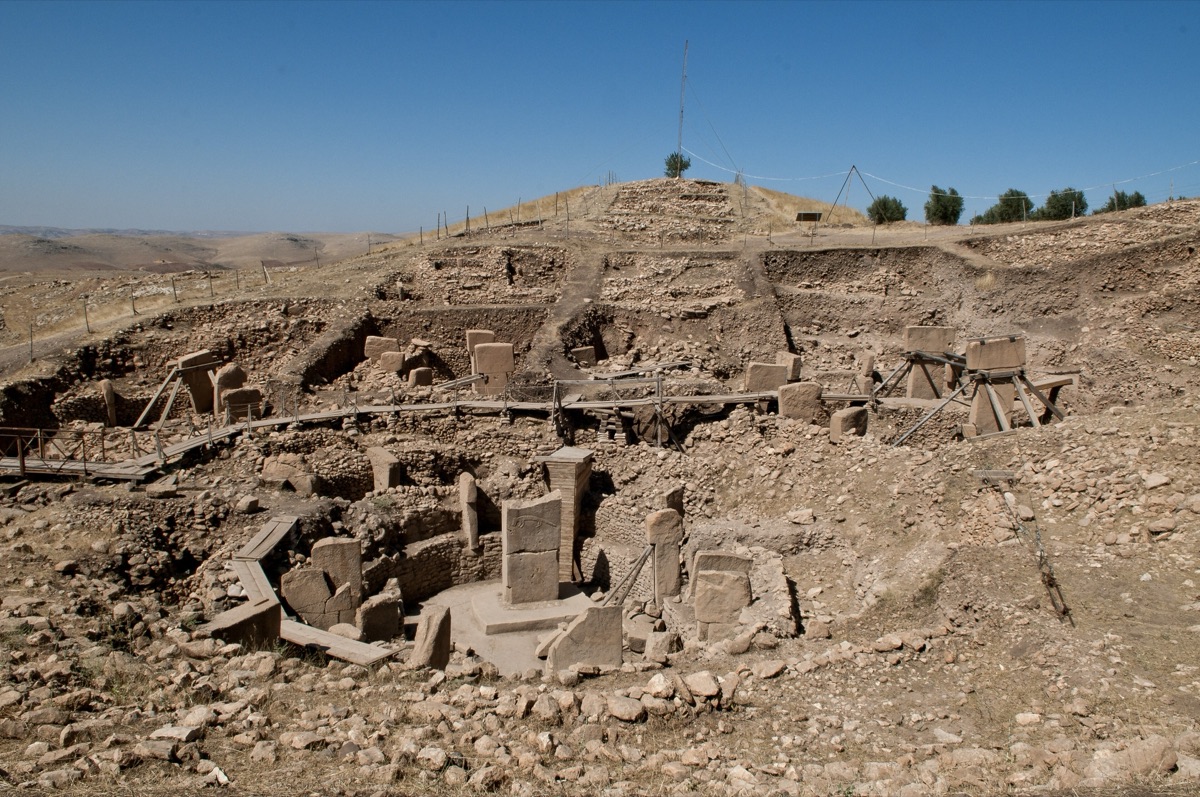
The consensus is that Göbekli Tepe was built by Pre-Pottery Neolithic hunter-gatherers of the northern Fertile Crescent. Radiocarbon dates from wall plaster, organic material in the fill, and stratified deposits consistently cluster in the 10th and 9th millennia BC. The builders quarried the T-pillars from limestone bedrock a few hundred metres away — unfinished pillars, including one roughly 7 metres long, still lie in the quarries — and worked them with flint tools. Enormous quantities of butchered gazelle, aurochs and wild boar bone suggest large communal feasts, which archaeologists such as Schmidt and later Jens Notroff interpreted as work-feasts that drew scattered bands together to build and celebrate. The carved menagerie of foxes, snakes, scorpions, vultures and boars is read as symbolic or totemic imagery of a hunter's cosmos.
Schmidt famously called the site a 'cathedral on a hill' — a purely ritual centre with no domestic life. That view has softened considerably: excavations and ground-penetrating radar under current director Necmi Karul have revealed rectangular domestic-style buildings, cisterns for harvesting rainwater, and grinding tools, indicating that people lived at or beside the monuments. Less than five percent of the site has been fully excavated. The revised mainstream picture is of increasingly sedentary foragers whose communal ritual building may itself have helped push them toward settled life and, eventually, agriculture — einkorn wheat was first domesticated in this very region.
The old claim that the enclosures were deliberately and ritually buried is now debated within archaeology itself: some researchers argue much of the infill arrived through slope slides and natural processes, with episodes of intentional backfilling. Either way, the burial preserved the site in remarkable condition.
- Radiocarbon dates from plaster and fill consistently span c. 9500–8000 BC
- Unfinished T-pillars still lie in adjacent limestone quarries, showing on-site, stone-tool production
- Massive deposits of wild animal bone indicate hunter-gatherer feasting, not farming
- Newly found domestic buildings, cisterns and grinding stones show a resident community capable of the work
- Similar but smaller T-pillar sites across the region (Taş Tepeler) show a local developmental context