What archaeology says
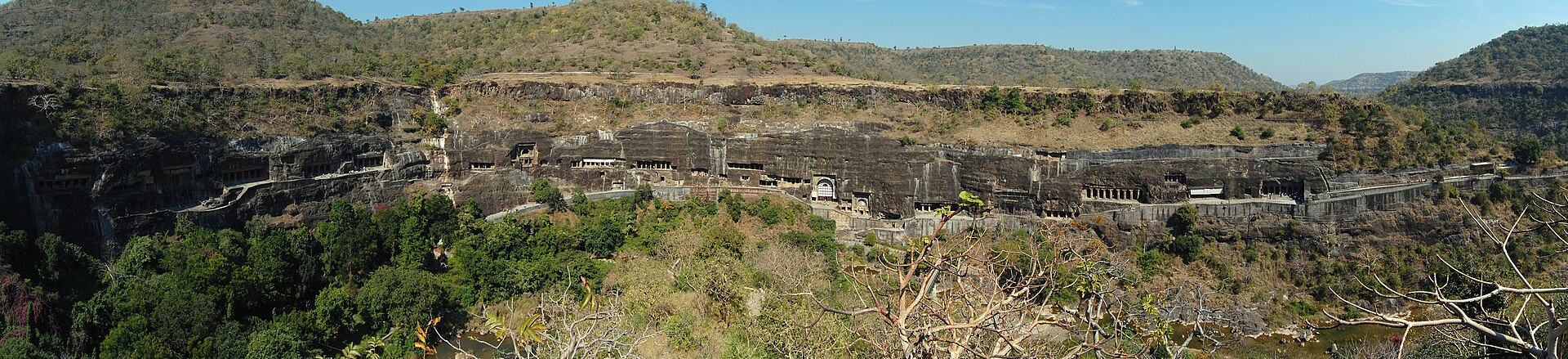
Archaeologists and art historians divide Ajanta into two construction phases separated by about four centuries. The earlier caves — including the chaitya halls 9 and 10 — belong to the Hinayana tradition and were excavated under the Satavahana dynasty in the 2nd–1st centuries BC, dated by donor inscriptions in early Brahmi script, architectural style and their aniconic stupa worship. The second, far more ambitious Mahayana phase produced most of the site, including the great painted viharas of Caves 1, 2, 16 and 17.
The chronology of that second phase was transformed by the University of Michigan art historian Walter M. Spink, who spent more than five decades arguing — cave by cave, doorway by doorway — that virtually all of it was accomplished in a single frenetic generation, roughly AD 460 to 480, under Emperor Harishena of the Vakataka dynasty. Inscriptions name the patrons: Harishena's minister Varahadeva sponsored Cave 16, and the local king Upendragupta sponsored Caves 17–20. When Harishena died around 477 the money stopped, work collapsed mid-stroke, and dozens of unfinished excavations froze every stage of the process in stone. Those unfinished caves are the mainstream's best evidence for method: they show the sequence of pilot tunnels, roughing-out and finishing by iron chisel, with millions of chisel marks still legible, while scientific study of the murals by the Archaeological Survey of India (notably conservation scientist Rajdeo Singh) has identified the plaster recipes, lamp-lighting arrangements and pigments — including lapis lazuli imported from Afghanistan.
- Donor inscriptions in datable Brahmi scripts spanning both phases, naming patrons such as Varahadeva, minister of Vakataka emperor Harishena
- Walter Spink's cave-by-cave chronology tying the second phase to c. AD 460–480, with work collapsing at Harishena's death
- Dozens of unfinished excavations preserving every stage of manual carving, with iron-chisel marks throughout
- Pigment and plaster analyses (ASI, Rajdeo Singh) matching known ancient materials, including imported lapis lazuli
- Architectural and stylistic continuity with other dated Satavahana and Vakataka monuments in the Deccan