What archaeology says
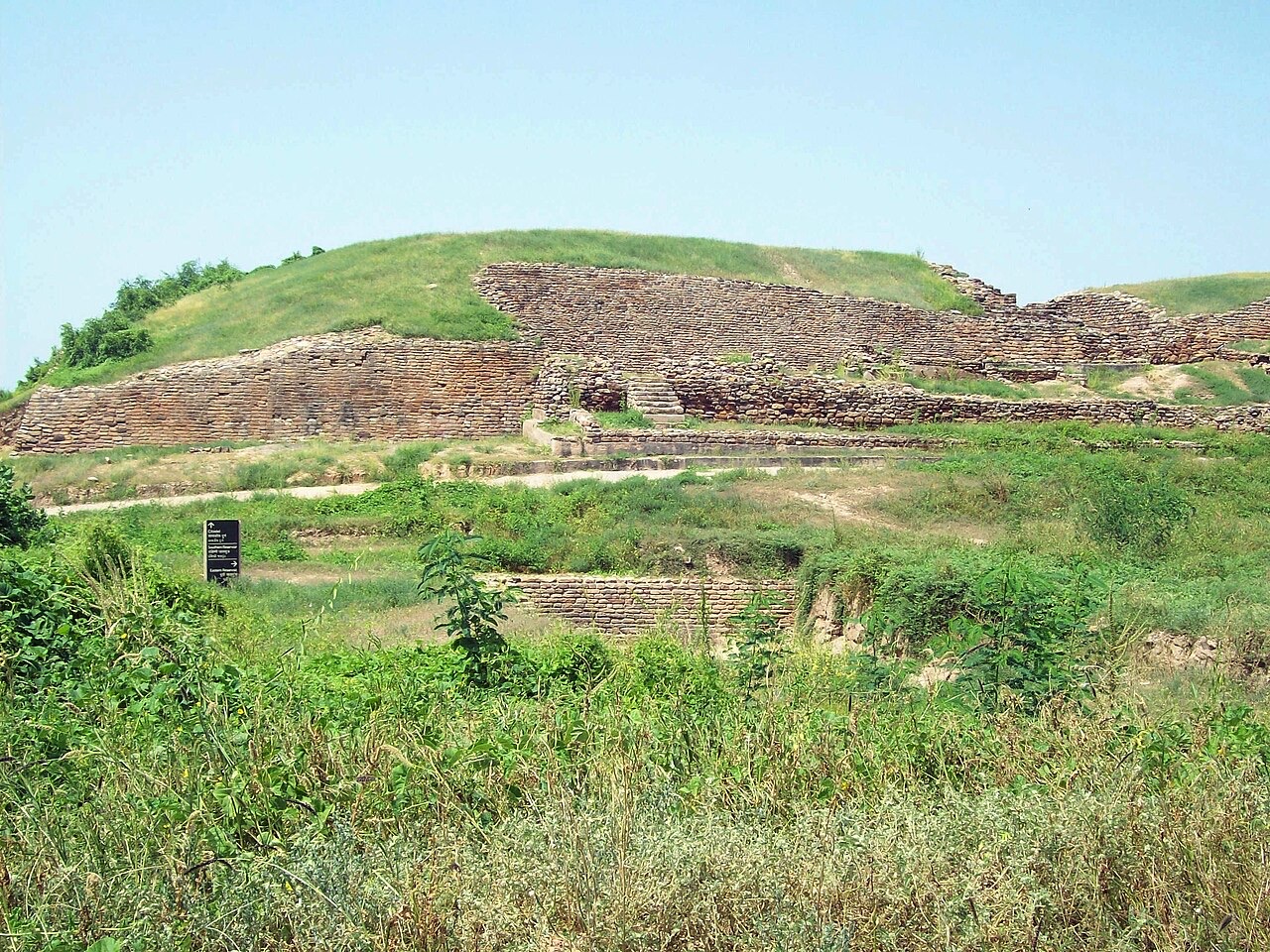
To mainstream archaeology Dholavira is the masterclass in Harappan hydraulic and civic engineering. Uniquely among major Indus cities it was built largely of stone rather than brick, laid out in a nested plan — citadel ('castle' and 'bailey'), middle town and lower town — inside massive walls, with a ceremonial ground and a sequence of enormous reservoirs, some cut five metres or more into bedrock, storing perhaps 250,000 cubic metres of monsoon runoff. Bisht's excavations traced seven occupation stages from an early settlement around 3000 BC through the mature urban climax (c. 2600-1900 BC) into de-urbanised late phases ending by about 1500 BC.
The signboard is emblematic of the Indus enigma: ten signs, each about 37 centimetres tall, apparently mounted above the north gate for all to see — implying an audience that could read them — in a script of roughly 400-700 signs that has defeated every decipherment attempt, largely because inscriptions average just five signs and no bilingual text exists.
Dholavira's decline tracks the wider Harappan story: reservoir maintenance falters, the city contracts, and occupation ends amid the aridification that peaked around the 4.2-kiloyear climate event, compounded locally by the drying of rivers feeding the Rann and the retreat of the sea that had connected the city to Gulf trade — Dholavira imported and worked copper and shipped beads and shell as part of the Meluhha trade with Mesopotamia.
- Seven stratified occupation stages, c. 3000-1500 BC, documented in R. S. Bisht's ASI excavations
- At least sixteen reservoirs and check dams forming the most elaborate water system of any Bronze Age city
- The ten-sign gypsum signboard, unique in the Indus world as a probable public inscription
- Stone architecture, nested town plan and a stadium-like ceremonial ground showing centralised planning
- Bead, shell and copper workshops tying Dholavira into documented Indus-Mesopotamia trade
- Decline phases correlating with the 4.2-kiloyear aridification event and retreat of navigable water from the Rann