Origins of Civilisation · Wuyang County, Henan, China

Jiahu

A 9,000-year-old village that gave the world its oldest playable instruments, its earliest fermented drink — and maybe its first signs.

Mainstream: c. 7000–5700 BCAlternative: Claimed home of proto-writing 5,000 years before the oracle bones33.61°, 113.66°

At a glance

Jiahu
Photo: asgitner · CC BY-SA 2.0

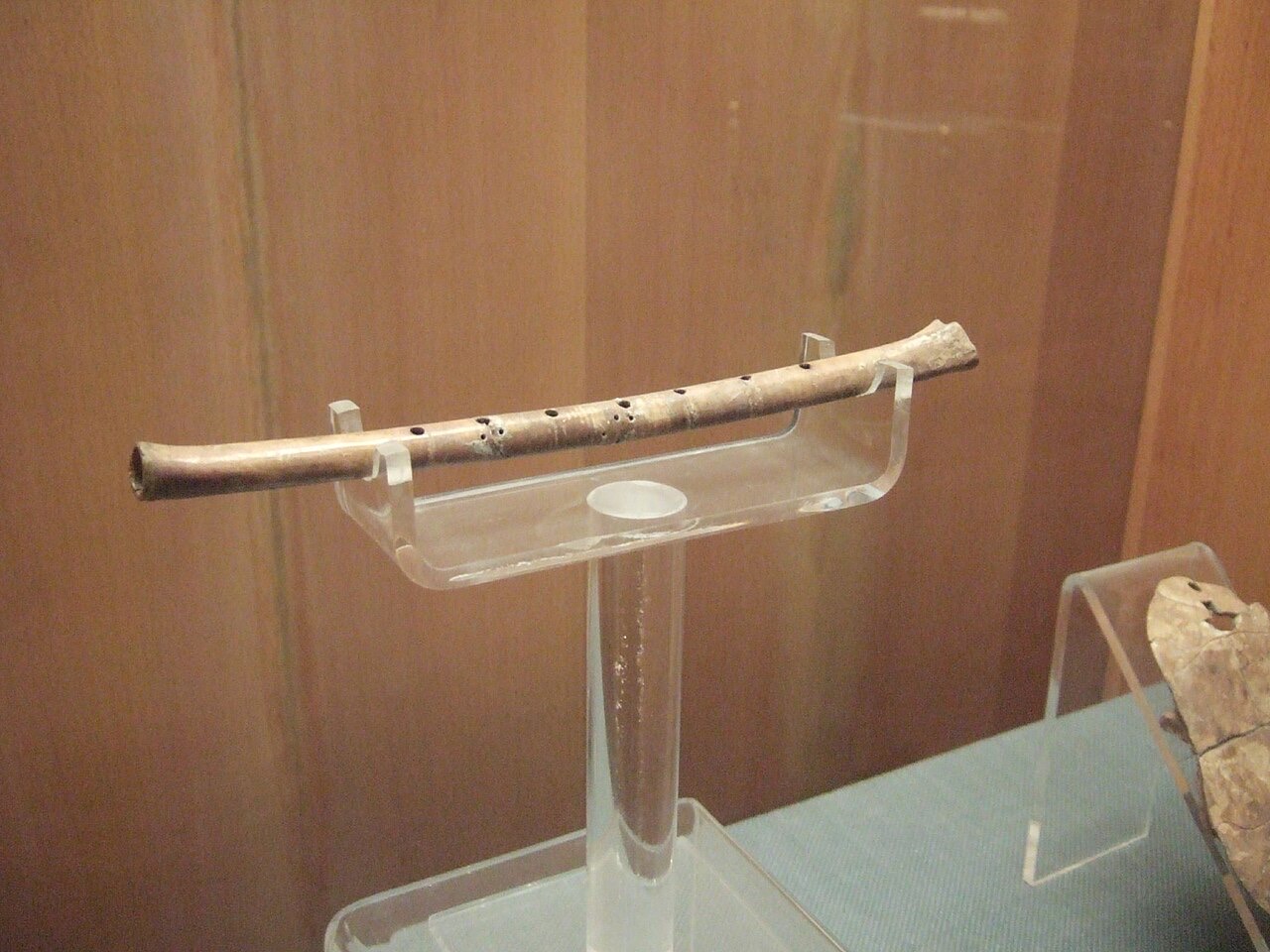
Jiahu, a Neolithic village site in the Huai River floodplain of Henan Province, was occupied from about 7000 to 5700 BC, when flooding forced its abandonment. Excavations from the 1980s onward, led for many years by Zhang Juzhong, recovered an astonishing trinity of firsts: more than 30 flutes made from the wing bones of red-crowned cranes, several still playable and tuned to recognisable scales; chemical residues in pottery identified by Patrick McGovern as the world's oldest fermented beverage, a rice-honey-fruit wine; and sixteen or so signs incised on tortoise shells and bone that some researchers argue foreshadow Chinese writing by five millennia. Early rice cultivation and possibly domesticated pigs complete the picture of a precociously sophisticated community.

See it on the globe →
The mainstream view

What archaeology says

Mainstream archaeology values Jiahu as one of the richest windows on early Neolithic China. The site, about 5.5 hectares, contained house foundations, kilns, hundreds of burials and thousands of artefacts. Its rice remains are among the earliest evidence for rice cultivation this far north, and its bone flutes — radiocarbon dated to around 7000-5700 BC across three phases — are the oldest playable multi-note instruments known, published in Nature in 1999. The finest, with seven holes, produces a scale close to the modern do-re-mi; one flute even shows a tiny corrective hole drilled to fix a sour note, evidence of deliberate tuning.

Patrick McGovern of the University of Pennsylvania analysed residues from Jiahu jars and in 2004 reported a fermented drink of rice, honey and hawthorn fruit or grape — the earliest chemical evidence of alcohol anywhere, later recreated commercially as the beer Chateau Jiahu. Together with turquoise ornaments and elaborate burials, some containing tortoise-shell rattles filled with pebbles, the finds suggest ritual specialists, possibly shamans.

On the famous signs, the mainstream is respectful but firm. The 2003 Antiquity paper by Li Xueqin, Garman Harbottle and colleagues noted that a few Jiahu marks resemble much later oracle-bone characters, including forms like 'eye' and numerals. Most epigraphers, including the late David Keightley, cautioned that sixteen isolated signs separated from the Shang script by five thousand silent years cannot be called writing; they are best described as symbolic use of signs — meaningful, but not a script.

Key evidence cited
  • Radiocarbon dates spanning c. 7000-5700 BC across three occupation phases
  • Over 30 crane-bone flutes, the oldest playable instruments in the world, published in Nature
  • Chemical residue analysis by Patrick McGovern identifying a rice-honey-fruit fermented drink c. 7000-6600 BC
  • Early cultivated rice and possible pig domestication at the northern edge of the rice zone
  • Hundreds of excavated burials showing ritual differentiation, including tortoise-shell rattles
  • Sixteen or so incised signs on shell and bone, catalogued in the 2003 Antiquity study
The alternative view

What the skeptics propose

Jiahu's controversies are genuine scholarly ones, and the deepest concerns the signs. Li Xueqin's team explicitly raised the possibility of a connection between Jiahu's tortoise-shell marks and the Shang oracle-bone script — used, suggestively, on the same medium of turtle plastrons for divination — implying an unbroken symbolic tradition of five millennia. If any version of that claim held, the origin of writing in China would leap from c. 1200 BC towards 6600 BC, before Mesopotamia's first tokens matured into cuneiform. Critics called this a bridge too far: BBC coverage at the time quoted specialists warning that isolated symbols recur worldwide without ever becoming writing, and that continuity across such a gulf of time is unprovable. The debate — sign versus script, continuity versus coincidence — remains open and periodically reignites as new early marks are found at other Chinese sites.

A second live argument concerns music and cognition. The flutes' near-modern scales have been used to argue that pentatonic and even heptatonic musical thinking predates civilisation itself, with implications for how early complex cognition and ritual developed — a quieter revolution than any lost-city claim, but one that moved 'sophistication' thousands of years earlier than expected.

Alternative-history writers more broadly cite Jiahu as part of a pattern: fully modern behaviour — brewing, tuned music, symbolic notation, cultivated rice — flourishing quietly in 7000 BC, supporting the view that conventional timelines systematically underestimate early peoples. Here, unusually, much of the mainstream would nod along.

Key evidence cited
  • Some Jiahu signs visually resemble later oracle-bone characters for eye, sun and numerals
  • Signs occur on tortoise plastrons, the same divinatory medium used by Shang diviners five millennia later
  • Li Xueqin, a leading historian of early China, considered a link to Shang script worth proposing in print
  • A seven-hole flute with a corrective tuning hole implies music theory, not casual whistling
  • The world's earliest alcohol suggests developed ritual feasting at the dawn of the Neolithic
  • The whole package — notation, music, brewing, agriculture — sits 3,000 years before conventional Chinese civilisation narratives begin

Genuinely open questions

  1. Are the Jiahu signs an isolated notation, or genuinely ancestral to Chinese writing?
  2. What role did the flutes and rattles play — entertainment, ritual, shamanic practice?
  3. How far north had rice farming truly spread by 7000 BC, and from where?
  4. Why do so many key innovations cluster at this one modest village?

Worth knowing

The Dogfish Head brewery worked with Patrick McGovern to resurrect Jiahu's 9,000-year-old recipe as 'Chateau Jiahu' — meaning you can drink a chemically informed approximation of the oldest known alcoholic beverage on Earth.