What archaeology says
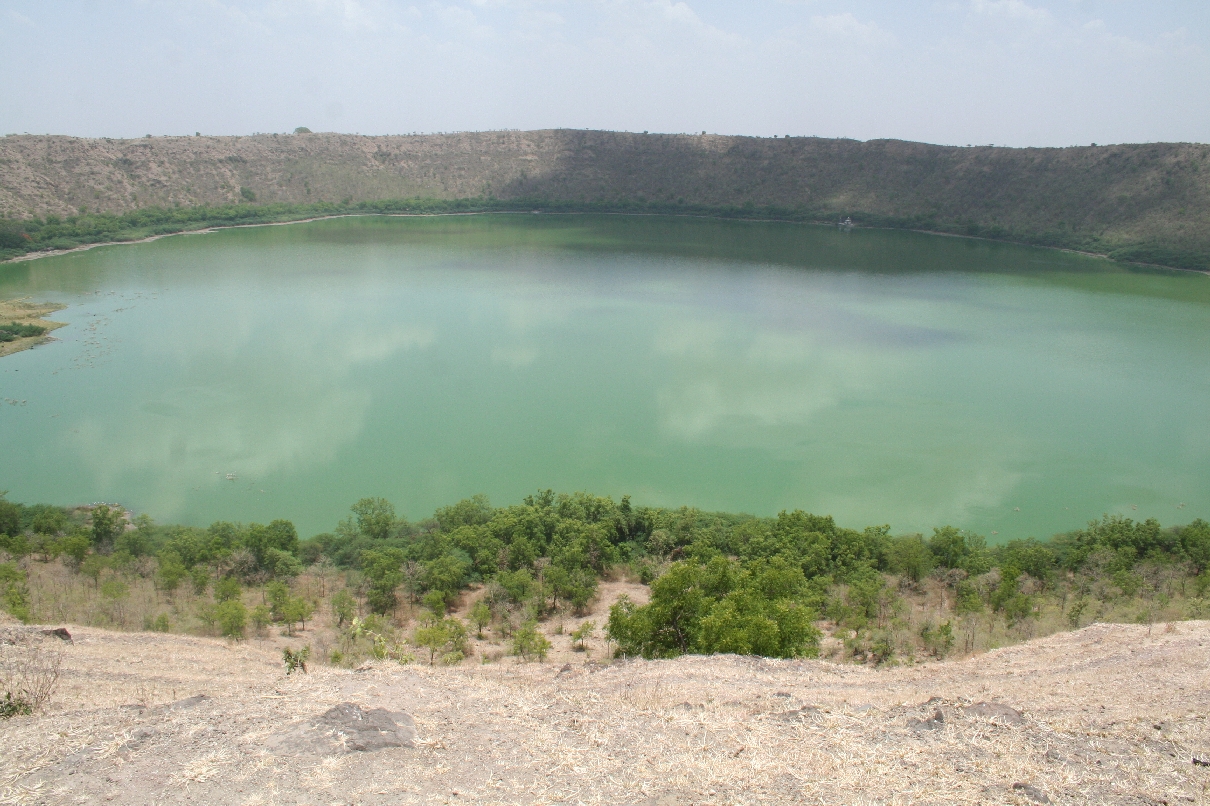
Lonar is a genuine hypervelocity impact crater, one of the very few excavated in flood basalt rather than sedimentary or crystalline rock. A meteorite struck the Deccan Traps and blasted out a bowl roughly 1.8 kilometres in diameter and around 150 metres deep, later partly filled by a saline, alkaline lake. Shock-metamorphic features, maskelynite, planar deformation, impact melt and ejecta, confirm the impact origin.
The age is debated. A commonly cited figure is about 50,000 years, but some argonand luminescence dating has suggested the impact could be considerably older, and the number is not settled.
Because it formed in basalt chemically similar to lunar and Martian surfaces, Lonar is studied as a planetary analogue, and its unusual lake chemistry and microbiology add further scientific interest. The surrounding temples, built in the Hemadpanthi style, date from the medieval period, long after the impact, and mark the crater as a sacred place rather than recording the event itself.
- A near-circular crater about 1.8 kilometres across sits in Deccan Trap basalt, a rare setting for a large impact.
- Shock-metamorphic features (maskelynite, planar deformation, impact melt) confirm a hypervelocity impact.
- Ejecta and an overturned rim stratigraphy ring the crater.
- A saline, alkaline lake fills the floor, giving distinctive water chemistry and microbiology.
- The basalt target makes Lonar a valued analogue for lunar and Martian impact craters.
- Dating (commonly cited near 50,000 years, though contested toward older ages) places the impact far in prehistory.