Ancient Technology · Halebidu, Karnataka, India

Hoysaleswara Temple

A 12th-century Shiva temple whose glass-smooth pillars look lathe-turned — because, in a sense, they were.

Mainstream: c. 1121 CE (Hoysala Empire)Alternative: 12th century CE, but built with machine tools, per alternative claims13.21°, 76.00°

At a glance

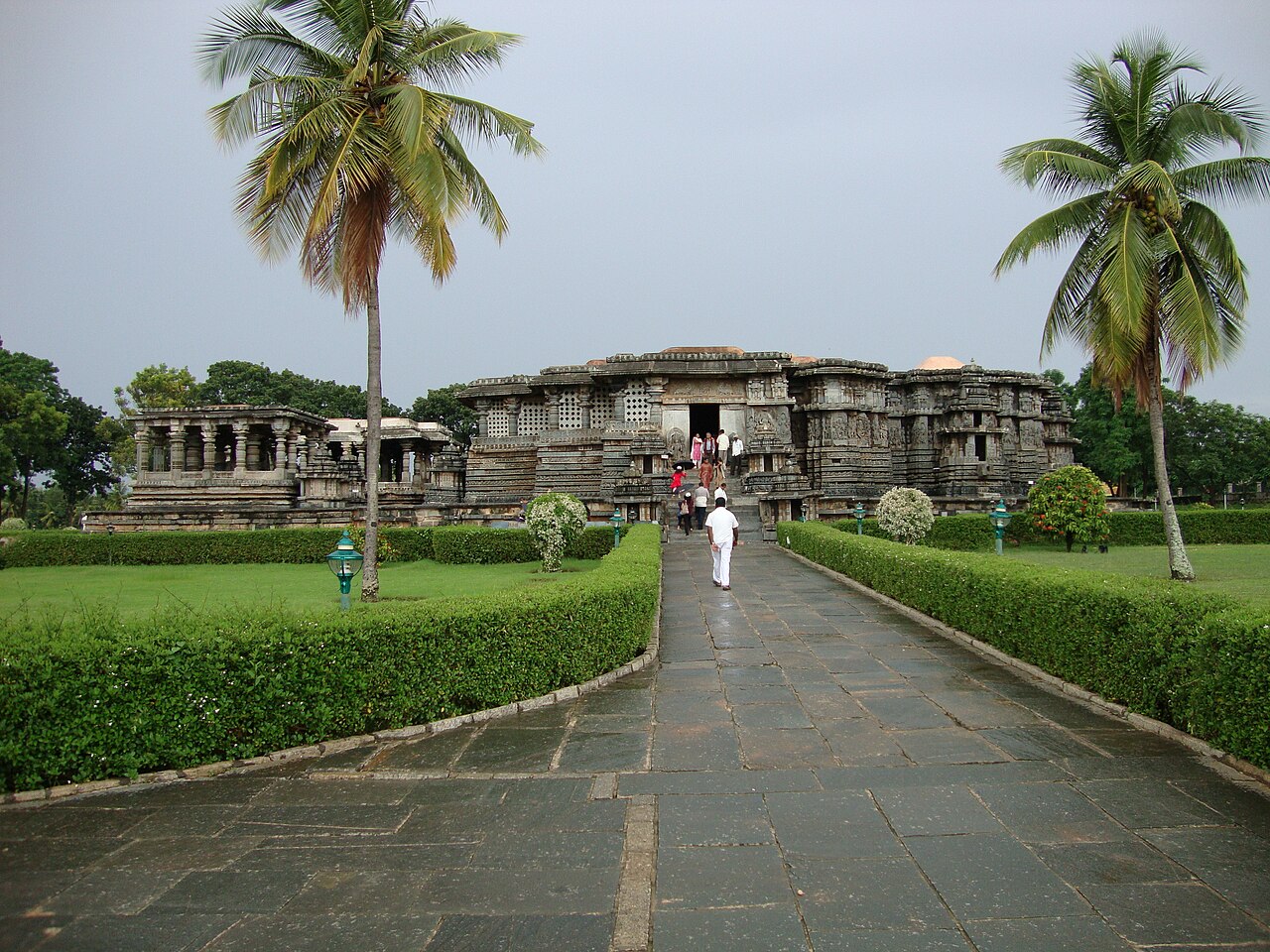
Hoysaleswara Temple
Photo: Karthikbs23 · CC BY-SA 3.0

The Hoysaleswara Temple at Halebidu, built from around 1121 CE under King Vishnuvardhana of the Hoysala Empire, is among the most intricately carved buildings on Earth. Its walls carry friezes of thousands of figures, and its interior is famous for gleaming, precisely profiled circular pillars whose stacked, symmetrical mouldings look strikingly like they came off an industrial lathe. YouTube researcher Praveen Mohan has made the temple a flagship case for claimed ancient machining in India, while art historians point to the unusual properties of the stone itself — soapstone, soft when quarried, hardening with age — and to a well-documented Hoysala turning technique.

See it on the globe →
The mainstream view

What archaeology says

Historians of Indian architecture date the temple firmly to the 12th century: inscriptions name the patrons, the deity dedications and even individual sculptors, who sometimes signed their work. The building belongs to a continuous, well-studied evolution of Hoysala style out of Western Chalukya architecture, which had already developed circular lathe-finished pillars generations earlier.

The key to the pillars is the material. Hoysala builders switched from sandstone to chloritic schist — soapstone — which is soft enough to carve easily when freshly quarried and then hardens on exposure to air. Scholarship on Hoysala craft describes rough pillar blanks being mounted vertically and rotated, probably on a wooden pivot arrangement turned by teams of workers, while a fixed chisel or abrasive scraped the profiles true — a genuine lathe process, human-powered, applied to an unusually forgiving stone. Final detail was cut by hand with iron chisels, and the mirror polish was achieved by abrasive finishing.

For mainstream scholars, the temple is spectacular evidence of medieval Indian craft organisation — guilds, signed masterpieces, royal patronage — rather than of anachronistic technology: everything visible is achievable with iron tools, rotation, abrasives and extraordinary skill applied to soapstone.

Key evidence cited
  • Inscriptions date the temple to c. 1121 CE and name patrons and individual sculptors, some of whom signed their work
  • Chloritic schist (soapstone) is soft when quarried and hardens with exposure, enabling fine carving with iron tools
  • Lathe-turned pillars appear earlier in Western Chalukya temples, showing a documented regional technique evolving over centuries
  • Hand-powered vertical turning of pillar blanks is described in scholarship on Hoysala construction methods
  • Iron chisels, abrasives and drills of the period are attested archaeologically and in texts
  • Unfinished sections show conventional tool marks and staged workflows, not machine cutting
The alternative view

What the skeptics propose

Praveen Mohan, whose videos on Hoysaleswara have been viewed many millions of times, argues the pillars' concentric precision could only come from machine turning, and points to features he considers machining signatures: fine parallel circular lines on pillar mouldings, small precisely drilled holes — some only millimetres wide yet deep — in hard-to-reach places, and sculptures he interprets as depicting drill bits, gears and other tool-like objects in the hands of deities. He has suggested the builders possessed rotary machines and long flexible drills, and that mainstream archaeology avoids testing these features.

Mohan also highlights the temple's unfinished portions, arguing the contrast between rough-hewn and machine-smooth elements shows two different toolkits at work, and he notes that some perforated ornaments — stone chains and freely rotating elements — would challenge modern stonemasons.

Mainstream specialists respond that every cited feature is consistent with hand lathes, bow drills with abrasive, and soapstone's softness at carving time; that the 'machine' iconography is standard religious symbolism (lotus buds, maces, drums); and that unfinished areas reflect the temple's interrupted construction history, including the disruption of later invasions. They add that a culture with industrial machines would have left workshops, metal tools and infrastructure — none of which appears in the extensive Hoysala archaeological record.

Key evidence cited
  • Praveen Mohan documents concentric pillar profiles he argues match machine-lathe tolerances
  • Deep, narrow drill holes only millimetres wide appear in awkward locations, hard to explain with bow drills, he claims
  • Some sculptures are interpreted by Mohan as depicting drill bits, gears and tool-bearing figures
  • Freely moving stone chains and perforated ornaments would challenge modern masons working by hand
  • Fine parallel circular striations on mouldings are read as tool feed marks
  • Mohan argues no full experimental replication of the pillar finish with period tools has been published

Genuinely open questions

  1. Could a full-scale experimental replication settle how the pillar profiles and polish were achieved?
  2. What tools made the smallest deep drill holes, and has anyone measured them systematically?
  3. How was pillar rotation practically engineered for blanks weighing many tonnes?
  4. How much of the temple's unfinished state reflects invasion-era disruption versus deliberate staging?

Worth knowing

Freshly quarried soapstone is so soft it can be marked with a fingernail — the Hoysalas essentially carved in 'stone clay' that later hardened into the crisp detail visitors marvel at today.