What archaeology says
Radiocarbon dates place occupation at roughly 6900–6300 BC, in the Pre-Pottery Neolithic C. Atlit Yam's inhabitants ran what Galili has called the earliest known 'Mediterranean fishing village' economy: they grew wheat, barley, lentils and flax, herded goats, sheep, cattle and pigs, hunted, and fished intensively — thousands of bones of triggerfish and other species were found processed and apparently stored for trade or winter use. Several male skeletons show auditory exostoses, bony growths of the ear canal caused by habitual diving in cold water, direct biological evidence of routine underwater fishing. The village's stone-built wells, sunk to reach the coastal aquifer, are among the oldest water wells known anywhere; one, over five metres deep, later became a rubbish dump as its water turned brackish — a detail that proved interpretively decisive.
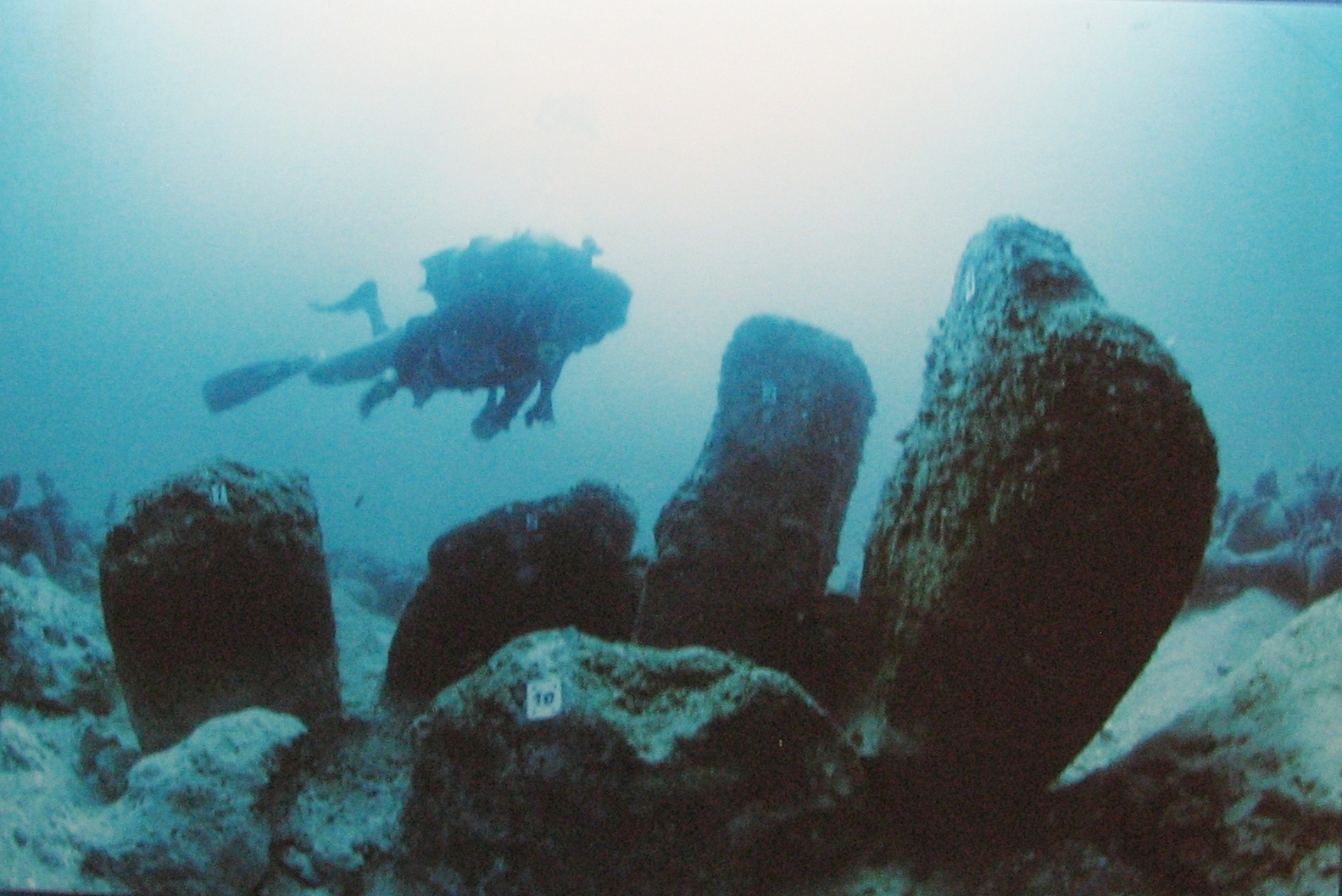
In 2008, DNA analysis of a woman and infant buried at the site identified the earliest confirmed cases of human tuberculosis, showing the disease predates the domestication of cattle-borne strains. The megalithic semicircle, with its cupmarked stones arranged around a former spring, is read as a water-related ritual installation — a reminder that monumental stone arrangements were within the capability of small Neolithic fishing-farming communities thousands of years before Stonehenge.
On the village's end, the mainstream position — argued in detail by Galili and colleagues — is unglamorous but well-evidenced: post-glacial sea-level rise gradually salinised the wells and drowned the coastal plain, and the inhabitants moved on in an orderly fashion. Fragile in-place remains, stored fish, the absence of crushed skeletons, damaged structures or characteristic tsunami deposits all argue against sudden catastrophe.
- Consistent radiocarbon dates of c. 6900–6300 BC from waterlogged organic material across the site
- Stone-lined wells — among the world's oldest — whose fill records gradual salinisation, not sudden disaster
- Auditory exostoses in male skeletons proving habitual cold-water diving and a genuine maritime economy
- 2008 DNA identification of tuberculosis in a buried woman and infant — the earliest confirmed cases known
- Galili's field tests finding none of the boulder beds, damage or trauma a mega-tsunami should have left