What archaeology says
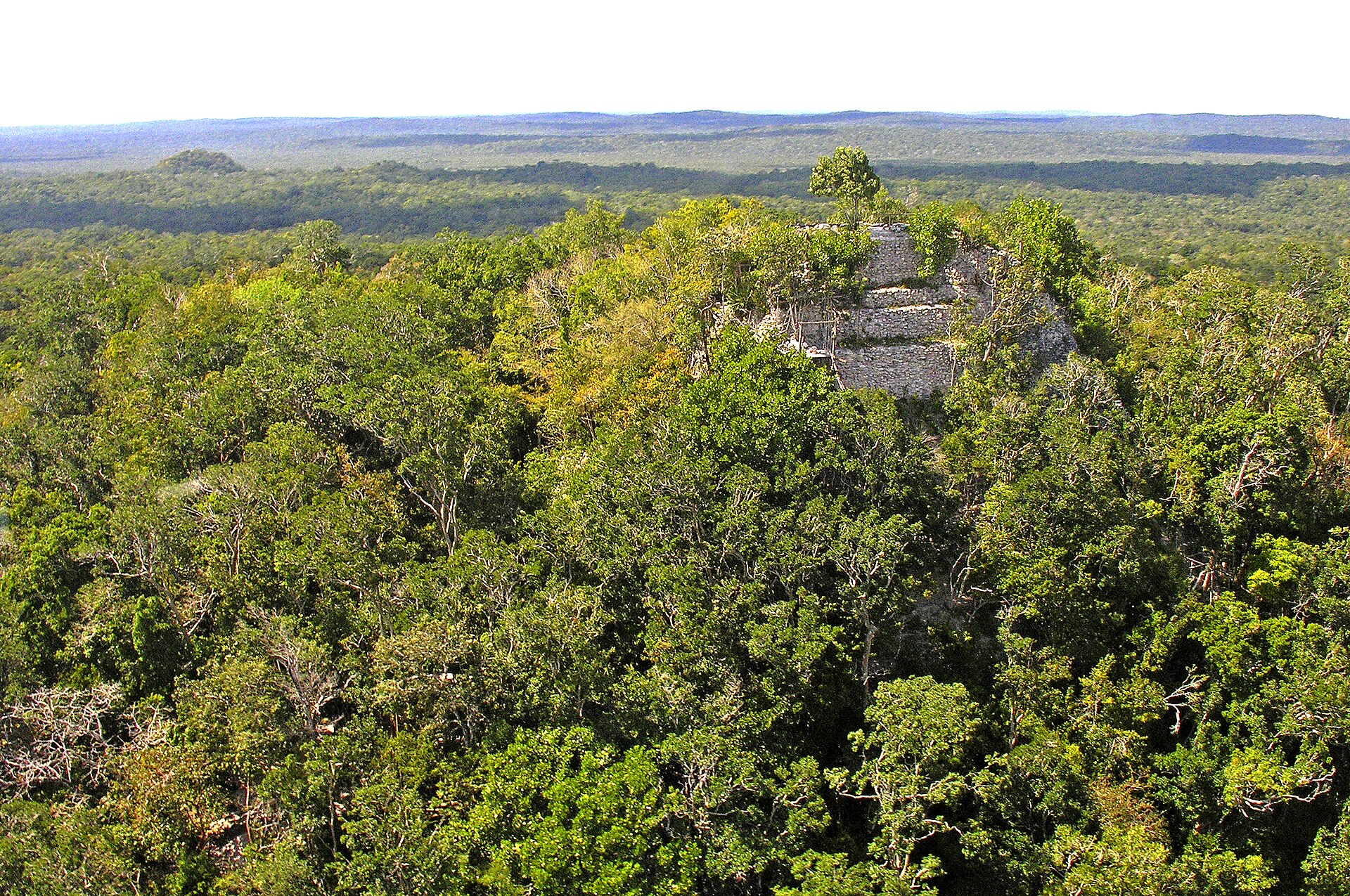
El Mirador was noted from the air in the 1930s and first mapped by Ian Graham in 1962, with excavations by Bruce Dahlin and Ray Matheny in the late 1970s; but the site is above all associated with Richard Hansen, who has directed the Mirador Basin Project since 1987. The results overturned the old assumption that the Preclassic Maya were simple villagers. Ceramics, stratigraphy and hundreds of radiocarbon dates show monumental construction in the basin beginning by about 1000–800 BC at sites like Nakbé, with El Mirador exploding in scale in the Late Preclassic. The city built triadic pyramids (La Danta, El Tigre, Los Monos), immense causeways, terraced agricultural systems and sophisticated water management — all before the invention of the Classic-period dynastic stela cult. A celebrated stucco frieze found in 2009 depicts a scene widely interpreted as an early version of the Hero Twins story from the Popol Vuh, suggesting deep roots for Maya mythology.
Between 2015 and 2022 an airborne LiDAR survey of more than 2,100 square kilometres of the Mirador–Calakmul basin — among the largest such surveys ever flown in the Maya lowlands — revealed nearly a thousand settlements interlinked by over 170 kilometres of raised causeways, which Hansen's team describe as the western hemisphere's first freeway system, implying regional political integration on a startling scale. Around AD 150 the great cities of the basin were abandoned; Hansen argues that deforestation driven by the industrial burning of limestone for lime plaster, together with erosion that choked the swamp-margin farming systems, brought ecological collapse — a sobering precursor to the better-known Classic Maya collapse 700 years later. Modest reoccupation followed centuries after, but the jungle took the city back.
- Hundreds of radiocarbon dates and ceramic sequences placing the city's rise firmly in the Middle–Late Preclassic
- LiDAR mapping (2015–2022) of c. 1,000 settlements and 170+ km of causeways showing organic regional development
- The 2009 stucco frieze suggesting Popol Vuh mythology already established by c. 200 BC
- Traceable local evolution of architecture from Nakbé's early platforms to La Danta's triadic summit
- Geoarchaeological evidence linking the c. AD 150 abandonment to deforestation and agricultural collapse