What archaeology says
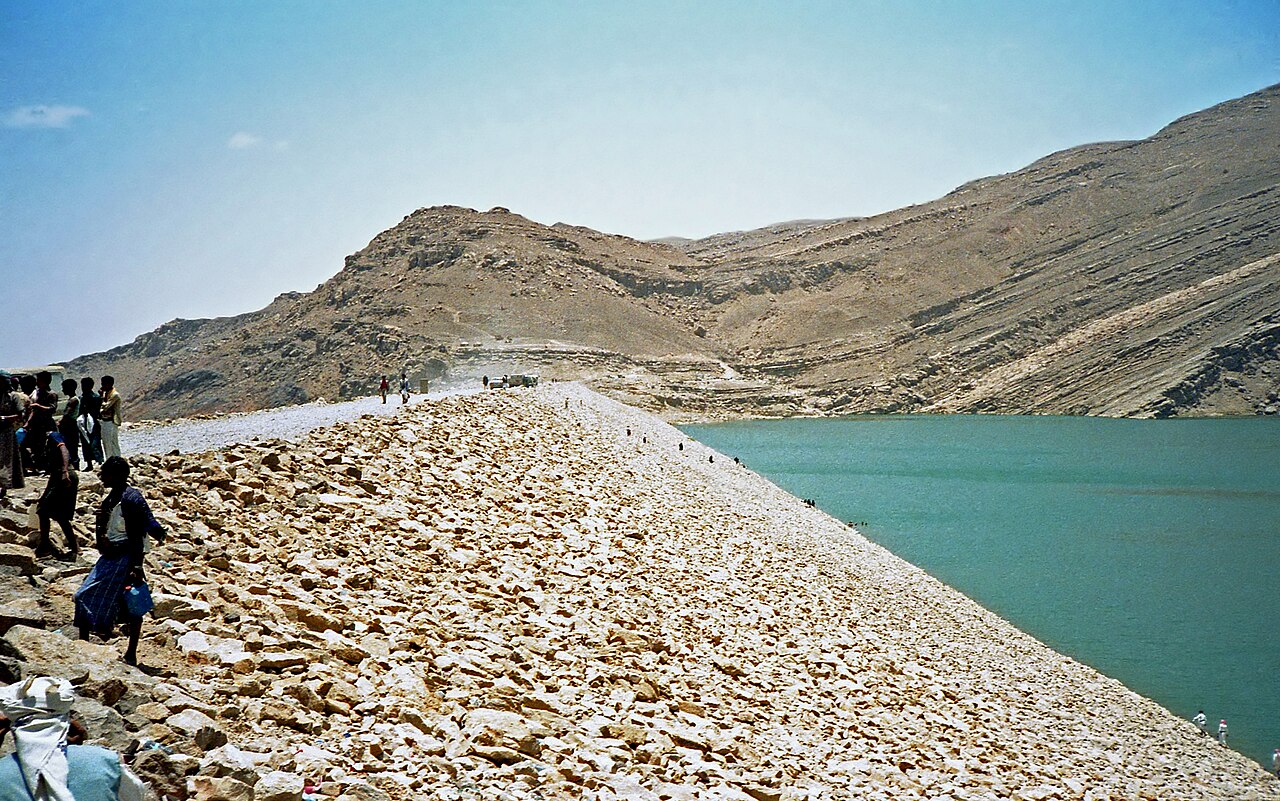
Historians agree that Saba was a real and formidable kingdom. Sabaean inscriptions, monumental temples such as the Awam sanctuary (Mahram Bilqis) and the Bar'an temple, and the engineering of the Great Dam attest to a wealthy state that grew rich on the incense route, exporting frankincense and myrrh towards the Mediterranean. Excavations by Wendell Phillips's American Foundation for the Study of Man in 1951-52, and later work led by William Glanzman and German teams, have documented occupation at Ma'rib from at least the early first millennium BC.
The difficulty is chronological. The developed Sabaean state that archaeology reveals flourishes mainly from the eighth century BC onwards — roughly two centuries after the traditional date of Solomon, around 950 BC. Sabaean records mention early rulers (mukarribs) such as Yitha'amar and Karib'il, names that plausibly lie behind Assyrian references to Sabaean tribute, but no queen of Saba appears in the South Arabian record for the relevant period, although Assyrian texts do attest queens among the North Arabian tribes.
Most scholars therefore read the Queen of Sheba story as a literary tradition that encodes something real — early trade contact between South Arabia and the Levant along the incense route — personified in a single dramatic royal visit. The Ethiopian Kebra Nagast, which makes the queen (Makeda) the mother of Menelik I and ancestress of the Solomonic dynasty, is viewed as a 14th-century AD national epic built on the older tale rather than an independent historical source.
- Sabaean inscriptions, coinage and monumental architecture at Ma'rib confirm a powerful historical kingdom of Saba from at least the 8th century BC.
- The Great Dam of Ma'rib is archaeologically attested, with construction phases spanning centuries and repair inscriptions by later Himyarite kings, including Abraha in the 6th century AD.
- Assyrian records of the 8th-7th centuries BC mention Sabaean rulers and tribute, anchoring Saba in datable Near Eastern history.
- No South Arabian inscription names a queen of Saba, and the developed kingdom postdates the traditional era of Solomon by roughly two centuries.
- The Quran (Surah Saba) remembers the dam's breach — the Flood of al-Arim — matching the final collapse around AD 570 attested archaeologically.
- The Kebra Nagast is a medieval Ethiopian composition, far too late to serve as an independent witness to 10th-century BC events.