What archaeology says
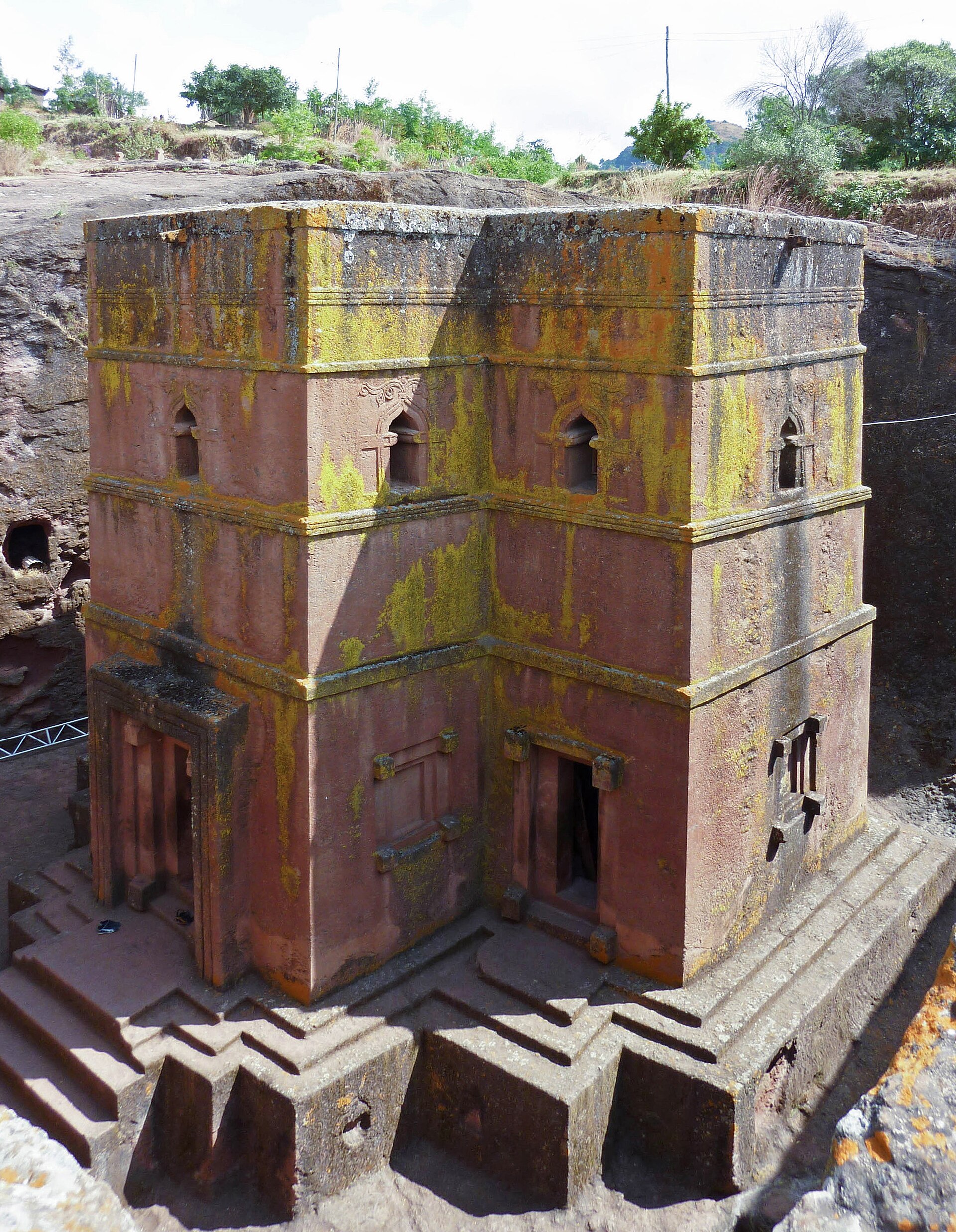
Ethiopian royal tradition and hagiography attribute the complex to King Gebre Mesqel Lalibela of the Zagwe dynasty (r. c. 1181–1221), who is said to have created a substitute Jerusalem for pilgrims after Saladin's capture of the real one in 1187. Historians accept a strong Zagwe connection — land grants and church documents tie the king to the site — but modern archaeology has complicated the picture of a single heroic building campaign. David Phillipson of Cambridge proposed that several structures, notably Bete Merkorios and Bete Gabriel-Rufael, began life centuries earlier — perhaps in the 7th to 8th centuries AD — as fortifications or elite residences of the late Aksumite period, and were only later converted into churches, with the whole complex developing in four or five phases.
Since 2009, and intensively through the 2019–2025 'Sustainable Lalibela' programme, a French-Ethiopian mission led by Marie-Laure Derat and Claire Bosc-Tiessé (CNRS, with the French Centre for Ethiopian Studies and Ethiopia's heritage authority ARCCH) has excavated around the churches for the first time. Their work has revealed that a powerful elite occupied and engineered the hill by around the 10th century, before the traditional construction date, and that the churches were repeatedly recut, enlarged and remodelled over centuries — a long, layered history rather than a single reign's miracle. The team also documented the enormous spoil heaps of quarried rock, a straightforwardly human signature of the work.
None of this diminishes the achievement: carving basilicas downward means every mistake is permanent, and the masons had to plan windows, arches, vaults and drainage before the first cut. The consensus view is that Lalibela is the culmination of an indigenous Ethiopian rock-cutting tradition, visible earlier in the hundreds of rock-hewn churches of Tigray, not an import.
- Land grants and church documents linking the Zagwe king Gebre Mesqel Lalibela to the site
- Phillipson's stratigraphic sequencing showing four to five carving phases, the earliest possibly late Aksumite (7th–8th century)
- French-Ethiopian mission evidence (Derat and Bosc-Tiessé) of elite occupation and engineering around the 10th century
- Aksumite architectural vocabulary — blind windows, monkey-head beams — copied from earlier Ethiopian buildings
- A regional tradition of hundreds of rock-hewn churches in Tigray demonstrating the local skill base