What archaeology says
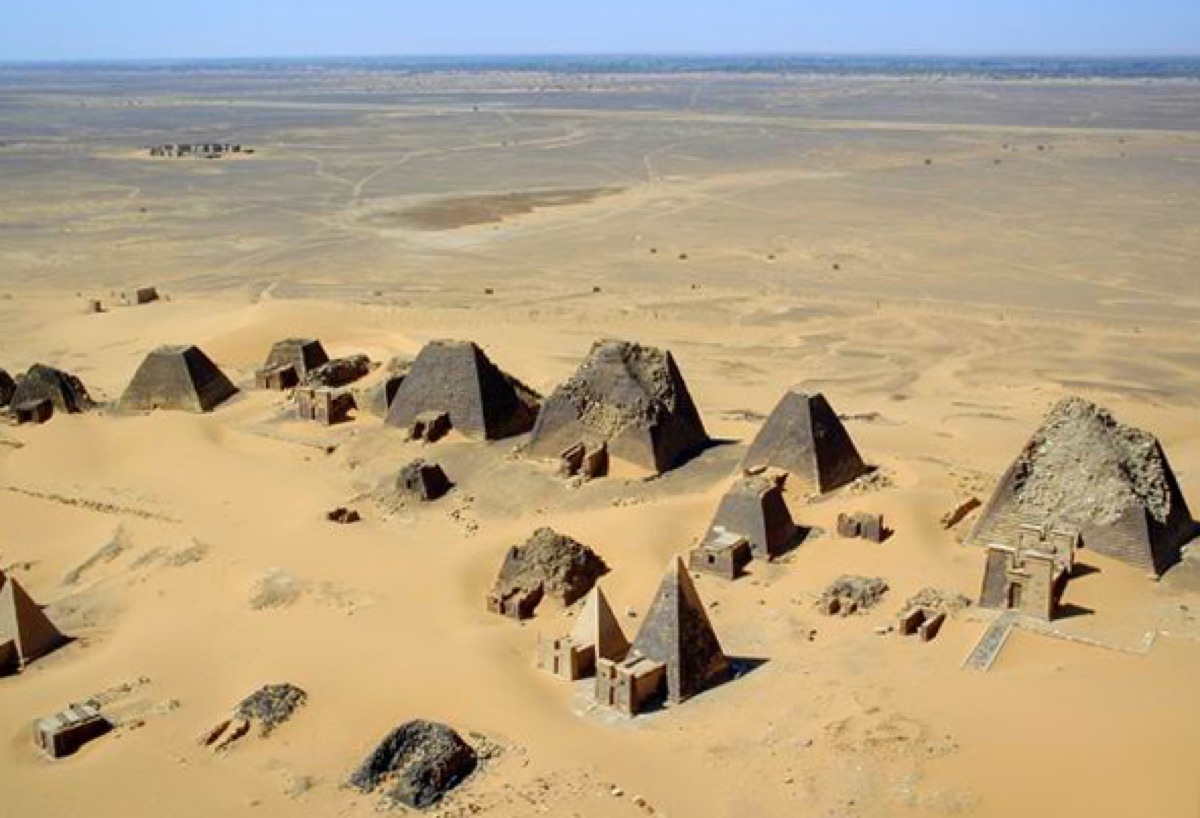
Archaeologists and historians place the Meroë pyramids firmly within the Kingdom of Kush, whose rulers — after conquering and ruling Egypt itself as the 25th 'Black Pharaoh' Dynasty in the 8th–7th centuries BC — adopted and adapted pyramid burial. The sequence is well documented: royal burials moved from El-Kurru and Nuri (where the pyramid of Taharqa still stands) south to Meroë around 300 BC, and building continued until the kingdom's decline around AD 350, roughly when the Ethiopian kingdom of Aksum raided the city. Dating rests on inscriptions naming known rulers (including powerful ruling queens, the Kandakes), imported datable goods from Ptolemaic Egypt and Rome, radiocarbon evidence and stratigraphy.
The pyramids' burial chambers lie beneath, not inside, the monuments, reached by stairways — a key architectural difference from Old Kingdom Egypt. Meroë itself was a major iron-working centre, dubbed by some archaeologists 'the Birmingham of ancient Africa', with slag heaps and furnaces attesting industrial-scale production. The Meroitic language, written in its own alphabetic script from around 300 BC, can be read phonetically but remains largely untranslated — one of the last undeciphered scripts of the ancient world.
Scholars emphasise Kush was not a copy of Egypt but a distinct African civilisation that selectively borrowed and transformed Egyptian forms, worshipping its own gods (like the lion-god Apedemak) alongside Egyptian ones.
- Inscriptions naming known Kushite kings and queens in chapels and chambers
- A continuous, excavated royal cemetery sequence from El-Kurru and Nuri to Meroë
- Datable Ptolemaic and Roman imports in tombs
- Kushite rule of Egypt as the 25th Dynasty, documented in Egyptian and Assyrian records
- Iron-smelting slag heaps and furnaces dating Meroë's industrial economy