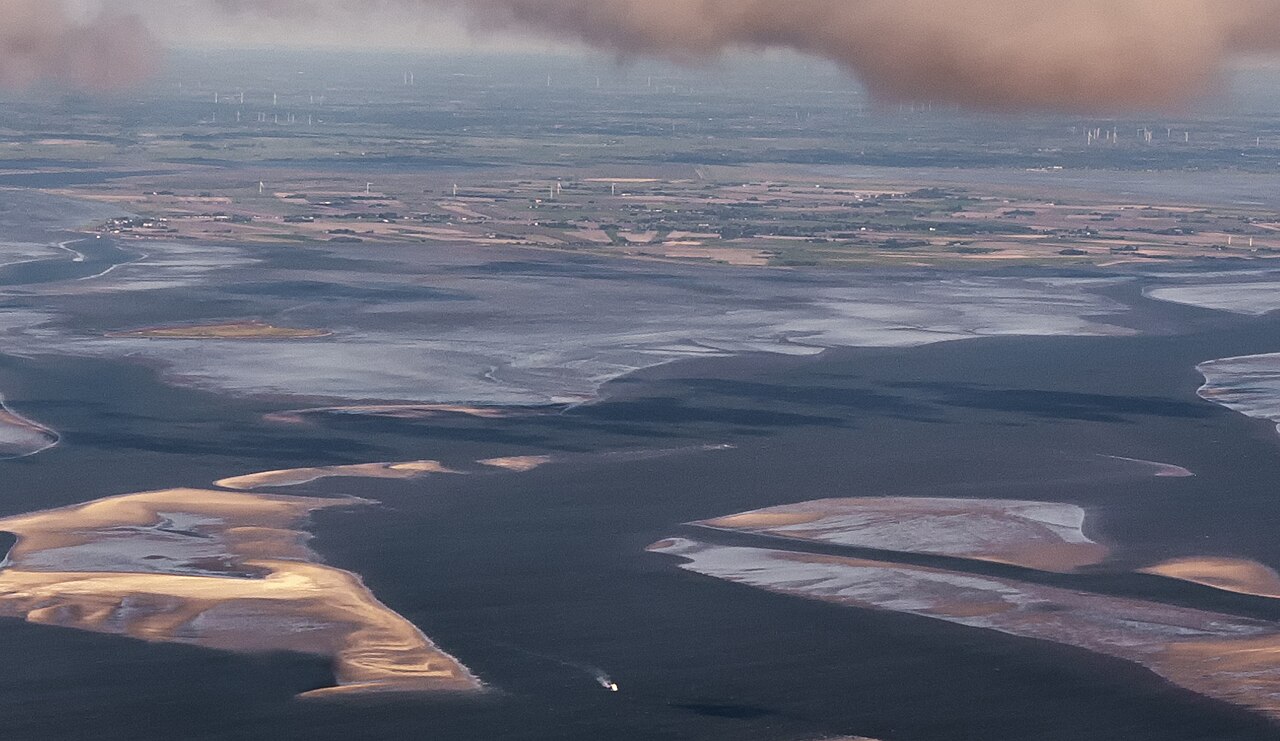
Lost Worlds · Wadden Sea mudflats near Hallig Suedfall, North Frisia, Germany

Rungholt

The rich Frisian trading town the sea took in a single night in 1362 — found again in 2023

Mainstream: Flourishing trading settlement drowned 16 January 1362 in the Grote Mandrenke storm surgeAlternative: The 'Atlantis of the North Sea' — a city cursed for its sins, its bells still ringing beneath the tide54.47°, 8.68°

At a glance

Rungholt
Photo: Ralf Roletschek · CC BY-SA 3.0

Rungholt was a prosperous trading settlement on the island of Strand in North Frisia, grown wealthy on agriculture and trade across the Wadden Sea. On the night of 15-16 January 1362, the storm surge known as the Grote Mandrenke ('great drowning of men') or Saint Marcellus flood overwhelmed the dikes, killed thousands along the coast, and erased Rungholt so completely that later generations doubted it had ever existed. Legend filled the gap: a city drowned for its wickedness, whose church bells ring under the sea. Then, in May 2023, researchers from Kiel and Mainz universities, the ZBSA and the Schleswig-Holstein state archaeology department announced they had mapped a two-kilometre chain of medieval dwelling mounds near Hallig Suedfall — including the unmistakable 40-by-15-metre foundations of Rungholt's great church.

See it on the globe →
The mainstream view

What archaeology says

Historians long treated Rungholt with caution because the legend so outgrew the evidence, but documentary traces — including a 1345 trade agreement with Hamburg mentioning the settlement — showed a real place. The 1362 Grote Mandrenke is one of the best-attested natural disasters of medieval Europe, a storm surge that permanently redrew the North Sea coast, shattered the island of Strand and drowned dozens of parishes. Rungholt's destruction fits a well-understood pattern: intensive medieval peat cutting and drainage had lowered the land surface behind the dikes, leaving the cultivated marsh fatally vulnerable when the sea broke through.

The first physical evidence came in the 1920s and 1930s, when the tides scouring the mudflats near Hallig Suedfall exposed remains of dikes, wells and sluices, doggedly documented by the amateur researcher Andreas Busch. The transformative work came in the 2020s: a joint team from Kiel University, Johannes Gutenberg University Mainz, the Centre for Baltic and Scandinavian Archaeology (ZBSA) and the State Archaeology Department of Schleswig-Holstein applied magnetic gradiometry, electromagnetic induction and seismic survey to more than ten square kilometres of tidal flats.

Their published results catalogue 54 terps (dwelling mounds), systematic drainage ditches, a sea dike with a tidal-gate harbour and two smaller church sites — and, announced in May 2023, a newly found two-kilometre terp chain with foundations of a large church, roughly 40 by 15 metres. Geophysicist Dr Dennis Wilken (Kiel) led the prospection work, and archaeologist Dr Ruth Blankenfeldt (ZBSA) noted that a church of this size implies a parish of superior rank — very plausibly the centre of Rungholt itself. The team warns the eroding mudflats are destroying the remains even as they are mapped.

Key evidence cited
  • A trade document of 1345 between Rungholt merchants and Hamburg attests the settlement's existence and commercial importance before the flood
  • The Grote Mandrenke storm surge of January 1362 is documented across northern Europe, with chronicle reports of catastrophic coastal losses
  • Andreas Busch's observations from the 1920s-30s recorded dike lines, wells and sluice remains exposed in the mudflats near Hallig Suedfall
  • Geophysical survey of over ten square kilometres has mapped 54 terps, drainage systems, a sea dike and a tidal-gate harbour
  • The May 2023 announcement by Kiel University, JGU Mainz, ZBSA and the Schleswig-Holstein state archaeologists reported church foundations of about 40 by 15 metres on a newly found terp chain
  • Medieval finds recovered from the flats — ceramics, metalwork — are consistent with a prosperous 14th-century Frisian trading community
The alternative view

What the skeptics propose

Rungholt is the North Sea's great morality tale. The dominant legend, elaborated over centuries, holds that the townsfolk were rich, godless and cruel — in the most famous version, drunken men forced a priest to give the last rites to a pig — and that the sea was sent to punish them. Sailors crossing the flats claimed to hear Rungholt's church bells tolling beneath the water, and it was said the town could be glimpsed shimmering below on clear days. Detlev von Liliencron's celebrated 1882 poem Trutz, Blanke Hans — 'today I travelled over Rungholt; the town went down six hundred years ago' — fixed the drowned city in German culture as firmly as Atlantis in Greek.

The legend also inflated Rungholt into a vast wealthy city with tens of thousands of inhabitants — the 'Atlantis of the North'. For centuries sceptical historians suspected the whole story was myth, which makes Rungholt a favourite case for alternative writers arguing that dismissed legends of drowned lands deserve a second look: here, the sceptics were wrong and the folk memory was right. A real, prosperous town did drown in a single night, exactly as tradition claimed.

The balanced reading is that the legend was right about the event but wrong about the scale and the theology. The archaeology reveals a substantial parish trading settlement of perhaps a couple of thousand people, not a wicked metropolis — and its destruction owed less to divine judgement than to the very human practice of cutting peat and draining marsh until the land sank below the level of the winter sea. In that sense Rungholt's true lesson is uncomfortably modern.

Key evidence cited
  • The centuries-old legend that Rungholt drowned as divine punishment for its inhabitants' wickedness, including the tale of the mock last rites given to a pig
  • The persistent 'sunken bells' tradition — sailors and wanderers on the flats reporting church bells tolling beneath the sea
  • Folk claims that the drowned town can sometimes be seen beneath clear water, and that it surfaces in mirages
  • Liliencron's poem Trutz, Blanke Hans, which canonised Rungholt as the proud rich city the sea destroyed
  • Older popular accounts inflating Rungholt into a city of tens of thousands, the 'Atlantis of the North Sea', far beyond what archaeology supports

Genuinely open questions

  1. Is the great church found in 2023 definitively Rungholt's parish church, and can excavated finds confirm the identification?
  2. How large was Rungholt's real population, and how far did the settlement extend beyond the mapped terp chains?
  3. How quickly are tidal erosion and shipworm destroying the remaining timber and sediment archives, and what can be recorded in time?
  4. How much did medieval peat extraction and drainage lower the land, and could the 1362 catastrophe have been averted with different land use?

Worth knowing

Rungholt vanished so thoroughly that historians doubted it existed — until the tides themselves began returning evidence; the 2023 church discovery was made under mudflats that tourists can walk across at low tide.