Lost Worlds · Kingston Harbour, Jamaica

Port Royal

A pirate boomtown that slid into the harbour in minutes, frozen at 11:43 am

Mainstream: Founded 1650s; two-thirds of the city sank in the earthquake of 7 June 1692Alternative: 'The wickedest city on Earth', swallowed by the sea as judgement — so preachers said within days17.94°, -76.84°

At a glance

Port Royal
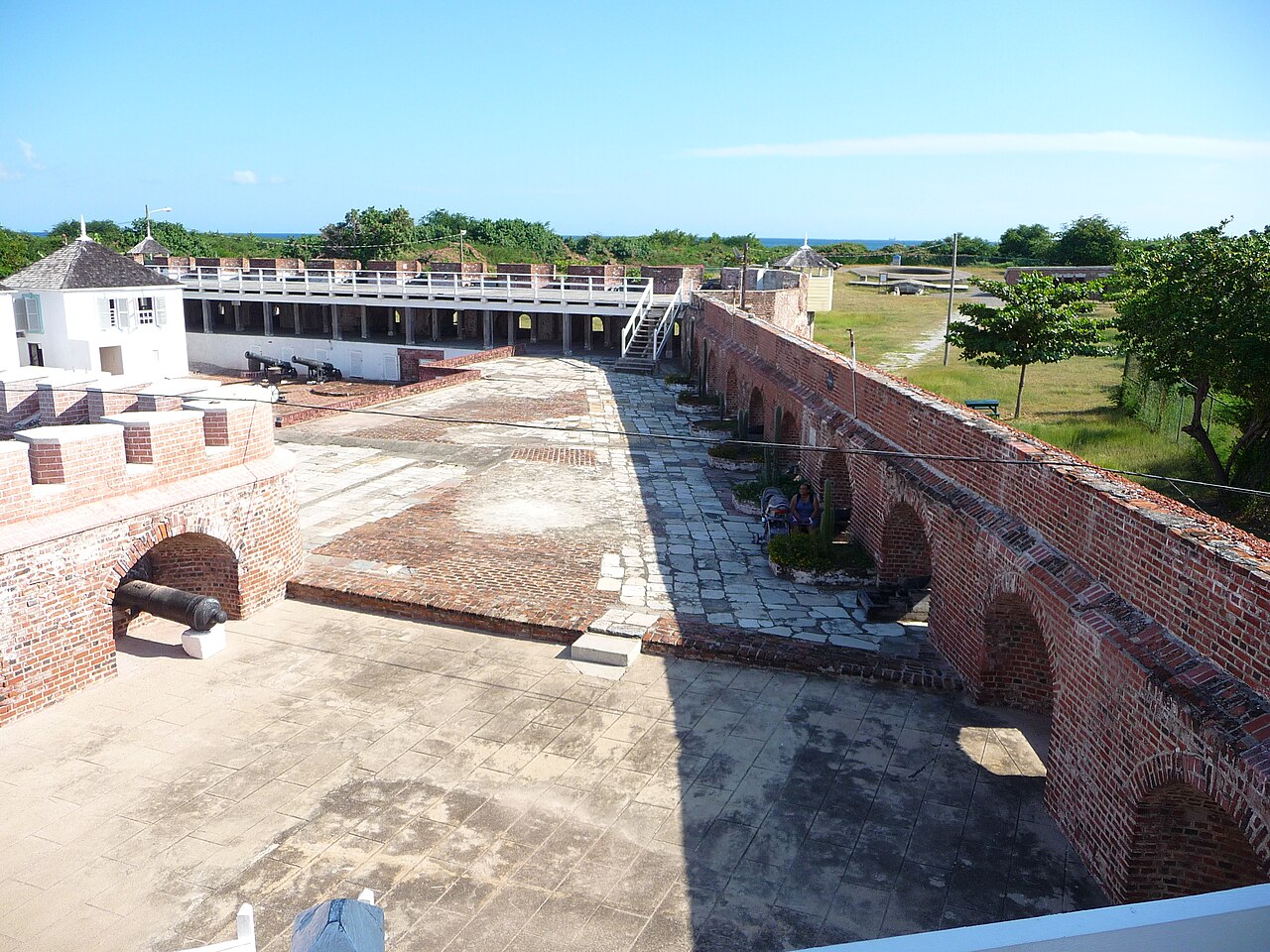
Photo: Raychristofer · CC BY-SA 4.0

In the late 17th century Port Royal, at the tip of the Palisadoes spit guarding Kingston Harbour, was the largest and richest English town in the Americas — a haven for privateers and pirates under men like Henry Morgan, notorious enough to be called 'the wickedest city on Earth'. On the morning of 7 June 1692 a violent earthquake liquefied the sandy spit; about two-thirds of the town, some 33 acres, slid beneath the harbour in minutes, and around 2,000 people died immediately with thousands more in the aftermath. Because whole streets sank rapidly and were sealed in sediment, submerged Port Royal became one of the most important underwater archaeological sites in the western hemisphere — a genuine 'catastrophic site', the drowned counterpart of Pompeii.

See it on the globe →
The mainstream view

What archaeology says

The destruction of Port Royal is documented by eyewitness letters, official reports and burial records: three shocks on the morning of 7 June 1692, followed by a tsunami-like surge in the harbour. The geology is well understood — the town was built on deep, water-saturated sand, which liquefied during the shaking, allowing buildings to slide and settle beneath the water rather than simply collapse. That mechanism, catastrophic but gentle by archaeological standards, preserved buildings, floors and household contents in association.

Underwater investigation began with Edwin Link's 1959 expedition, which famously recovered a brass pocket watch whose hands had stopped at 11:43 — matching the documented time of the earthquake. Robert Marx conducted salvage-style excavations in the 1960s. The definitive scientific campaign was led by Donny L. Hamilton of Texas A&M University and the Institute of Nautical Archaeology, in partnership with the Jamaica National Heritage Trust, from 1981 to 1990: a decade of controlled excavation focused on Lime Street, recording eight buildings with walls, floors and thousands of everyday artefacts — pewter, ceramics, tools, food remains — in situ.

Hamilton's team showed that the sunken town preserves a synchronic snapshot of English colonial life unmatched on land, because everything was in use at the moment of loss. Port Royal today is a quiet fishing town; the submerged city sits on Jamaica's UNESCO World Heritage tentative list and remains legally protected, with proposals for managed diving access periodically debated.

Key evidence cited
  • Eyewitness accounts and official correspondence from June 1692 describe the earthquake, the sinking of the streets and the death toll in detail
  • Edwin Link's 1959 expedition recovered a pocket watch stopped at 11:43, matching the recorded time of the disaster
  • Donny L. Hamilton's Texas A&M / Institute of Nautical Archaeology excavations (1981-1990) recorded eight buildings and thousands of in-situ artefacts along Lime Street
  • Sediment cores and geotechnical studies confirm liquefaction of the water-saturated sand spit as the sinking mechanism
  • Recovered artefacts — dated pewter, coins, ceramics, organic remains — cluster tightly at 1692, confirming a single catastrophic sealing event
  • Contemporary maps of the town align with the submerged building plots mapped by excavators
The alternative view

What the skeptics propose

Port Royal generated its own mythology instantly. Clergy across the English world proclaimed the earthquake God's judgement on a city of sin — a reading the survivors themselves half accepted, as a member of the town's council wrote of God's terrible hand. The parallel with Sodom, and later with Atlantis, made Port Royal the template of the drowned wicked city in the anglophone imagination, and pirate lore has kept it supernatural ever since: tales of sunken taverns still visible below the water, ghost bells, and treasure fleets' plunder strewn across the harbour floor.

Persistent popular legends claim that the drowned city's buildings still stand intact beneath the harbour, that vast pirate treasure remains unrecovered, and that on calm days the streets can be seen from a boat. The archaeology is more sober: most structures collapsed or were salvaged in the decades after 1692, and the preserved remains lie under harbour sediment in poor visibility, not gleaming in blue water.

For the sunken-cities debate, Port Royal is a keystone the way Shi Cheng is: an uncontested drowning with an exact date and time. It demonstrates that liquefaction can sink whole city quarters nearly intact within minutes — a mechanism alternative writers legitimately cite when arguing that coastal settlements elsewhere could have been lost suddenly rather than gradually. It equally demonstrates that even a documented, shallow, recent sunken city is hard to find, harder to excavate, and invisible from the surface — a caution against expecting dramatic ruins wherever legends place them.

Key evidence cited
  • Sermons and pamphlets from 1692 onward interpreting the earthquake as divine judgement on 'the wickedest city on Earth'
  • Enduring legends of intact streets, taverns and church towers visible beneath the harbour on calm days
  • Tales of ghostly bells and drowned pirates that attached to the site within a generation of the disaster
  • Treasure-hunting lore claiming vast unrecovered pirate plunder from Morgan's raids lies in the sunken quarter
  • The city's use in popular books and documentaries as a real-world Atlantis — proof that a proud city can vanish beneath the sea in an afternoon

Genuinely open questions

  1. How much of the sunken town survives undisturbed beneath harbour sediment beyond the excavated Lime Street area?
  2. Can the site be opened to managed diving or in-situ museum access without compromising its preservation?
  3. What more can the organic remains — food, textiles, wood — reveal about daily life, diet and trade in the 17th-century Caribbean?
  4. How should Jamaica balance development of modern Port Royal and Kingston Harbour against protection of the submerged city?

Worth knowing

The brass pocket watch recovered in 1959 had stopped at 11:43 am — and X-ray examination even suggested the positions of its lost hands, fixing the moment the wickedest city on Earth went under.