Ancient Knowledge · Near Little River, Victoria, Australia

Wurdi Youang

An egg-shaped ring of basalt boulders that may make Aboriginal Australians the first astronomers

Mainstream: Pre-colonial; absolute age unknownAlternative: Possibly 11,000+ years old — potentially the world's oldest astronomical arrangement-37.88°, 144.45°

At a glance

Wurdi Youang
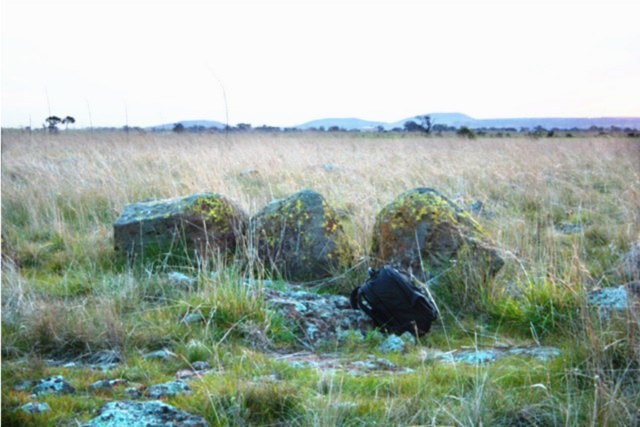
Photo: Ray Norris · CC BY-SA 2.5

On Wadawurrung (Wathaurong) country between Melbourne and Geelong lies Wurdi Youang: an egg-shaped arrangement of about 100 basalt stones some 50 metres across, its major axis lying east-west. Recorded by European surveyors in the twentieth century but built by Aboriginal people at an unknown earlier date, the site was surveyed in detail from 2008 by CSIRO astrophysicist Ray Norris with Wathaurong custodians. The stones at the western apex, and the straight sides of the ring itself, indicate the setting sun at the solstices and equinoxes — raising the possibility that a continuous astronomical tradition on this continent long pre-dates the megaliths of Europe and Egypt.

See it on the globe →
The mainstream view

What archaeology says

Norris's survey, published with Duane Hamacher and colleagues, found two independent sets of solar indicators. Three prominent outlying stones west of the ring's apex align with the setting sun at the two solstices and the equinox, and the straight north and south sides of the egg-shape independently point to the solstice sunsets. The team calculated that the double coincidence is unlikely to be chance, concluding the builders deliberately encoded the sun's seasonal turning points — knowledge consistent with the rich sky-lore documented in Aboriginal oral traditions across Australia.

The honest difficulty is dating. Stone arrangements resist absolute dating because placing a boulder leaves little datable material. Wurdi Youang is certainly pre-colonial — Wadawurrung tradition holds it ancient — and preliminary geomorphological work suggests the stones have not moved for a very long time, but no published radiometric date yet exists. Mainstream archaeology therefore records the site's age as unknown, plausibly anywhere from a few centuries to many millennia.

The site also feeds a wider re-evaluation of Aboriginal society: nearby traces of possible eel-farming channels and stone dwellings have been cited, notably by researcher Reg Abrahams working with Norris, as evidence of semi-sedentary communities — the kind of settled context in which a permanent solar marker makes practical sense for managing seasonal resources.

Key evidence cited
  • The 2008 survey found two independent sets of alignments to solstice and equinox sunsets, unlikely to co-occur by chance
  • The arrangement's east-west major axis matches the equinoctial line within a few degrees
  • About 100 basalt stones totalling an estimated 23 tonnes indicate a substantial, deliberate communal construction
  • Documented Aboriginal sky-lore across Australia demonstrates sophisticated positional astronomy in oral tradition
  • Nearby evidence discussed for aquaculture and stone structures supports a semi-sedentary society with seasonal scheduling needs
The alternative view

What the skeptics propose

The headline claim, aired by Norris himself as a hypothesis worth testing, is that if Wurdi Youang proves to be more than about 7,000 years old it would overtake Nabta Playa, Goseck and every other candidate to become the oldest astronomically aligned construction on Earth. Given that Aboriginal occupation of Victoria stretches back tens of thousands of years, and that some researchers associate the arrangement with land surfaces stable for over 11,000 years, enthusiasts have run far ahead of the evidence to declare Aboriginal Australians 'the world's first astronomers'.

A related, more defensible argument — advanced by Norris, Hamacher and Indigenous scholars — is that Aboriginal astronomical knowledge has been systematically underestimated: songlines encode star calendars, oral traditions describe variable stars and eclipses, and Wurdi Youang shows this knowledge was also committed to permanent stone. On this view the burden of proof should shift: the question is not whether Aboriginal people could build an observatory, but how many such sites were destroyed before anyone looked.

Sceptics within archaeology counsel caution on every front: the alignments are accurate only to within a few degrees; egg-shaped rings have many possible orientations; and without a date the world's-oldest framing is unfalsifiable. The Wathaurong custodians, for their part, emphasise that the site's cultural meaning does not depend on any European notion of an observatory, and have asked that its exact location not be publicised.

Key evidence cited
  • Aboriginal presence in the region for tens of thousands of years leaves open a construction date far older than any Old World monument
  • Preliminary geomorphology suggests long-term stability of the stones, cited in support of a date possibly exceeding 11,000 years
  • Wadawurrung tradition regards the arrangement as ancient beyond memory, with no record of its construction
  • Norris has argued that a pre-7,000 BC date would make Wurdi Youang the oldest known astronomical site on Earth
  • Advocates note colonial destruction of stone arrangements means Wurdi Youang may be the survivor of a once-widespread tradition

Genuinely open questions

  1. Can optically stimulated luminescence or soil dating finally establish when the stones were placed?
  2. Were the solar alignments practical calendar tools, ceremonial symbols, or both?
  3. How many comparable Aboriginal stone arrangements were destroyed by pastoral clearance before being recorded?
  4. Should Indigenous frameworks of sky knowledge reshape what counts as an 'observatory' at all?

Worth knowing

At the request of its Wathaurong custodians, Wurdi Youang's precise location is kept confidential — one of the few candidate 'world's oldest observatories' you cannot simply look up and visit.