What archaeology says
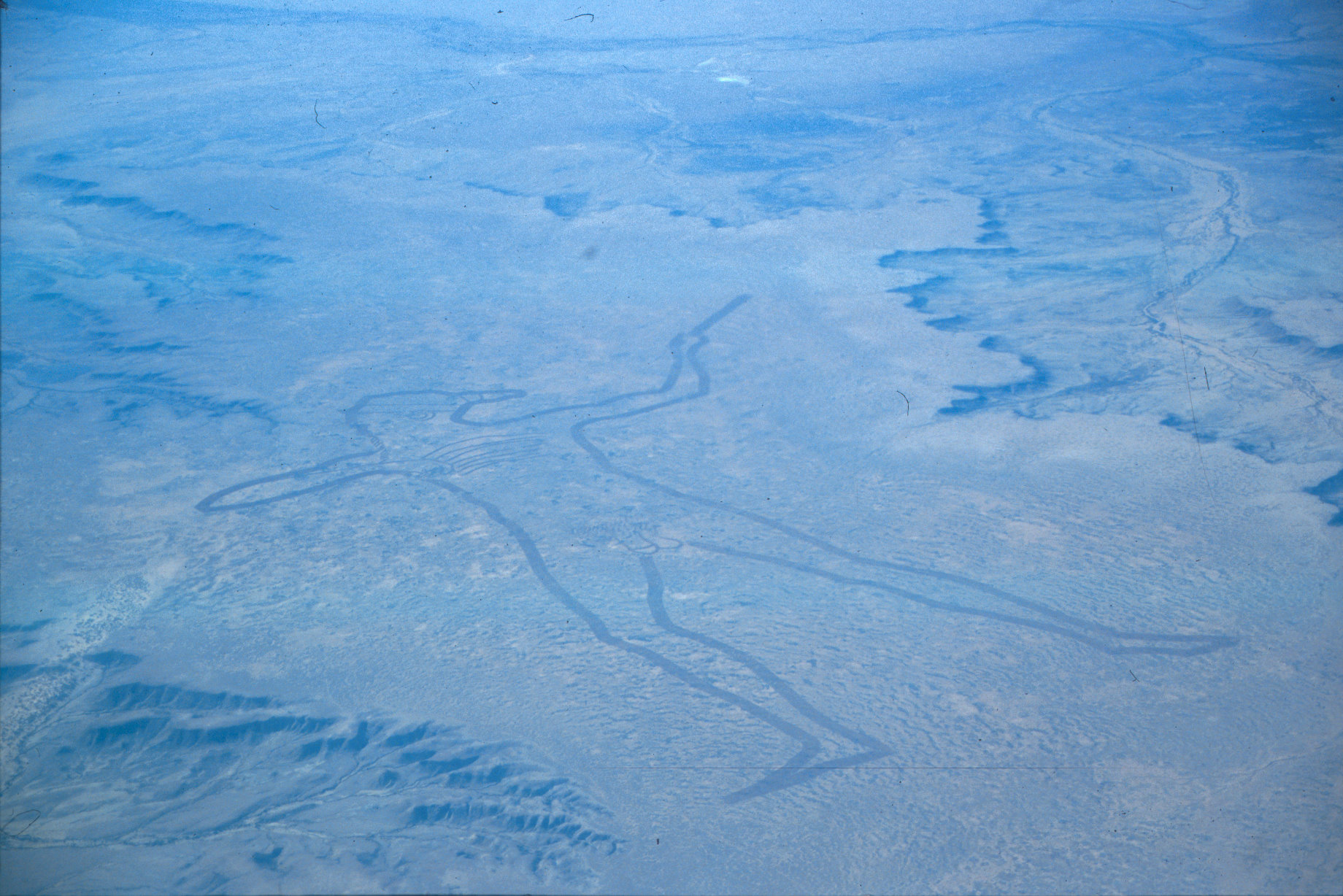
Investigators treat Marree Man as a modern work — a monumental piece of land art or an elaborate stunt — created by someone with professional surveying skills, GPS equipment and access to a grader or plough. The execution would have required weeks of planning: analysts calculated the figure was plotted from digitised coordinates, and small survey pegs and a buried plaque bearing a United States flag and Olympic rings were found at the site. A series of anonymous faxes sent to media outlets used American spellings and phrases, leading some to suspect US servicemen from bases in the region, though many consider the American flavour a deliberate false trail.
The most persistent suspect is the late Alice Springs artist Bardius Goldberg, who was known to be interested in creating a work visible from space, reportedly received an unexplained ten thousand dollars around the time, and refused to confirm or deny authorship before his death in 2002. Entrepreneur Dick Smith, who investigated the case with a team in 2016–2018 and offered a reward, concluded the authorship remains genuinely unsolved. The figure itself has faded and been restored: in August 2016 Marree locals used a grader guided by GPS to re-cut the lines, hoping to preserve the outback's strangest tourist drawcard.
- Survey pegs, plotted coordinates and plough lines showing professional GPS-guided execution
- A buried plaque with a US flag and anonymous faxes using American spellings, indicating a planned campaign
- Bardius Goldberg's known ambition, unexplained payment and refusal to deny authorship
- Dick Smith's 2016–2018 investigation documenting the evidence trail and concluding it was a modern, human work
- The 2016 GPS-guided re-grading, which reproduced the original lines with the same ordinary machinery