Ancient Knowledge · Chaco Canyon, New Mexico, USA

Sun Dagger of Fajada Butte

Three slabs of sandstone that stabbed a dagger of light through a spiral — until the stones moved

Mainstream: c. AD 950-1150 (Chacoan florescence)Alternative: A complete lunisolar codex in stone (Sofaer's full reading)36.02°, -107.91°

At a glance

Sun Dagger of Fajada Butte
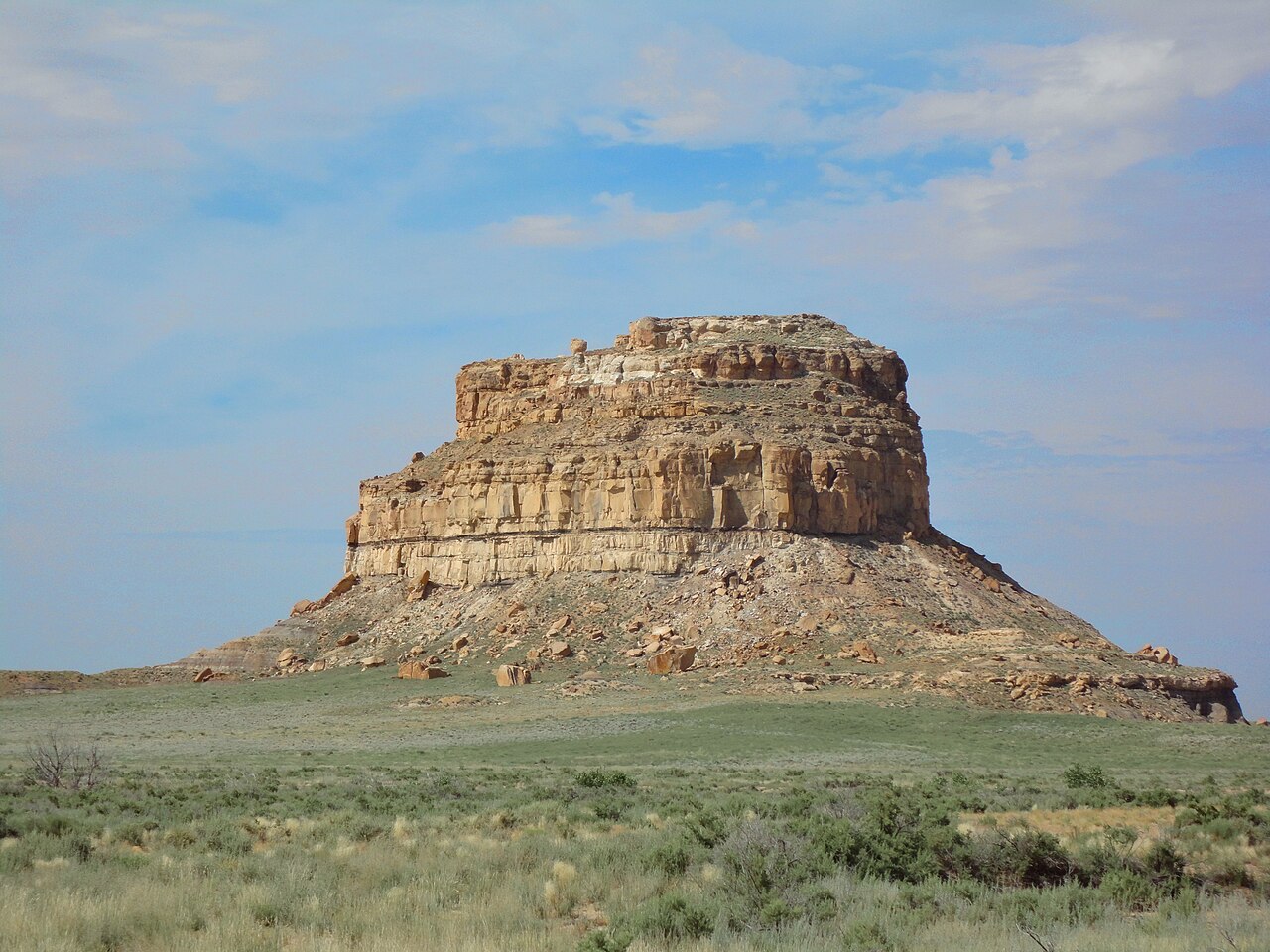
Photo: Rationalobserver · CC BY-SA 4.0

Near the summit of Fajada Butte, a 135-metre sandstone tower in Chaco Canyon, three great rock slabs lean against a cliff face carved with two spiral petroglyphs. In 1977 artist Anna Sofaer, recording rock art as a volunteer, saw a dagger of sunlight slice vertically through the heart of the larger spiral at midday near the summer solstice. Her Solstice Project went on to document light-and-shadow events marking both solstices, the equinoxes and, controversially, the 18.6-year lunar standstill cycle — making the Sun Dagger the most celebrated astronomical artefact of the Ancestral Puebloan world, and its 1989 shifting one of archaeology's saddest losses.

See it on the globe →
The mainstream view

What archaeology says

The Chacoan culture that flourished in the canyon between about AD 850 and 1150 undeniably built astronomy into its architecture: great houses such as Pueblo Bonito align to cardinal and solstitial directions, and the 'Great North Road' runs true north for kilometres. Within that context, most archaeologists accept the core of Sofaer's discovery — that at local solar noon in the days around the summer solstice, a discrete dagger of light descended through the centre of the spiral, while paired daggers framed it at the winter solstice and a smaller spiral marked the equinoxes. The slabs are natural rockfall, but the spirals were plainly pecked in relation to the light patterns they receive.

Scholars debate how the site was used. The ledge is cramped, perilous and invisible from below, suggesting a shrine for a few sun priests rather than a public calendar; Pueblo descendant communities describe sun-watching stations in similar terms. Astronomer Michael Zeilik argued the Sun Dagger was a sun shrine rather than a precise calendrical instrument, noting the light events unfold over many days.

In 1989 monitoring revealed the slabs had rotated and settled — most likely because visitor foot traffic destabilised the supporting sediment — and the daggers no longer strike the spirals as recorded. Access to Fajada Butte is now closed, and the original functioning of the site survives only in the Solstice Project's photographs and models.

Key evidence cited
  • Documented light daggers marked summer solstice, winter solstice and the equinoxes on the two spirals before 1989
  • Chacoan great house alignments and the Great North Road independently demonstrate sophisticated astronomical practice
  • The spirals are positioned precisely where the slab-filtered light falls, indicating deliberate placement
  • Pueblo oral traditions describe dedicated sun-watchers using horizon and shadow stations to set ceremonial calendars
  • Tree-ring dating anchors Chacoan florescence to AD 850-1150, bracketing the petroglyphs' likely creation
The alternative view

What the skeptics propose

Sofaer's full interpretation goes considerably further than the accepted solar events. She and collaborators, including Rolf Sinclair of the US National Science Foundation, argued that shadow edges cast across the larger spiral at moonrise mark both the minor and major lunar standstills, so that the nine-and-a-half-turn spiral encodes the count of years in the standstill cycle — a complete lunisolar codex compressed into a single petroglyph. She has further proposed that many Chacoan great houses are deliberately aligned to lunar standstill azimuths, a claim developed in the Solstice Project's surveys and films.

Critics, led in print by Zeilik, countered that the lunar shadow events are less distinct than the solar ones, that spiral petroglyphs are ubiquitous in the Southwest with no astronomical role, and that counting spiral turns is numerology unless independent evidence shows Chacoans tracked the 18.6-year cycle. Supporters reply that Chimney Rock in Colorado — where the moon rises between twin pinnacles only near major standstill, beside a Chacoan great house dated to standstill years — supplies exactly that independent evidence.

Beyond the scholarly dispute, the Sun Dagger has been absorbed into New Age literature as proof of lost cosmic knowledge, with claims of energy vortices and star-being contact that neither Sofaer nor her critics endorse. The genuine mystery — how a non-literate society encoded a two-decade lunar rhythm, if it did — needs no embellishment.

Key evidence cited
  • Solstice Project measurements recorded shadow edges tangent to the spiral's centre and edge at the minor and major lunar standstills
  • The larger spiral's turn count matches the years of the standstill half-cycle, argued to be deliberate notation
  • Sofaer's surveys report lunar standstill azimuths built into major Chacoan buildings, extending the pattern beyond one petroglyph
  • Chacoan-era construction at Chimney Rock clusters in tree-ring dates matching major standstill years
  • The three-slab arrangement shapes light into narrow blades with an economy that some argue exceeds lucky rockfall

Genuinely open questions

  1. Did the Chacoans genuinely track the 18.6-year lunar standstill cycle, or is the pattern modern pattern-seeking?
  2. Can the slabs ever be re-stabilised to restore the original light events without falsifying the site?
  3. Was the Sun Dagger an instrument for calendar-keeping or a shrine commemorating knowledge held elsewhere?
  4. How much other Chacoan astronomy was lost before anyone thought to look for light-and-shadow markers?

Worth knowing

Fajada Butte has been closed to all visitors since the slabs shifted — rangers concluded that the footsteps of people coming to admire the Sun Dagger were precisely what destroyed it.