What archaeology says
Historians see Cibola as a case study in how legend, rumour and wishful translation compound. The Antillia tradition primed Spanish minds to expect seven rich cities somewhere beyond the horizon; the survivors of the Narvaez disaster — Cabeza de Vaca, Estevanico and two companions, who walked across the continent between 1528 and 1536 — brought back genuine second-hand reports of large permanent towns to the north, which meant the pueblos. Estevanico, sent ahead in 1539, was killed at Hawikuh; Fray Marcos returned with his tale of a glittering city seen from a distance, which most historians judge to be at best a view of a pueblo's sunlit walls from many miles away and at worst an outright invention under pressure to deliver.
Coronado's reaction on arriving in July 1540 is the best evidence of the gap between report and reality: after the brief battle in which the Zunis were driven from Hawikuh, he wrote to the viceroy that Fray Marcos had not told the truth in a single thing he said. The seven cities of Cibola were the six or seven Zuni towns — real, populous farming communities, but built of stone and mud, not gold. The word Cibola itself likely derives from Shiwona, the Zuni name for their own land, and Spaniards later applied cibolo to the buffalo.
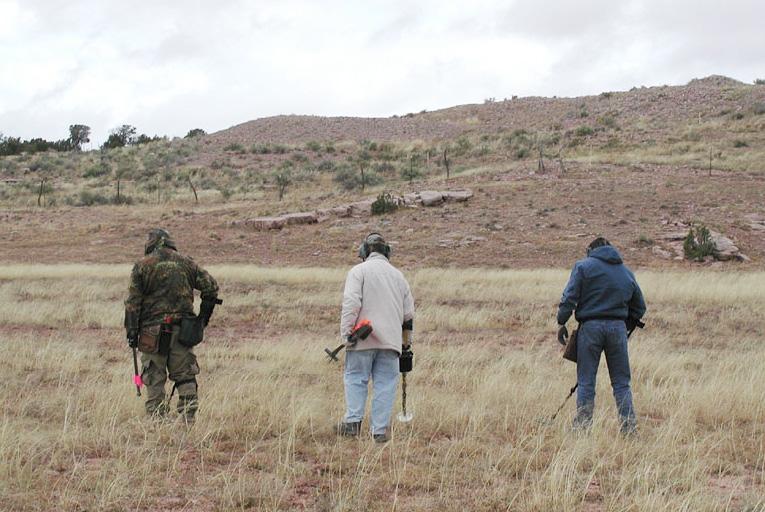
Archaeology has confirmed the identification. Hawikuh, excavated by Frederick Webb Hodge's Hendricks-Hodge expedition of 1917-1923, yielded a great ancestral Zuni pueblo occupied from around 1400, with the mission church of La Purisima Concepcion built after 1629 and the site abandoned following the Pueblo Revolt of 1680. The Zuni people, who never left the region, regard Hawikuh as one of their ancestral towns, and the ruins are a National Historic Landmark on the Zuni Reservation.
- Coronado's own 1540 letter to Viceroy Mendoza reports that Fray Marcos had not told the truth in anything, written from the captured pueblo itself.
- Excavation of Hawikuh (Hendricks-Hodge expedition, 1917-1923) revealed a large ancestral Zuni pueblo with Spanish mission remains — and no gold.
- The Cibola name plausibly derives from the Zuni term for their own land (Shiwona), showing the legend was pinned onto real Zuni towns.
- The Antillia/Seven Cities story is documented in Iberian tradition and on 15th-century charts long before any American discovery, revealing the legend's Old World template.
- Expedition chronicles (especially Castaneda's) describe the pueblos accurately as multi-storey stone and adobe towns, matching the archaeology.
- The follow-on phantom, Quivira, dissolved the same way in 1541: Coronado found grass-lodge Wichita villages in Kansas, and had his guide, the Turk, executed for the deception.