What archaeology says
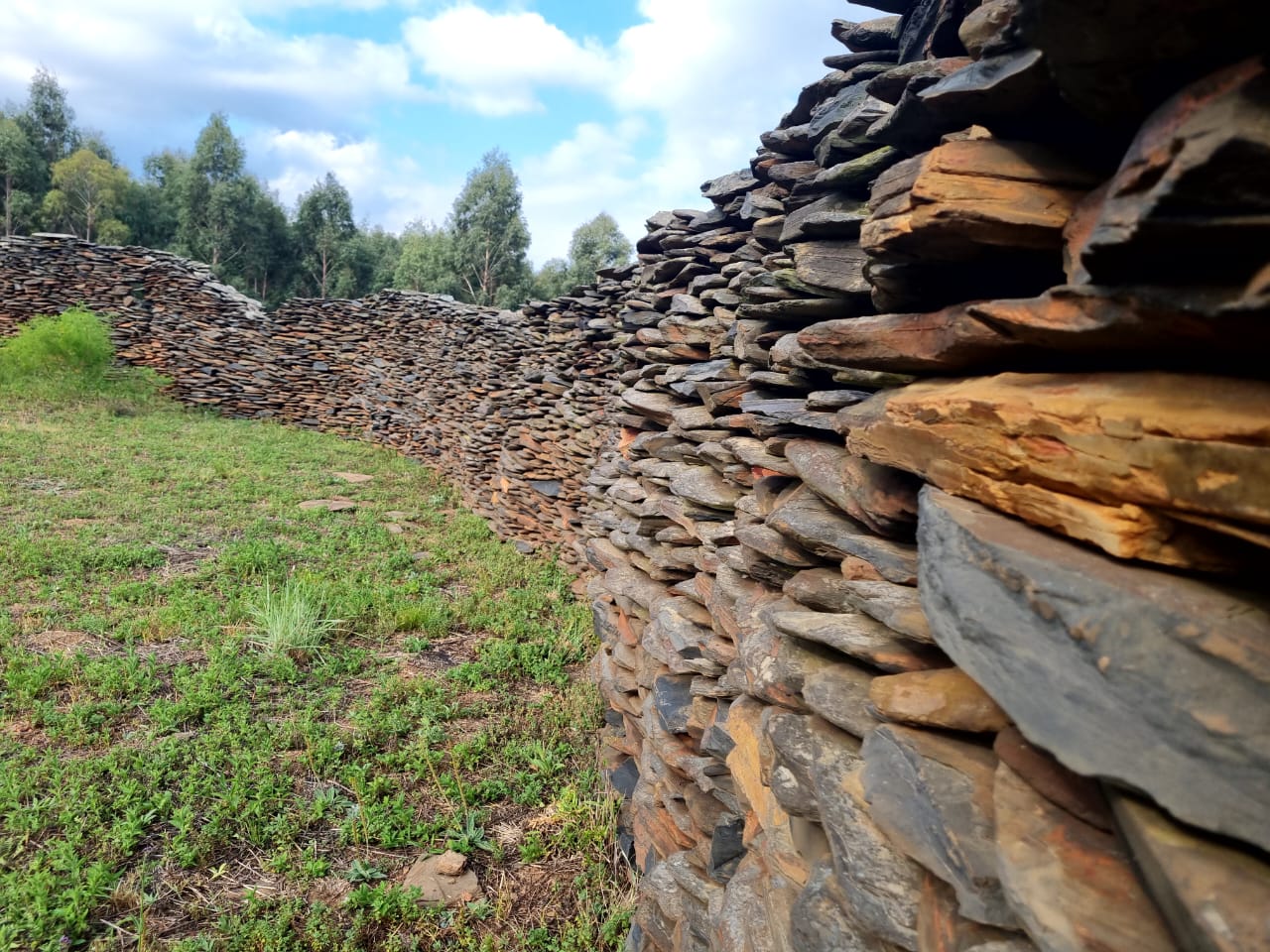
Archaeologists and historians — notably Peter Delius, Tim Maggs and Alex Schoeman, whose research is synthesised in the book Forgotten World — identify the stone-walled sites as the settlements of the Bokoni ('people of the Koni'), Sotho-Tswana-speaking farmers who flourished here from around the 16th century until the regional upheavals of the early 19th. The evidence is abundant and ordinary in the best sense: excavated homesteads yield pottery, iron tools, grindstones, cattle byres and datable hearths; optically stimulated luminescence dates on terrace sediments confirm construction within the last few centuries; and oral histories and early colonial records describe Koni communities living in and building such settlements.
Far from primitive, Bokoni represents the only known 'island' of intensive terraced agriculture in South Africa. The stone-lined roads — walled so that cattle could be driven between homesteads without trampling crops — and kilometre upon kilometre of hillside terracing reveal sophisticated landscape engineering supporting a population estimated in the tens of thousands. Google Earth surveys and LiDAR-based machine-learning studies continue to map the enormous extent of the system.
The 'calendar' itself sits within this Bokoni landscape. Researchers regard the Blaauboschkraal monoliths as part of a Bokoni ceremonial or homestead complex — and note that some of the dramatic upright dolerite blocks may simply be natural outcrop incorporated into the walling. The site is a declared provincial heritage site under South African law, protected as part of the Bokoni cultural landscape.
- Optically stimulated luminescence dates on Bokoni terraces and homesteads within the last few centuries
- Excavated pottery, iron tools, grindstones and cattle byres typical of Sotho-Tswana farming culture
- Oral histories and early written records identifying the Koni people as the builders
- The integrated landscape of terraces, walled roads and homesteads showing a coherent agricultural system
- Absence of any artefacts, burials or occupation debris remotely approaching 75,000 years old