Origins of Civilisation · Cradle of Humankind, Gauteng, South Africa

Rising Star Cave

A small-brained human that may have buried its dead - if the peer reviewers can be convinced.

Mainstream: c. 335,000-241,000 years ago (age of Homo naledi remains)Alternative: Same age, but with contested burial and engraving behaviour-26.02°, 27.71°

At a glance

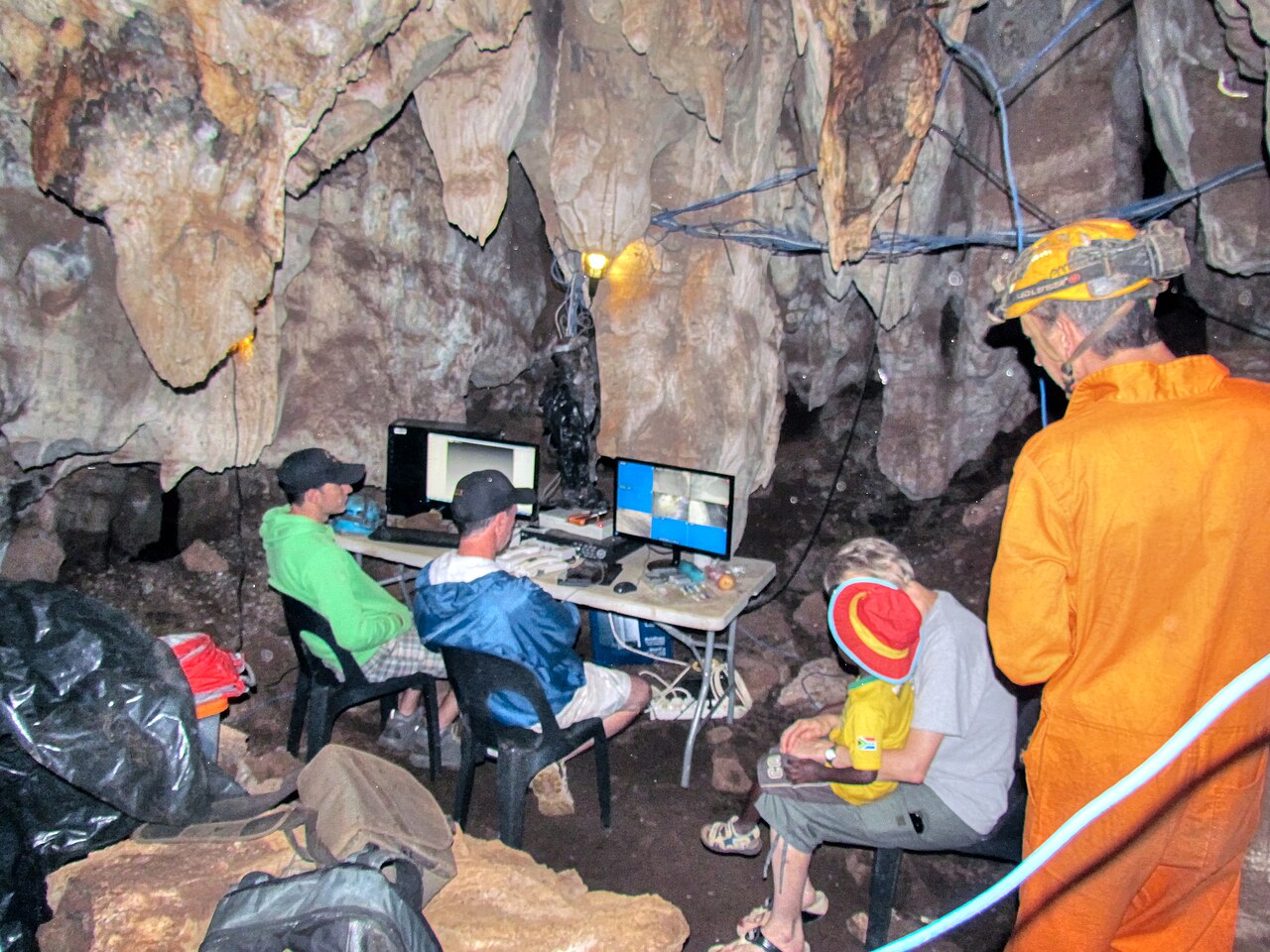
Rising Star Cave
Photo: Simon Fraser University · CC BY 2.0

Rising Star is a cave system in South Africa's Cradle of Humankind where, from 2013, Lee Berger's team recovered an enormous trove of fossils of a new species, Homo naledi - a small-brained hominin dated to roughly 335,000-241,000 years ago. In 2023 Berger's group made far bolder claims: that Homo naledi deliberately buried its dead deep in the cave and carved engravings on the walls, cognitively advanced behaviours never before credited to so small-brained a creature. Those claims triggered one of the most public peer-review fights in recent palaeoanthropology.

See it on the globe →
The mainstream view

What archaeology says

The existence of Homo naledi is broadly accepted. The Rising Star chambers yielded thousands of skeletal elements from many individuals, describing a genuinely mosaic hominin - some features primitive, some modern-like - with a brain roughly a third the size of ours, dated by multiple methods to the Middle Pleistocene. That such a small-brained species existed so recently, overlapping in time with early Homo sapiens elsewhere in Africa, is itself a significant finding.

The controversy is over behaviour. In 2023 Berger's team posted preprints, timed to a Netflix documentary and heavy press coverage, claiming deliberate burial and deliberate wall engravings. When the papers went through eLife's open peer-review model, the reviewers were sharply critical: they found the evidence for intentional burial inadequate and largely assumption-based, argued natural processes such as water action could account for the bone accumulations, and noted the engravings had not been directly dated or shown to be the work of naledi rather than later humans. A separate group of specialists published a formal rebuttal arguing there was no scientific evidence for advanced symbolic behaviour.

Berger's team revised and resubmitted; in the later review round the response was mixed, with some reviewers softening and others still unconvinced, particularly over how naledi could repeatedly reach so inaccessible a chamber. The mainstream position is that Homo naledi is real and important, but that the burial and engraving claims remain unproven and were announced with more publicity than the evidence justified.

Key evidence cited
  • Multiple dating methods place Homo naledi at roughly 335,000-241,000 years old.
  • Thousands of fossils document a real, mosaic-anatomy small-brained hominin.
  • eLife peer reviewers found the burial evidence inadequate and assumption-based.
  • Critics argue water action and natural processes could explain the bone accumulations.
  • The engravings have not been directly dated or securely attributed to naledi rather than later humans.
The alternative view

What the skeptics propose

Lee Berger and his collaborators, including Agustin Fuentes and John Hawks, argue that the deep chambers show genuine deliberate burial - bodies placed in dug depressions - and that associated engravings and a possible tool imply that meaning-making behaviour is not the exclusive preserve of large-brained humans. If correct, this would overturn the long-standing assumption that symbolic behaviour requires a big brain and would push complex mortuary practice back hundreds of thousands of years, into a non-sapiens species.

Berger has framed the resistance partly as institutional conservatism - a field reluctant to credit a small-brained hominin with behaviours it reserves for Homo sapiens and Neanderthals - and has leaned on public communication, documentaries and open science to make the case directly to a wide audience. Supporters see this as democratising a debate that would otherwise play out slowly in closed journals; critics see it as marketing running ahead of evidence.

The current standing, as of the mid-2020s, is unresolved and contested. The claims have not been accepted by the wider community, the peer reviews were harsh, and the revised papers have not settled the matter - but Berger's team continues to defend and develop the interpretation, and the question of whether Homo naledi buried its dead remains genuinely open.

Key evidence cited
  • Berger's team report bodies in apparent dug depressions, interpreted as deliberate burials.
  • Wall engravings and a possible associated tool are offered as evidence of symbolic behaviour.
  • Proponents argue meaning-making need not require a large brain.
  • The team revised and resubmitted, and some reviewers softened their objections.
  • Open science and documentaries brought the evidence directly to public scrutiny.

Genuinely open questions

  1. Are the bone concentrations deliberate burials or the result of natural sedimentary processes?
  2. Were the wall engravings made by Homo naledi, and can they be directly dated?
  3. How did naledi repeatedly reach the extremely inaccessible deep chambers?
  4. Does symbolic or mortuary behaviour genuinely require a large brain, or not?

Worth knowing

The original Rising Star excavation recruited six slender scientists - all women - through a Facebook advert, because the only route to the fossil chamber was through a vertical squeeze just 18 centimetres wide.