What archaeology says
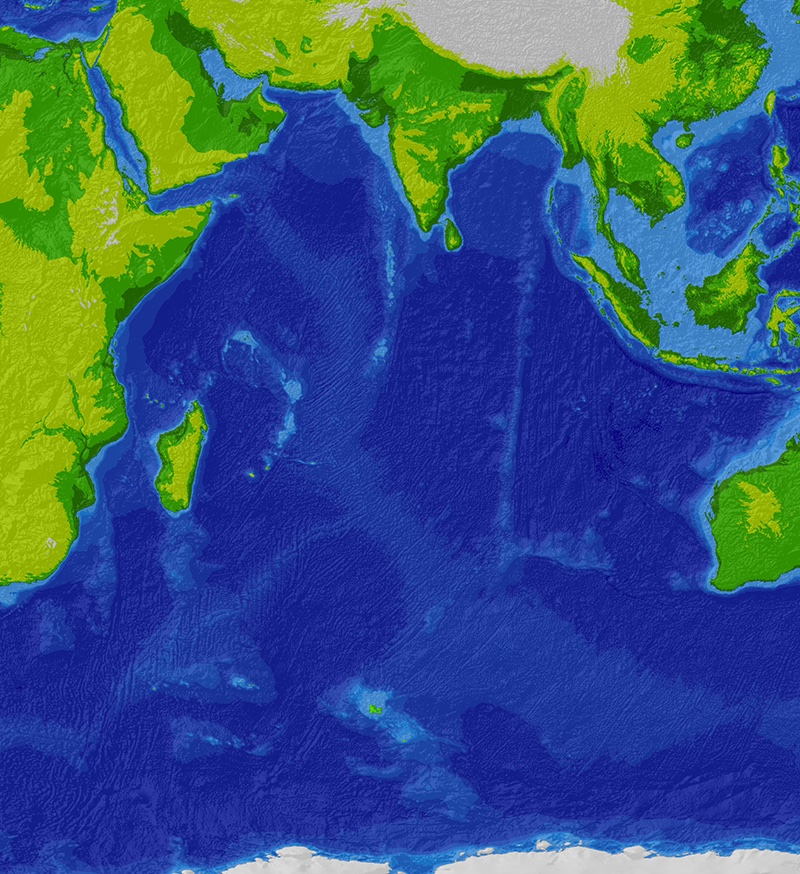
Impact specialists point out that Burckle Crater fails every test normally required to confirm an impact structure: no shocked quartz, no shatter cones, no melt sheet, no ejecta layer traced to it, no geophysical survey demonstrating a crater form, and consequently no listing in the Earth Impact Database. A depression on rough, tectonically complex seafloor near the Southwest Indian Ridge can be volcanic or tectonic; a Holocene age has never been established by dating of any sample. Nicholas Pinter and Scott Ishman put the general objection sharply in a 2008 GSA Today essay, 'Impacts, mega-tsunami, and other extraordinary claims': statistically, impacts of this size should occur only about once every couple of hundred thousand years, yet the Holocene Impact Working Group's claims would require them every few thousand — extraordinary claims resting on evidence that has simpler, quieter explanations.
The chevron dunes received a direct test. In 2009 Jody Bourgeois of the University of Washington and tsunami modeller Robert Weiss showed that the Madagascan chevrons align with the prevailing south-easterly winds rather than radiating from Burckle, that modelled megatsunami behave nothing like the flows needed to build such forms, and that the deposits' sedimentology — including their fine, well-sorted sand — is classic aeolian dune material. Their paper's title said it all: 'Chevrons' are not mega-tsunami deposits. Subsequent dating work on Australian and Malagasy coastal dunes indicates accumulation over many millennia. As for the myths, historians of religion note that flood stories are near-universal because catastrophic river and coastal floods are near-universal; extracting a calendar date from them is, in the mainstream view, numerology rather than science.
- Absence of shocked minerals, melt rock or verified ejecta — Burckle is not accepted by the Earth Impact Database
- Bourgeois and Weiss (2009): chevrons align with prevailing winds, not with the proposed crater, and model as wind-built dunes
- Sedimentology of the chevrons — fine, well-sorted sand typical of aeolian transport, not chaotic tsunami debris
- Pinter and Ishman's statistical argument: kilometre-scale Holocene impacts are wildly improbable
- Luminescence and stratigraphic dating suggesting the coastal dunes accumulated over many millennia