What archaeology says
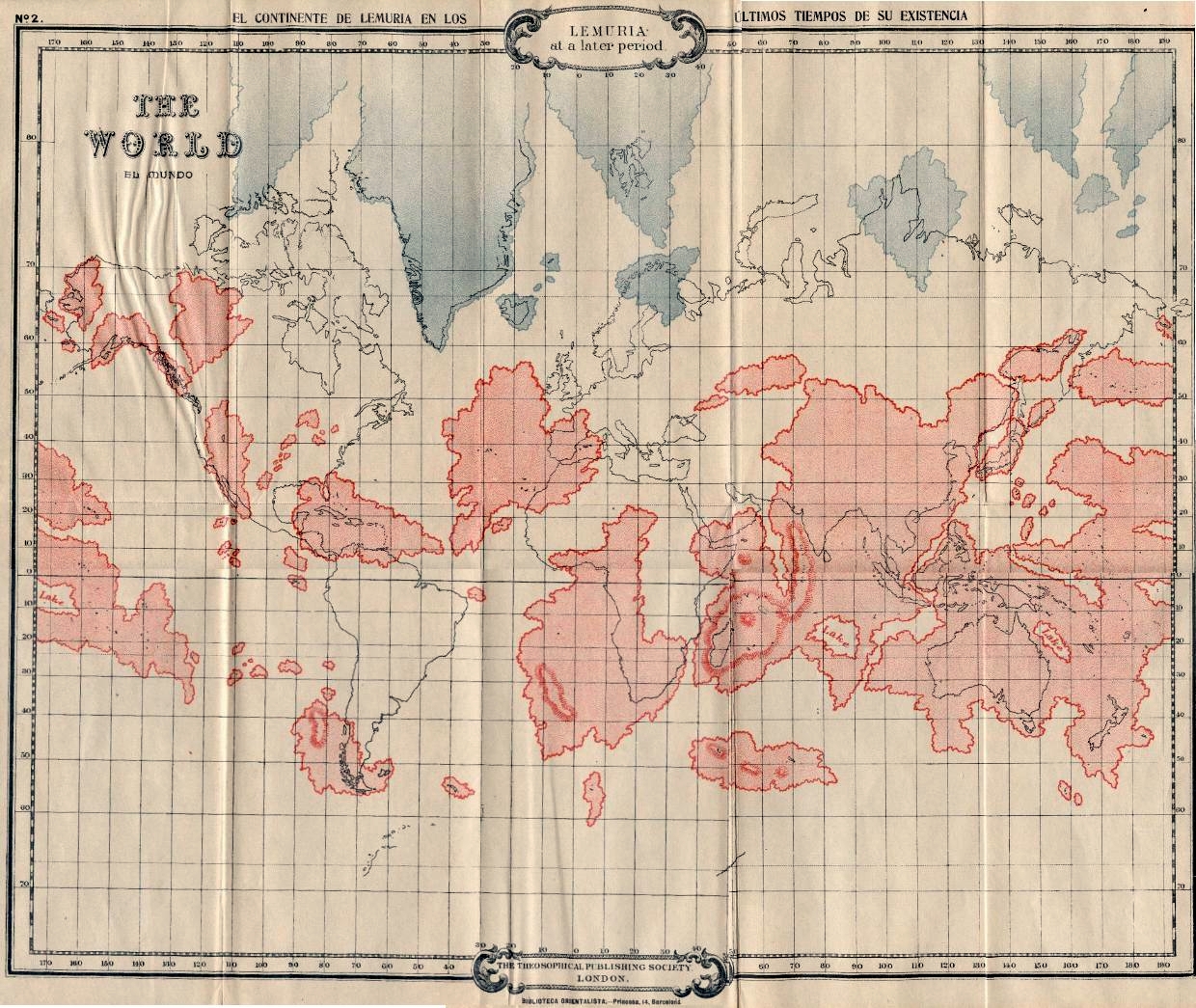
Historians of science treat Lemuria as a textbook case of a reasonable hypothesis overtaken by better theory. In the 1860s the fixed-continent consensus left biologists genuinely stuck: closely related animals and fossils sat on opposite shores of oceans, and sunken land bridges were the least-bad explanation available. Sclater's Lemuria was one of many such proposed bridges, and it did real explanatory work — the Madagascar–India faunal connection is genuine. The resolution came from continental drift: Madagascar and India were once joined, not by a vanished bridge, but as neighbouring pieces of the supercontinent Gondwana, which broke apart between roughly 160 and 88 million years ago, with India then sailing north to collide with Asia. Once plate tectonics was accepted in the 1960s, Lemuria became scientifically superfluous — the connection was real, the sunken continent was not, and oceanic crust in any case cannot host a foundered continent of that kind.
The delicious epilogue is Mauritia. Between 2013 and 2017, studies led by Trond Torsvik and Lewis Ashwal reported Precambrian zircon crystals — some over two billion years old, one lot nearly three billion — in young volcanic sands and rocks on Mauritius, an island whose basalts are no older than about nine million years. The favoured explanation is that Mauritius sits atop a drowned sliver of ancient continental crust, dubbed Mauritia, stretched and sunk when India and Madagascar separated. So a fragment of 'Lemuria' exists after all: a genuine microcontinent beneath the Indian Ocean, vindicating Sclater's geographical instinct while demolishing every inhabited-lost-world version — Mauritia foundered more than 80 million years before hominins existed.
- The Madagascar–India faunal link that motivated Lemuria is fully explained by the breakup of Gondwana and plate tectonics
- Ocean-floor mapping shows no sunken continent-scale landmass in the Indian Ocean at any humanly relevant date
- Precambrian zircons on Mauritius (Torsvik 2013; Ashwal 2017) indicate the real drowned fragment, Mauritia, foundered over 80 million years ago
- Lemuria's occult content traces to Blavatsky's unverifiable 'Book of Dzyan', not to any archaeological or textual discovery
- The idea's complete paper trail — from Sclater's 1864 article onward — documents its invention and mutation step by step