Lost Worlds · Doñana National Park and the lower Guadalquivir, Andalusia, Spain (traditional heartland of Tartessos)

Tartessos & the Doñana Marshes

A genuinely lost civilisation of silver kings and burned temples — and the marshland where Atlantis-hunters keep looking for Plato's city.

Mainstream: c. 900–450 BC (florescence of the Tartessian culture)Alternative: c. 9600 BC (if Doñana hides Atlantis itself, per the Kühne–Freund hypothesis)36.95°, -6.35°

At a glance

Tartessos & the Doñana Marshes
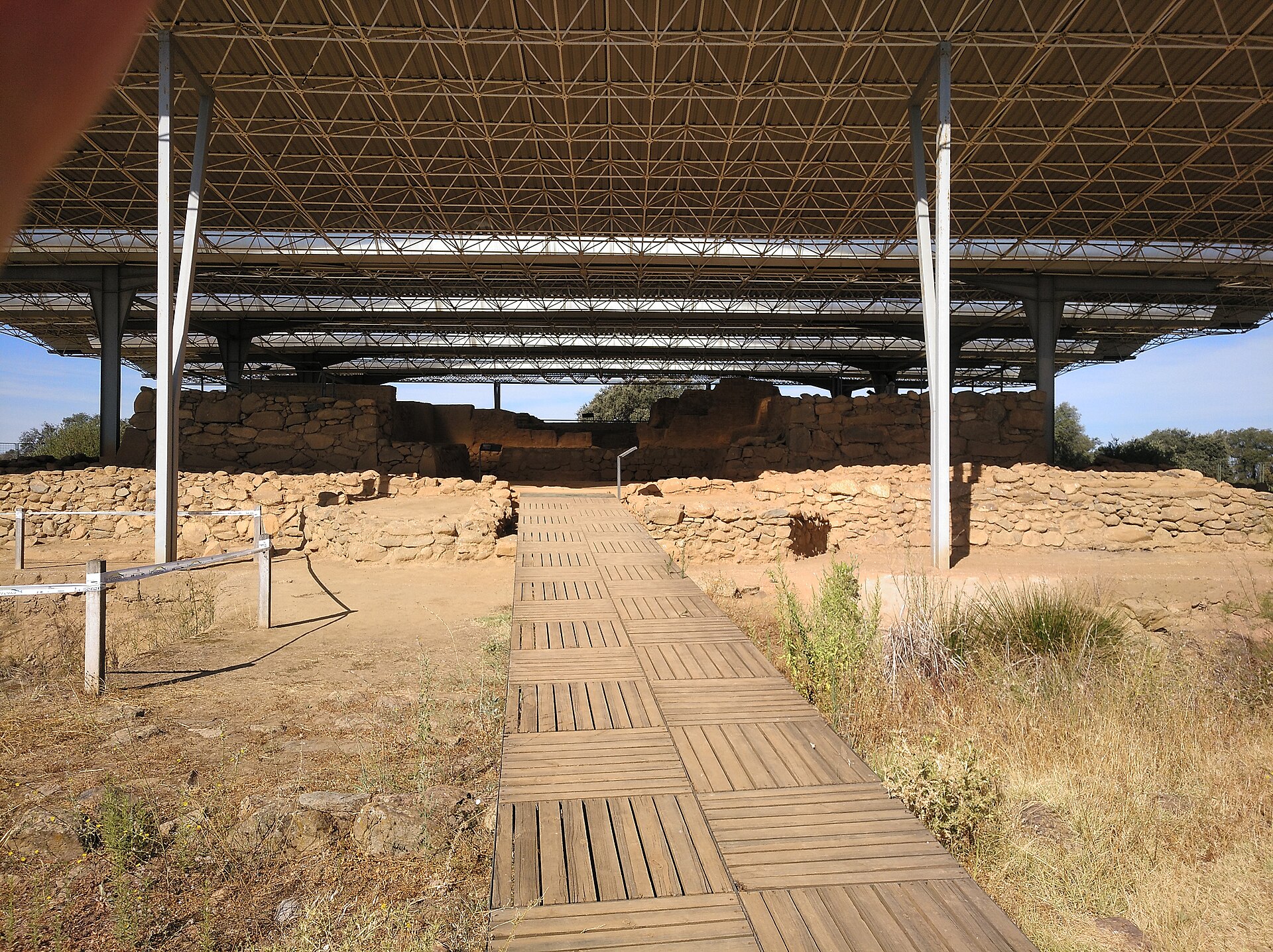
Photo: Axel Cotón Gutiérrez · CC BY-SA 4.0

Tartessos is the rare case where a semi-legendary lost realm turned out to be real. Greek sources describe a fabulously silver-rich kingdom beyond the Pillars of Heracles ruled by the long-lived king Arganthonios; the Bible's Tarshish may be the same place. Around 500 BC it faded from the record, and for centuries its very existence was doubted. Archaeology has since recovered a brilliant 'orientalising' culture of the eighth to fifth centuries BC in southwestern Iberia — Phoenician-influenced, literate in a still-undeciphered script, and given to ritually burning and burying its own sanctuaries. Its presumed coastal core near the Guadalquivir mouth now lies under the shifting marshes of Doñana National Park, which is also, not coincidentally, one of the most persistent modern candidates for Atlantis itself.

See it on the globe →
The mainstream view

What archaeology says

Mainstream archaeology treats Tartessos as an indigenous Iberian society transformed by contact with Phoenician colonists from the ninth century BC onward: local Bronze Age communities around Huelva, Seville and Cádiz grew wealthy on the Rio Tinto silver and copper trade, adopted eastern Mediterranean techniques and iconography, and produced treasures such as the gold hoard of El Carambolo. The most spectacular finds come from the culture's inland final phase in Extremadura. Cancho Roano, excavated from the 1970s, is a palace-sanctuary that was deliberately burned, filled in and sealed around 370 BC after ritual feasting. Casas del Turuñuelo, under excavation since 2015 by Sebastián Celestino and Esther Rodríguez of the CSIC, yielded a two-storey adobe building sealed the same way, a staircase unique in the western Mediterranean, and the mass sacrifice of more than fifty animals, mostly horses. In 2023 the site produced a sensation: five carved stone faces, the first known figurative human representations of Tartessian art, upending the culture's reputation as strictly aniconic.

The culture's end around the mid-fifth century BC — whether through the collapse of the silver trade after Phoenicia's crisis, internal upheaval, or environmental change including earthquakes and tsunamis recorded in Doñana's sediments — remains debated, as does the location of the capital the Greeks knew, which may lie beneath metres of Guadalquivir silt. What archaeologists reject is any link to Atlantis: when the Turuñuelo faces went viral in 2023 accompanied by Atlantis headlines, the excavators publicly repudiated the association, noting Tartessos is a documented Iron Age society a full nine millennia adrift of Plato's dramatic date.

Key evidence cited
  • Tartessos is independently attested by Greek and Near Eastern texts and by a rich archaeological record — a real Iron Age culture, not a myth
  • Cancho Roano and Casas del Turuñuelo: sealed palace-sanctuaries with datable ritual burning, feasting deposits and mass horse sacrifice (6th–4th centuries BC)
  • The 2023 Turuñuelo carved faces — the first Tartessian figurative sculpture — fit Iron Age orientalising art, not any earlier horizon
  • CSIC coring in the Marisma de Hinojos found estuary sediments and no urban remains matching the satellite-photo claims
  • Tsunami deposits in Doñana explain later legends of drowned cities without requiring any Platonic metropolis
The alternative view

What the skeptics propose

The Atlantis-in-Iberia hypothesis has a distinguished pedigree. The German archaeologist Adolf Schulten, who did more than anyone to put Tartessos on the scholarly map, argued in his 1922 book Tartessos that the historical kingdom was Plato's Atlantis — a rich realm beyond the Pillars, facing Gadir (Cádiz, echoing Plato's Atlantean prince Gadeirus), destroyed and lost. He excavated in Doñana in the 1920s with George Bonsor seeking the drowned capital, finding only a Roman-era ring. The idea revived spectacularly in 2003–2004 when physicist Rainer Kühne, drawing on Werner Wickboldt's reading of satellite photographs, published in Antiquity the claim that two rectangular 'temples' and traces of concentric rings could be seen in the Marisma de Hinojos within Doñana — matching Plato's temples of Poseidon and Cleito. Kühne suggested Atlantis was a memory of Tartessos and even linked its warriors to the Sea Peoples. In 2011 the National Geographic documentary Finding Atlantis, fronted by Richard Freund of the University of Hartford, promoted the Hinojos claims worldwide, adding proposed 'memorial cities' inland (including Cancho Roano) supposedly built by refugees in Atlantis's image.

The pushback from the Spanish research teams was unusually sharp. The CSIC's own Hinojos Project, whose geologists and archaeologists had been coring the marsh for years, reported that the satellite 'structures' are natural or recent features, that the marsh was open estuary through most of the relevant period, and that no urban remains of any pre-Roman city — let alone a Bronze Age metropolis — exist there; anthropologist Juan Villarías-Robles noted acidly that Freund had spent less than a week with the project before the documentary framed its work as his Atlantis hunt. What the sediments do show is a genuine history of extreme events: high-energy marine deposits recording tsunamis that struck the Gulf of Cádiz repeatedly in antiquity, including around 200 BC, and possibly earlier events that could have damaged proto-historic settlements. Sceptical scholars allow one modest concession: if any real place inspired Plato's rich western realm humbled by the sea, drowned-and-vanished Tartessos is among the least unreasonable candidates — which is precisely why the two legends keep being braided together.

Key evidence cited
  • Adolf Schulten's argument that Plato's Atlantis preserves a memory of historical Tartessos, both rich realms beyond the Pillars that vanished
  • The name Gadeirus in Plato's Critias, matching Gadir (Cádiz), directly opposite the Doñana marshes
  • Wickboldt and Kühne's satellite-image interpretation of rectangular structures and concentric traces in the Marisma de Hinojos (Antiquity, 2004)
  • Freund's proposed 'memorial cities' — ritual sites like Cancho Roano read as refugee commemorations of a drowned capital
  • Documented tsunami history in the Gulf of Cádiz, showing the region really could lose coastal settlements to the sea in a day and a night

Genuinely open questions

  1. Where was the Tartessian capital the Greeks knew, and does it survive under the Guadalquivir silts or the Doñana marshes?
  2. Why did Tartessian sites like Cancho Roano and Turuñuelo ritually burn, bury and abandon their own buildings?
  3. What caused the culture's disappearance around the mid-fifth century BC — economics, upheaval, or natural catastrophe?

Worth knowing

Herodotus claims the Tartessian king Arganthonios — 'the silver one' — reigned for eighty years and lived to 120, showering visiting Greeks with so much silver that they dedicated a giant bronze cauldron from the proceeds. Even the sober historical Tartessos came wrapped in tall tales.