What archaeology says
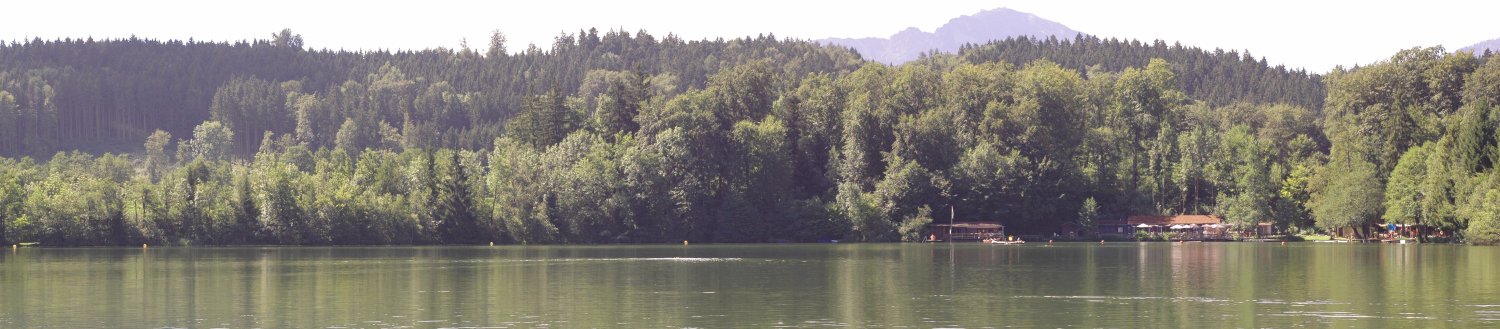
For the Bavarian State Office for the Environment and virtually all professional geologists who have studied the region, the Chiemgau landscape needs no comet. The alpine foreland is textbook glacial terrain: when the Chiemsee ice lobe melted at the end of the last glaciation, stranded blocks of dead ice left kettle holes by the hundred, of which Tüttensee is simply one of the larger examples. Gerhard Doppler and Erwin Geiss of the state geological survey published detailed rebuttals in 2005-2007, and the decisive evidence came from Tüttensee itself: cores through the surrounding mire show continuous, undisturbed peat and lake sediment accumulating since the late glacial period, more than 12,500 years — impossible if the basin had been excavated by an explosion around 2,500 years ago. Radiocarbon dates on the peat straddle the alleged impact era without any disturbance horizon.
The other evidence fares no better under mainstream scrutiny. The iron silicides, initially exciting, occur widely as by-products of smelting, fireworks and industrial abrasives, and their distribution follows human activity rather than a cosmic strewn ellipse; analyses found accompanying phases inconsistent with meteoritic material. The claimed 'shock effects' in local cobbles have been attributed to ordinary weathering, soil pressure and agricultural burning, and the smaller 'craters' to marl pits, bomb craters and other diggings. The Earth Impact Database does not list Chiemgau, and a 2010 Antiquity paper by CIRT linking the event to the Phaethon myth drew sharp published criticism from geologists and archaeologists alike. German academic commentary has not minced words, with critics — including impact researchers otherwise keen to identify new craters — describing the affair as pseudoscience sustained by local enthusiasm and media appetite.
- Undisturbed peat and lake sediments around Tüttensee accumulating continuously for over 12,500 years
- Textbook dead-ice kettle-hole morphology shared with numerous undisputed lakes of the alpine foreland
- Iron silicides identified as industrial by-products, distributed along patterns of human activity
- Rebuttals by Doppler, Geiss and Kroemer of the Bavarian geological survey attributing 'craters' to pits and natural hollows
- No listing in the Earth Impact Database and no independently confirmed shock metamorphism