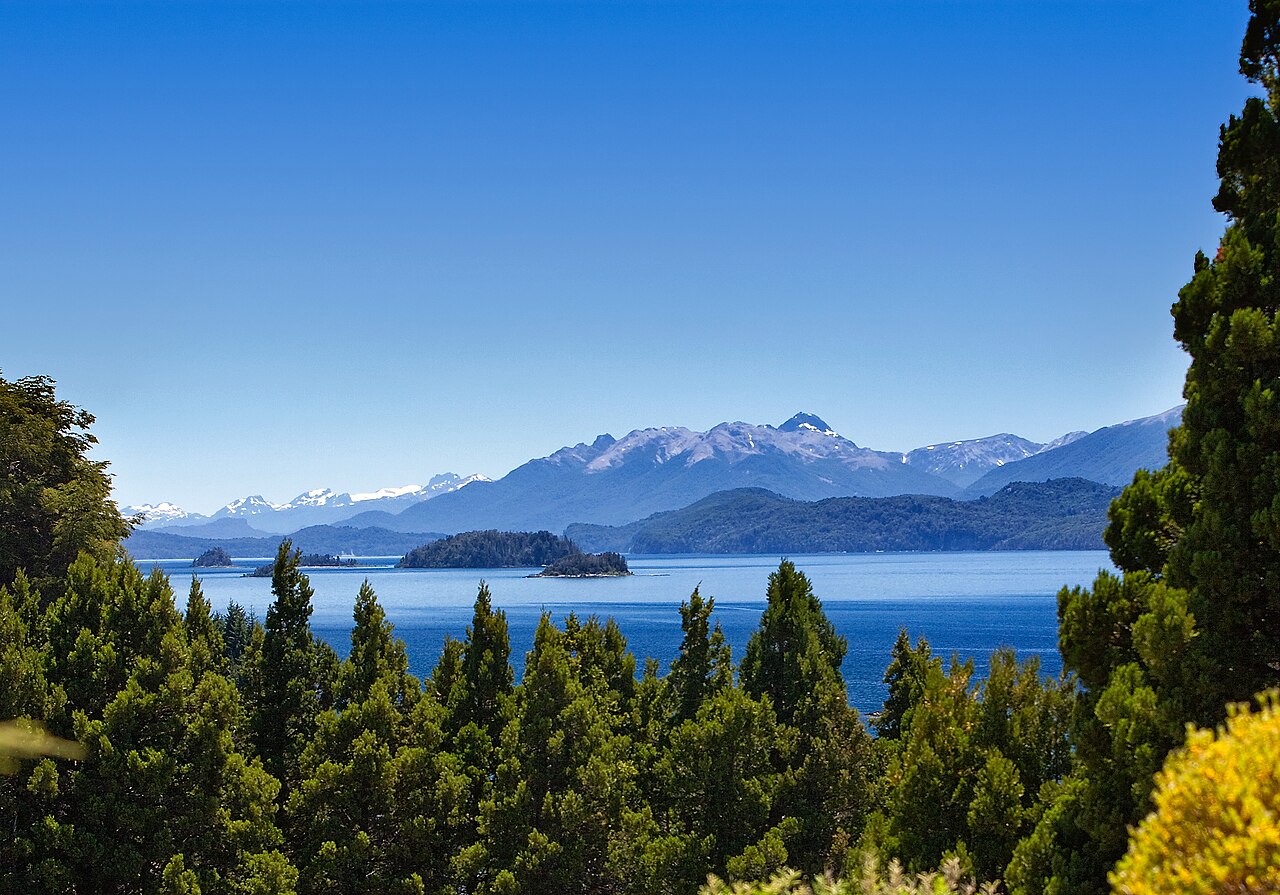
Lost Worlds · Lake Nahuel Huapi, Patagonia, Argentina (focus of the most persistent searches)

City of the Caesars

For 250 years the Spanish Empire hunted a wandering golden city through Patagonia — and mapped half a continent looking for it.

Mainstream: 1528-1782 (life of the legend, from Cesar's expedition to the last searches)Alternative: 16th-18th centuries (a real hidden city of castaways, Incas or exiles)-40.98°, -71.50°

At a glance

City of the Caesars
Photo: David · CC BY 2.0

The City of the Caesars — Ciudad de los Cesares, also called Trapananda, the Wandering City or the Enchanted City — was said to lie somewhere in the Andes of Patagonia: a city of silver roofs and golden bells, between a mountain of gold and a mountain of diamonds by some accounts, inhabited variously by lost Spanish castaways, exiled Incas fleeing the conquest, or immortal inhabitants whose city appeared and disappeared at will. The name traces to Francisco Cesar, a captain from Sebastian Cabot's 1528 expedition whose party returned from the interior telling of a rich land — the news of the Cesares. For two and a half centuries expeditions hunted it from both the Atlantic and Pacific sides, and in failing to find it, they explored and mapped Patagonia.

See it on the globe →
The mainstream view

What archaeology says

Historians read the City of the Caesars as a compound legend that Patagonia's genuine mysteries kept alive. Its documented seeds are prosaic: Francisco Cesar's inflated report of 1528-29; the fate of Spanish colonists and shipwreck survivors who vanished into the far south — notably survivors of the 1540 wreck from the bishop of Plasencia's fleet in the Strait of Magellan, and the abandoned settlers of Pedro Sarmiento de Gamboa's doomed Strait colonies of the 1580s — around whom grew stories of Europeans living in a hidden city; and post-conquest rumours of Inca refugees carrying treasure south. Each strand is historically real as an event; the golden city into which they fused is not.

The legend's practical effect was exploration. Jesuit father Nicolas Mascardi, founder of the mission on Lake Nahuel Huapi in 1670, made repeated journeys across Patagonia searching for the Cesares before being killed in 1673; later Jesuits including Jose Cardiel and Thomas Falkner weighed the evidence; and expeditions and official inquiries continued through the 18th century — Ignacio Pinuer's detailed 1774 report from Valdivia of a Spanish-descended city on a lake prompted new searches, and journeys by figures such as Fray Francisco Menendez into the cordillera around 1780-1791 were among the last serious hunts. Cumulatively these journeys produced much of the early cartography and ethnography of the southern Andes.

Scholars also note the legend's literary DNA: it absorbed the medieval template of hidden blessed cities and utopias, and in Chilote folklore it merged with pure enchantment — a city cloaked in fog, reachable by no road twice. Modern historians such as those who compiled the colonial documents (the Angelis collection) treat the corpus as an invaluable window onto frontier rumour, indigenous-Spanish information exchange, and the psychology of empire.

Key evidence cited
  • The legend's origin is documented: Francisco Cesar's party from Cabot's 1528 expedition returned with tales of a rich interior, coining the news of the Cesares.
  • Every later search — Mascardi's journeys from Nahuel Huapi (1670-73), 18th-century Valdivia expeditions, Menendez's cordillera crossings — found no city, while progressively mapping the terrain where it was supposed to be.
  • The legend's ingredients correspond to real, documented events (the 1540 Strait shipwreck, Sarmiento's abandoned colonists, Inca flight south) that required no actual golden city.
  • Versions of the story contradict one another — Spanish castaways, Incas, immortals; on a lake, an island, between two mountains — the signature of folklore rather than geography.
  • Patagonia has since been comprehensively surveyed, settled and satellite-mapped with no trace of any colonial-era hidden city.
  • The enchanted-city motif (invisibility, fog, no return) matches well-known European and Chilote folklore templates, indicating literary borrowing.
The alternative view

What the skeptics propose

Because the legend explicitly claimed European inhabitants, its literalist defenders were often officials and clergy rather than dreamers. Ignacio Pinuer, a Spanish officer at Valdivia, swore in 1774 that the city existed, giving distances, defences and the detail that its bearded inhabitants spoke Spanish and kept cannon; his report convinced the governor to mount expeditions. Advocates argued that somewhere in the unmapped immensity between Valdivia, Nahuel Huapi and the Strait, descendants of the lost colonists of Sarmiento's settlements or the bishop of Plasencia's wrecked fleet plausibly survived — Patagonia was quite large enough to hide them, and captives and traders periodically reported white men beyond the mountains.

A second literalist school made the city Incan: after Cajamarca and the fall of Vilcabamba, parties of Incas were said to have fled south with treasure, founding a refuge city in the Andes — a southern twin to the Paititi legend of the Amazon. Reports of masonry ruins in the cordillera, and genuine finds of Inca influence far south into Argentina, kept this version breathing.

The legend has never entirely died. In the 20th century, treasure hunters and writers periodically revived it; most notably, the Argentine researcher Roberto Etchepareborda and others catalogued the colonial search literature, while popular authors linked supposed ruins near Nahuel Huapi or in Aysen to the Cesares. In Chiloe and Patagonia the Enchanted City remains living folklore — a city visible on rare days across the water, whose finders can never leave or never return — and occasional expeditions, half archaeology and half romance, still go looking for stone remains in the fjords of Aysen, the legend's old Trapananda country.

Key evidence cited
  • Ignacio Pinuer's 1774 sworn report to the governor of Chile gave specific, testable details — location on a lake, Spanish-speaking bearded inhabitants, artillery — and was taken seriously enough to launch official expeditions.
  • Hundreds of real Spanish colonists genuinely vanished in Patagonia (Sarmiento's Strait settlements alone left some 300 abandoned), so a surviving remnant community was a rational hypothesis, not fantasy.
  • Indigenous informants on both sides of the Andes repeatedly and independently described white settlements in the interior across two centuries of testimony.
  • Inca material influence demonstrably reached far into Argentina and Chile, lending plausibility to the refugee-Inca version.
  • Patagonia's scale and terrain genuinely could conceal settlements: Jesuit missions, and later even outlaw hideouts, operated for years unknown to authorities.
  • The persistence of the search among hard-headed officials, soldiers and Jesuits — not merely poets — suggests the cumulative testimony was substantial by the standards of the day.

Genuinely open questions

  1. What did Francisco Cesar's party actually see or hear in 1528-29 — an echo of the Inca realm to the north-west?
  2. What became of the survivors of the Strait of Magellan shipwrecks and Sarmiento's colonies — did any remnant community persist inland?
  3. Which indigenous reports of white men beyond the mountains reflected real castaways, and which were diplomacy or misunderstanding?
  4. Why did the legend settle so firmly on the Nahuel Huapi and Aysen country — was there a real geographic kernel?

Worth knowing

The City of the Caesars was said to become visible only at rare moments — some told that it could be seen from afar shimmering across Lake Nahuel Huapi, but that no traveller could find it twice, and that anyone who entered would lose all memory of the way out; one version says it will only become visible to all on the last day of the world.