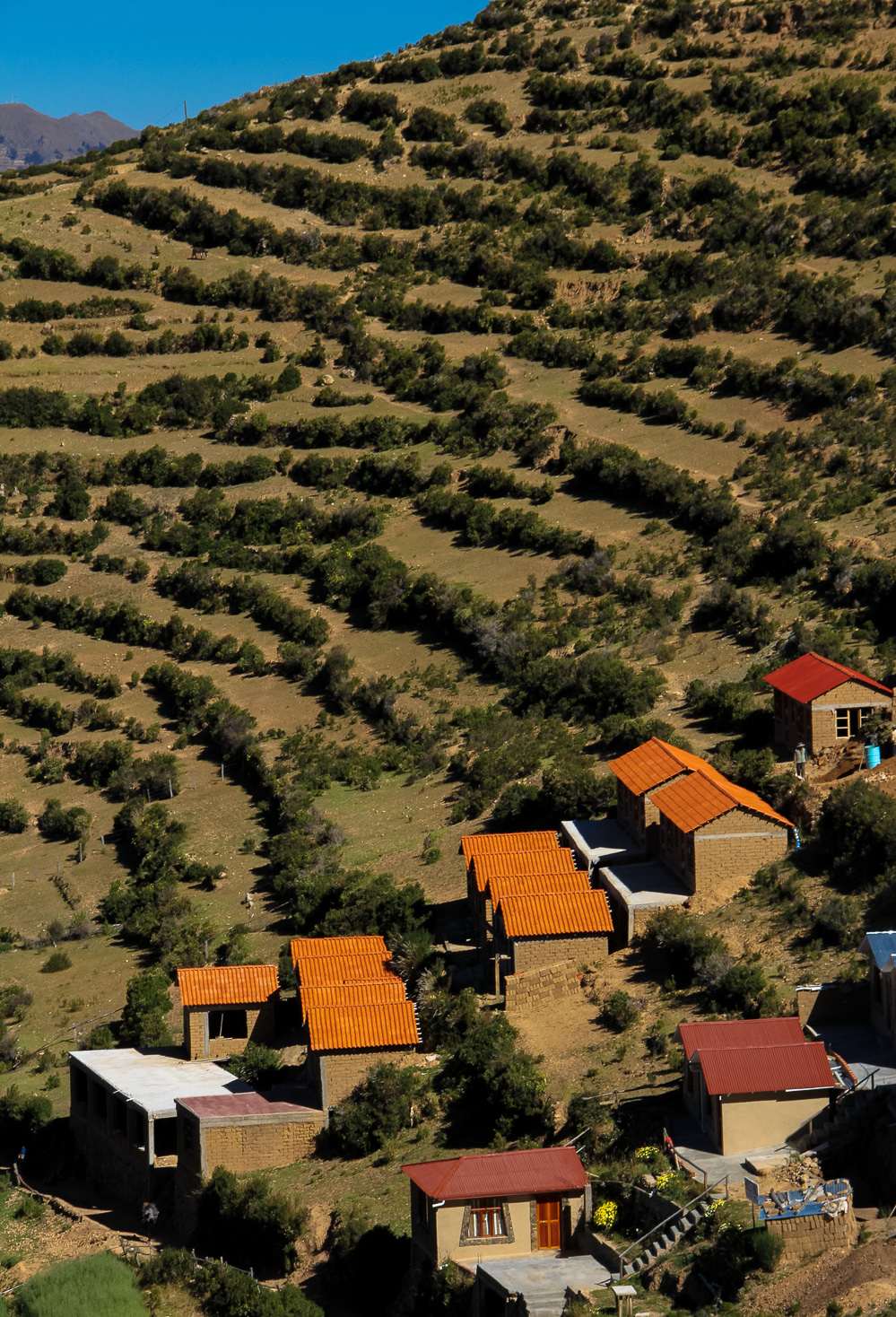
Lost Worlds · Lake Titicaca, Bolivia/Peru (Khoa reef, near the Island of the Sun)

Lake Titicaca's Submerged Ruins

The highest navigable lake on Earth really does hold sunken ruins — the argument is over what they are and how old.

Mainstream: c. AD 500–1100 (Tiwanaku ritual offerings at Khoa reef), with Inca offerings to c. AD 1500Alternative: Pre-Tiwanaku or Ice Age antiquity proposed for the Marka Pampa 'temple' and 'sunken city' of Andean legend-16.02°, -69.17°

At a glance

Lake Titicaca's Submerged Ruins
Photo: Bob Ramsak · CC BY-SA 4.0

Lake Titicaca, straddling Bolivia and Peru at 3,810 metres above sea level, is the sacred lake of Andean civilisation: Inca myth held that the creator god Viracocha and the first Inca emerged from its waters near the Island of the Sun. Unusually for a 'sunken city' story, there genuinely are archaeological remains beneath the surface. In 2000 the Akakor Geographical Exploring expedition 'Atahuallpa 2000', led by Lorenzo Epis, announced a submerged 'temple' some 200 metres long near Copacabana, along with a terrace, a long wall and a paved road. Separately, and far more rigorously, Belgian archaeologist Christophe Delaere of the Université libre de Bruxelles has led systematic underwater excavations since 2012, recovering thousands of artefacts and revealing the Khoa reef near the Island of the Sun as one of the most important ritual sites of the ancient Andes.

See it on the globe →
The mainstream view

What archaeology says

The scientifically documented story is spectacular enough. Between 2013 and 2019 Delaere's team, with José Capriles and Charles Stanish, excavated the Khoa reef and published the results in the Proceedings of the National Academy of Sciences in 2019: Tiwanaku-period offerings dating to roughly AD 500 to 1100, including ceramic incense burners modelled with puma heads, gold medallions and plaques, a lapis lazuli puma figurine, Spondylus shell imported from the distant Pacific coast of Ecuador, and the remains of sacrificed juvenile llamas. The team argued these repeated, high-value underwater offerings helped consolidate the religious and political authority of the emerging Tiwanaku state centuries before the Inca. In 2020 the same programme recovered an intact Inca stone offering box from the lakebed containing a miniature llama carved in Spondylus and a rolled gold foil cylinder — showing the Inca continued the tradition.

Submerged structures as such are also uncontroversial in principle: Titicaca's level has fluctuated by many metres over the millennia, and drowned agricultural terraces, causeways and shoreline installations are expected consequences of natural lake-level rise — not of a cataclysm. What archaeologists have never verified is the Akakor expedition's grander claims. The 2000 announcement of a 200-metre 'temple' at the site dubbed Marka Pampa was made to the press, not in a peer-reviewed publication, and the features have never been independently mapped, excavated or dated. Researchers note that drowned field walls, terraces and natural rock alignments can easily be upgraded to 'temples' in translation from sonar shadow to headline. Jacques Cousteau, who took mini-submarines into the lake in 1968 expressly looking for a lost city, found pre-Columbian pottery but no city at all.

Key evidence cited
  • PNAS 2019 publication of Tiwanaku offerings (AD 500–1100) excavated at Khoa reef by Delaere, Capriles and Stanish
  • Puma-headed incense burners, gold medallions, lapis lazuli puma and Ecuadorian Spondylus shell from stratified underwater contexts
  • Sacrificed juvenile llamas indicating organised state ritual, radiocarbon dated to the Tiwanaku period
  • An intact Inca stone offering box recovered in 2020 with a Spondylus llama figurine and gold foil
  • Documented natural lake-level fluctuations explaining drowned terraces and shoreline structures without catastrophe
The alternative view

What the skeptics propose

Alternative writers approach Titicaca through its mythology and through the neighbouring ruins of Tiwanaku, which Graham Hancock in Fingerprints of the Gods (following Arthur Posnansky's early twentieth-century archaeoastronomical dating) argued could be vastly older than the mainstream chronology allows — with the lake's drowned structures as supporting evidence of a radically changed landscape. Andean tradition itself speaks of a sunken city called Wanaku beneath the lake, and of the flood-surviving creator emerging from its waters; proponents read these as folk memory of real inundation. The Marka Pampa 'temple', the 800 metres of wall and the paved road reported by the Akakor team in 2000 are cited as physical confirmation that something substantial lies below, predating the Inca and perhaps the Tiwanaku themselves.

Proponents also point out, fairly, that the lake has repeatedly vindicated the idea that its waters conceal treasures: locals' stories of golden offerings were dismissed until divers began recovering exactly that — gold, ritual vessels and sacrificed animals — from Khoa reef. If the legends were right about the offerings, they ask, why assume they are wrong about a drowned settlement? The weakness, which even sympathetic observers concede, is that the headline 2000 discoveries were never published or independently examined, and Akakor Geographical Exploring's subsequent history did little for its credibility. The strongest defensible alternative position is more modest: that substantial pre-Inca structures now under water await proper study, and that lake-level history may push some drowned sites older than currently assumed.

Key evidence cited
  • Akakor's 2000 'Atahuallpa' expedition report of a ~200 m submerged 'temple', terraces, an 800 m wall and a paved road near Copacabana
  • Andean legends of the sunken city of Wanaku and of Viracocha emerging from the lake
  • Posnansky's and Hancock's arguments for a far older Tiwanaku, implying great antiquity for the lake's drowned landscape
  • Golden offerings long rumoured by local tradition were eventually proven real by excavation
  • Stone boxes and artefacts reportedly recovered at Marka Pampa in the 1990s before formal archaeology began

Genuinely open questions

  1. What exactly are the large submerged features reported near Copacabana in 2000, and how old are they?
  2. How far did lake-level changes drown Tiwanaku-era settlements, and could any drowned structures predate Tiwanaku?
  3. Why did Tiwanaku and later the Inca make their richest offerings underwater at Khoa reef specifically?

Worth knowing

Jacques Cousteau took two mini-submarines into Lake Titicaca in 1968 hunting for the legendary sunken city — he found no city, but did encounter enormous Titicaca water frogs, some reportedly the size of dinner plates.