What archaeology says
Archaeologists and historians attribute Sacsayhuamán to the Inca state at its height. Spanish chroniclers, including Cieza de León and Garcilaso de la Vega (himself half-Inca and raised in Cusco), recorded Inca oral tradition that the complex was begun under the ninth ruler Pachacuti in the mid-1400s and continued under Tupac Inca Yupanqui and Huayna Capac, with tens of thousands of workers supplied through the mita rotating-labour system. Radiocarbon dates and associated imperial Inca pottery from excavations at the site are consistent with this 15th–16th century construction window, and no stratified pre-Inca occupation layer has been demonstrated beneath the great walls.
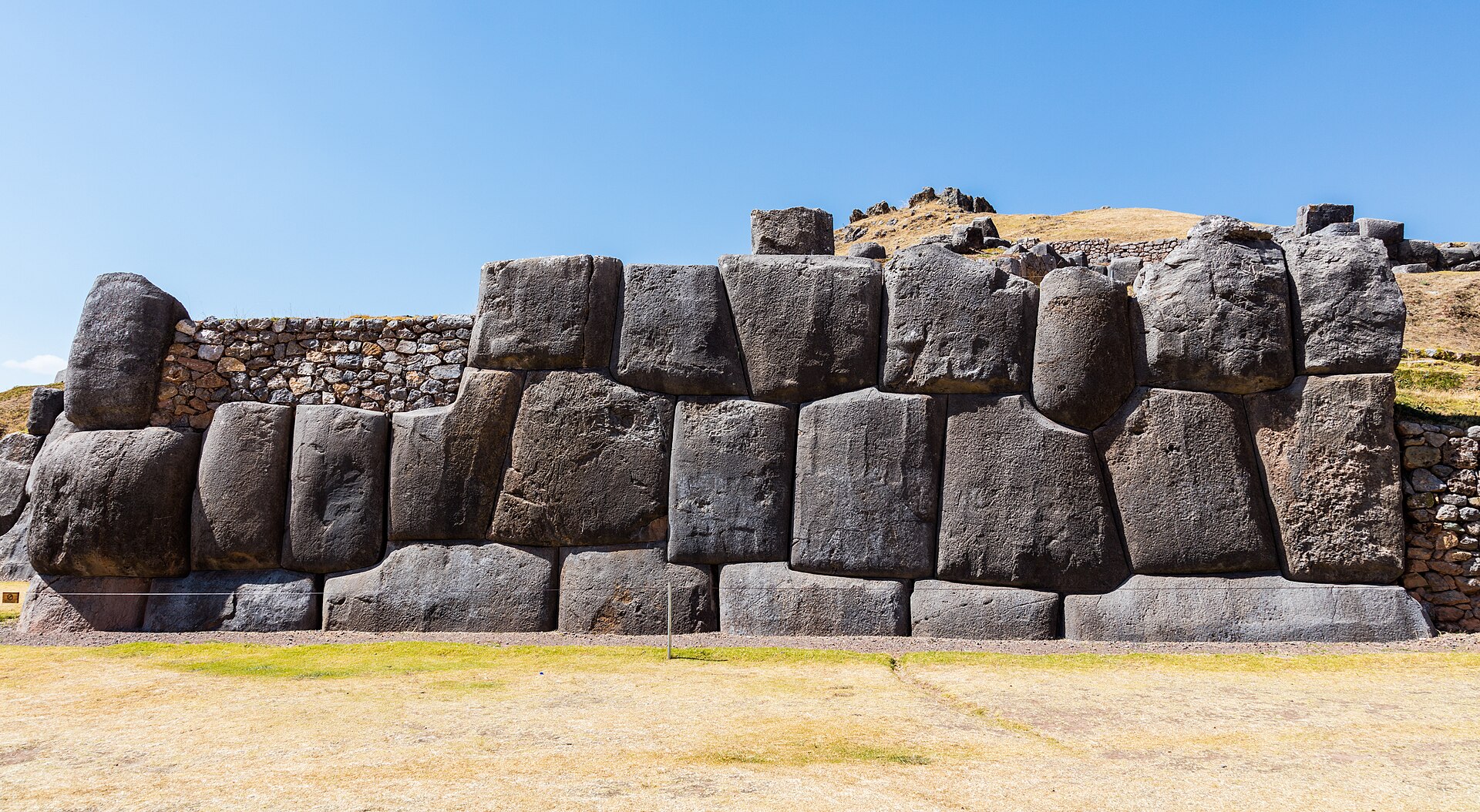
The masonry itself has been studied intensively. Architect Jean-Pierre Protzen's experimental work in the 1980s showed that Inca-style polygonal joints can be produced by iterative pounding, fitting and abrasion with harder hammerstones, and abandoned blocks at Inca quarries carry tool marks matching his experiments. The zigzag walls are local limestone from outcrops close to the hill, and unfinished blocks, drag scars and construction ramps document the workflow. Engineering analyses have found that the interlocking, inward-leaning courses are superbly adapted to earthquakes — the walls have shrugged off tremors that flattened colonial Cusco — which explains the design as seismic pragmatism rather than mystery.
Historians add a sobering postscript: the Spanish used Sacsayhuamán as a quarry for churches and mansions, stripping away the smaller upper masonry and the three great towers whose foundations were only re-excavated in the 20th century. What survives today is essentially what was too big to steal — which, mainstream researchers note, is partly why the site looks so exclusively 'megalithic' now.
- Spanish chronicles (Cieza de León, Garcilaso) recording Inca construction under Pachacuti and successors
- Radiocarbon dates and imperial Inca ceramics from site excavations consistent with the 15th century
- Protzen's experiments replicating polygonal fitting with hammerstones, matching quarry tool marks
- Local limestone sources and abandoned blocks, ramps and drag scars documenting the workflow
- No demonstrated pre-Inca occupation stratum beneath the megalithic walls