What archaeology says
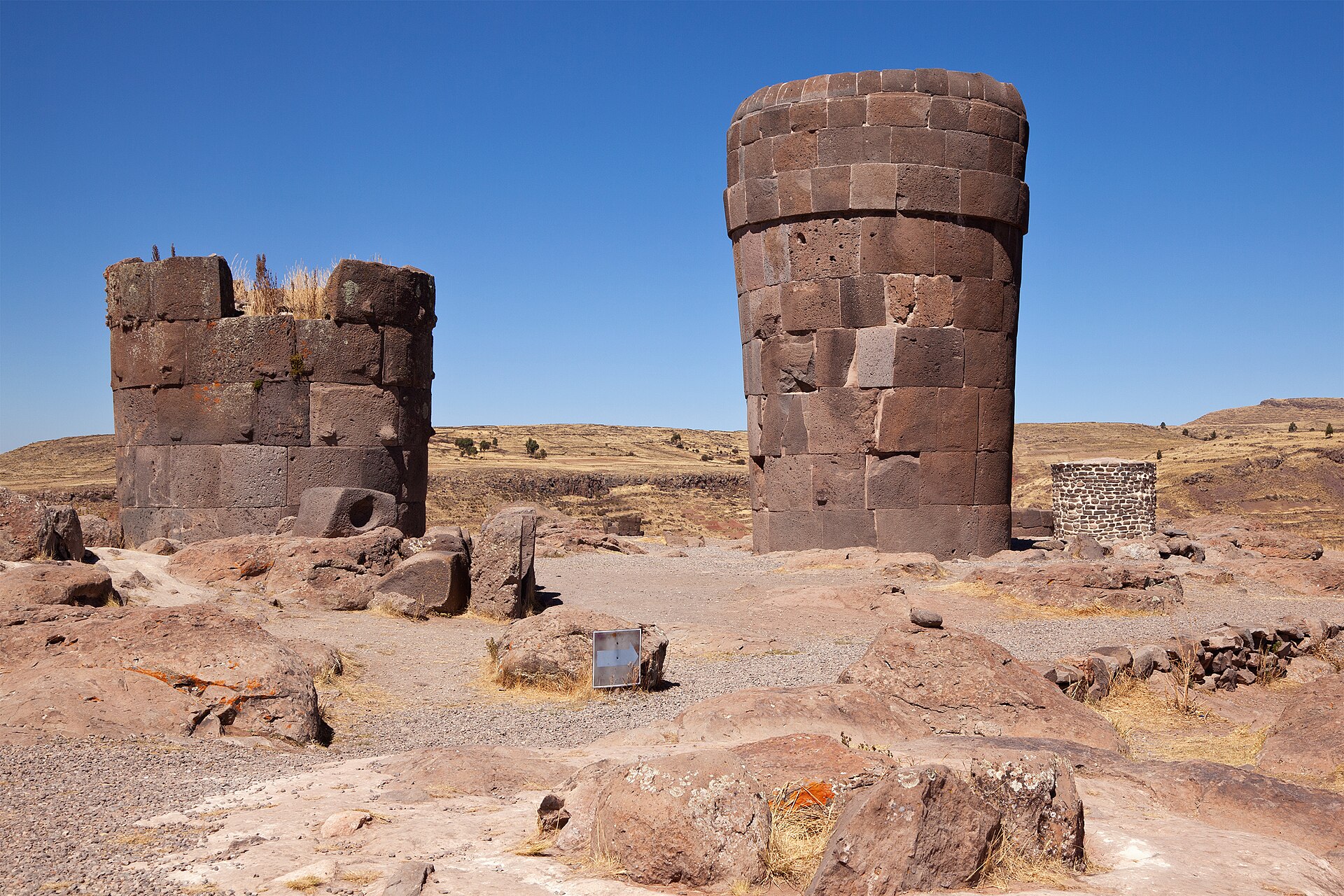
Archaeologists attribute Sillustani chiefly to the Colla, an Aymara-speaking Altiplano people who dominated the Lake Titicaca region before being absorbed into the Inca Empire in the fifteenth century, with the Inca then adding and refining towers after the conquest of the area. The chullpas are tombs: excavations have found human remains, often in a foetal position, together with grave goods, and the towers' small openings typically face east toward the rising sun. The finest examples show classic Inca-style construction techniques — closely fitted mortarless blocks with a slight batter and, in places, the animal-relief carvings (such as a lizard) associated with imperial work — which is why the best masonry is generally read as Inca-period rather than earlier Colla.
The unfinished towers are the mainstream's best teaching aid. Because at least one chullpa was abandoned mid-build, its earthen-and-stone construction ramp survives with dressed blocks still resting on it, showing directly how the builders raised and positioned stones by hauling them up an inclined ramp — no exotic technique required. Site signage and researchers point to this as physical proof of ordinary ramp-and-lever methods. The presence of finished, half-finished and barely-started towers side by side lets archaeologists reconstruct the whole sequence of quarrying, dressing, coursing and final capping, and to date the complex firmly to the late pre-Hispanic and Inca horizon.
- Human remains and grave goods inside the towers confirming a funerary function
- An unfinished chullpa with its construction ramp and abandoned blocks still in place
- Inca-style fitted masonry and animal reliefs marking the finest towers as imperial-period
- Attribution to the Aymara-speaking Colla, later absorbed and extended by the Inca
- Finished, half-built and barely-started towers together preserving the full building sequence