What archaeology says
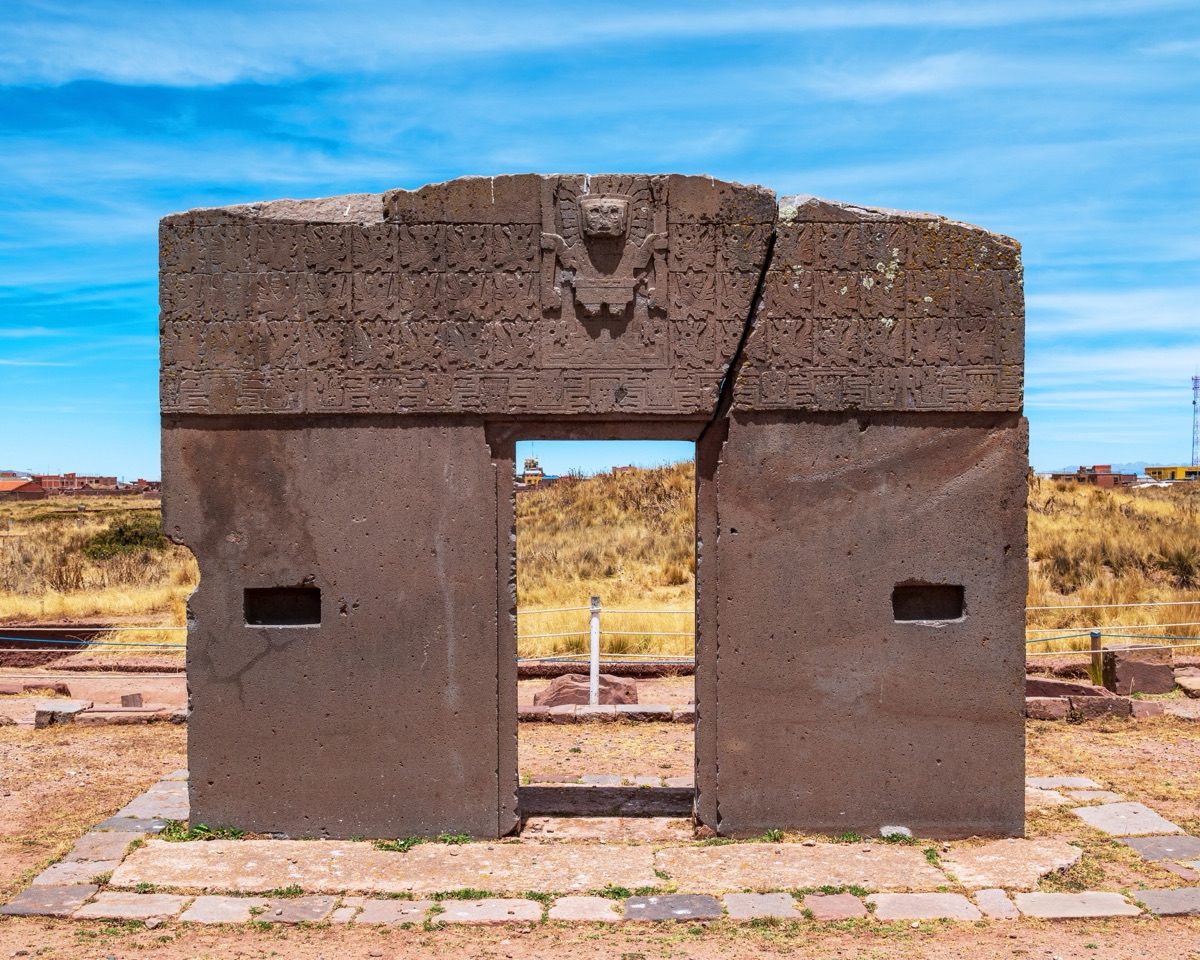
Mainstream archaeology attributes Tiwanaku and Puma Punku to the Tiwanaku culture, an indigenous Andean civilisation that grew from local antecedents from around 200 BC and became an expansive state between roughly AD 500 and 1000, before collapsing amid a long drought around AD 1000–1100. Radiocarbon dates from secure contexts are abundant; critically, Alexei Vranich's excavations dated organic material sealed beneath Puma Punku's lowest platform fill to about AD 536–600, meaning the celebrated stonework cannot be older than that. The 2025 discovery of Palaspata, a previously unknown Tiwanaku temple 200-odd kilometres away, continues to fill out the picture of a large, organised state.
The stonework, though extraordinary, has well-studied earthly explanations. Jean-Pierre Protzen and Stella Nair ('The Stones of Tiahuanaco', 2013) documented how the sharp interior angles, smooth faces and repeated 'modular' geometry of the H-blocks could be produced with stone hammers, harder-stone polishers and abrasives, guided by a sophisticated system of templated, standardised design — precision reflecting organisation, not machinery. Quarries are identified: red sandstone from the Kimsachata range about 10 km away, andesite from the Copacabana peninsula, likely rafted across Lake Titicaca on reed boats and dragged on ramps; drag scars, unfinished blocks and abandoned stones litter the routes.
Metal was not absent: the builders used copper-arsenic alloy cramps, some poured molten into carved sockets, to clamp blocks together — an elegant technique also seen in Egypt and Cambodia. Puma Punku was never finished; the site was later heavily quarried by colonial builders and railway contractors, and 19th-century treasure hunters dynamited parts of it, which contributes to its shattered, enigmatic appearance.
- Radiocarbon dates beneath Puma Punku's platform fill place construction after c. AD 536 (Vranich)
- Identified quarries, drag marks, ramps and unfinished blocks document the production process
- Protzen & Nair replicated the characteristic cuts and surfaces using stone tools and abrasives
- Copper-arsenic cramps and their pour-sockets show the builders' actual metallurgy in situ
- Continuous local cultural development from c. 200 BC is documented across the Titicaca basin