What archaeology says
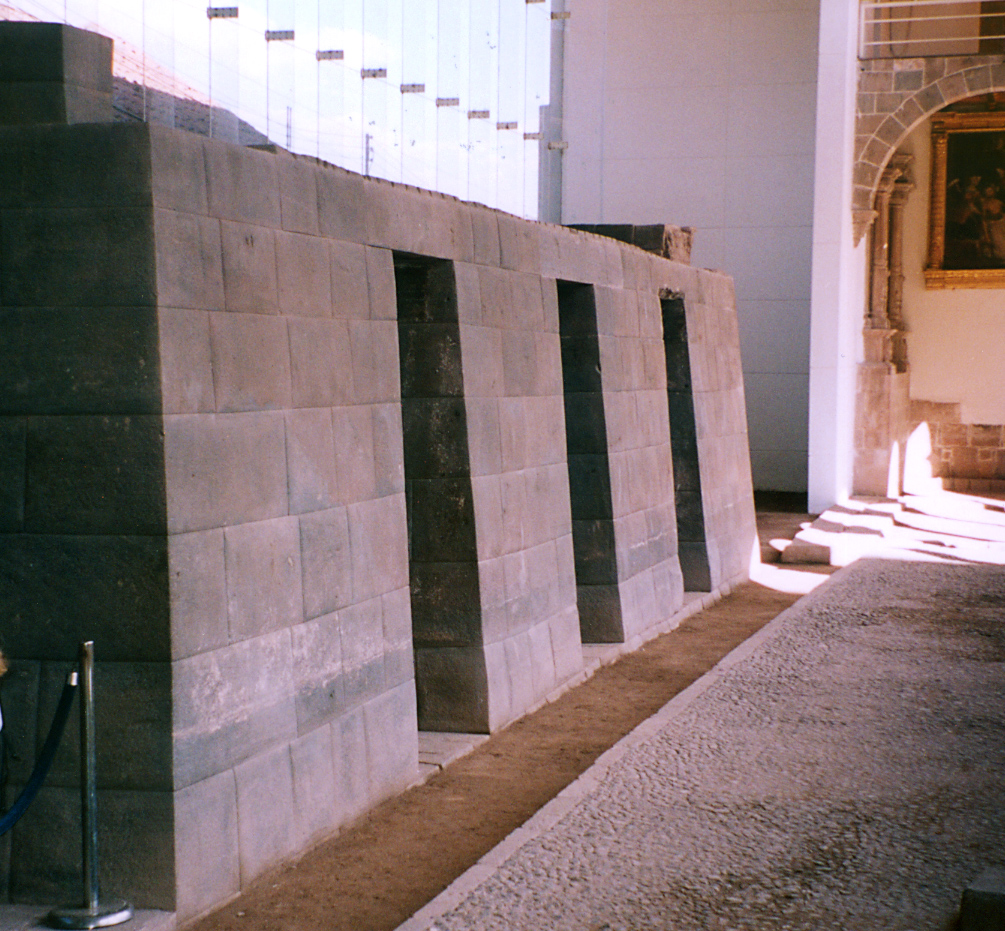
Archaeologists and historians attribute Coricancha and Cusco's great walls to the Inca, principally from the reign of Pachacuti in the mid-fifteenth century until the Spanish conquest of 1533 — a chronology supported by Spanish eyewitness chronicles that describe the temple in use, gilded and staffed, at the moment of contact. The Inca worked hard volcanic stone with harder hammerstones, pecking and grinding faces into place, and are thought to have test-fitted blocks repeatedly, grinding down high spots until adjoining surfaces mated exactly. The slight inward lean (a three-to-five-degree batter), trapezoidal doorways and niches, and interlocking irregular joints are not decoration but seismic engineering: the walls are designed to flex and settle back rather than topple.
That design has been vindicated spectacularly. Cusco has been struck by major earthquakes, and each time the Spanish colonial masonry above has cracked or collapsed while the Inca walls beneath stood firm. The 1950 earthquake toppled much of the Santo Domingo convent and, in doing so, exposed the curved Inca enclosure it had been hiding, prompting a deliberate decision to conserve and display the original temple. Mainstream scholars emphasise that the sophistication is real and hard-won — the product of an enormous organised labour force, generations of accumulated craft, and abundant time — not evidence of a different or vanished civilisation.
- Spanish conquest-era chronicles describing Coricancha in use as an Inca temple in 1533
- Hammerstones and abandoned worked blocks showing the pecking-and-grinding method
- Seismic-resistant features (batter, trapezoids, interlocking joints) matching Inca design across the empire
- The 1950 earthquake collapsing colonial masonry while the Inca curved wall stood intact
- A consistent citywide Inca style linking Coricancha to dated Inca sites and roads