What archaeology says
Archaeology, comparative linguistics and genetics together reconstruct how the Pacific was peopled, and the picture aligns strikingly with Polynesian tradition. The ancestors of Polynesians emerged from the Lapita cultural expansion out of island Southeast Asia, reaching the western Polynesian 'homeland' of Tonga, Samoa and Fiji by roughly 3,000 years ago. After a long pause, a burst of long-distance voyaging carried settlers eastward. High-precision radiocarbon dating by Janet Wilmshurst, Atholl Anderson and colleagues (2011) showed East Polynesia was colonised late and fast: the Society Islands around AD 1025–1120, then all the remaining islands, from Hawaii to Rapa Nui to New Zealand, within a couple of centuries.
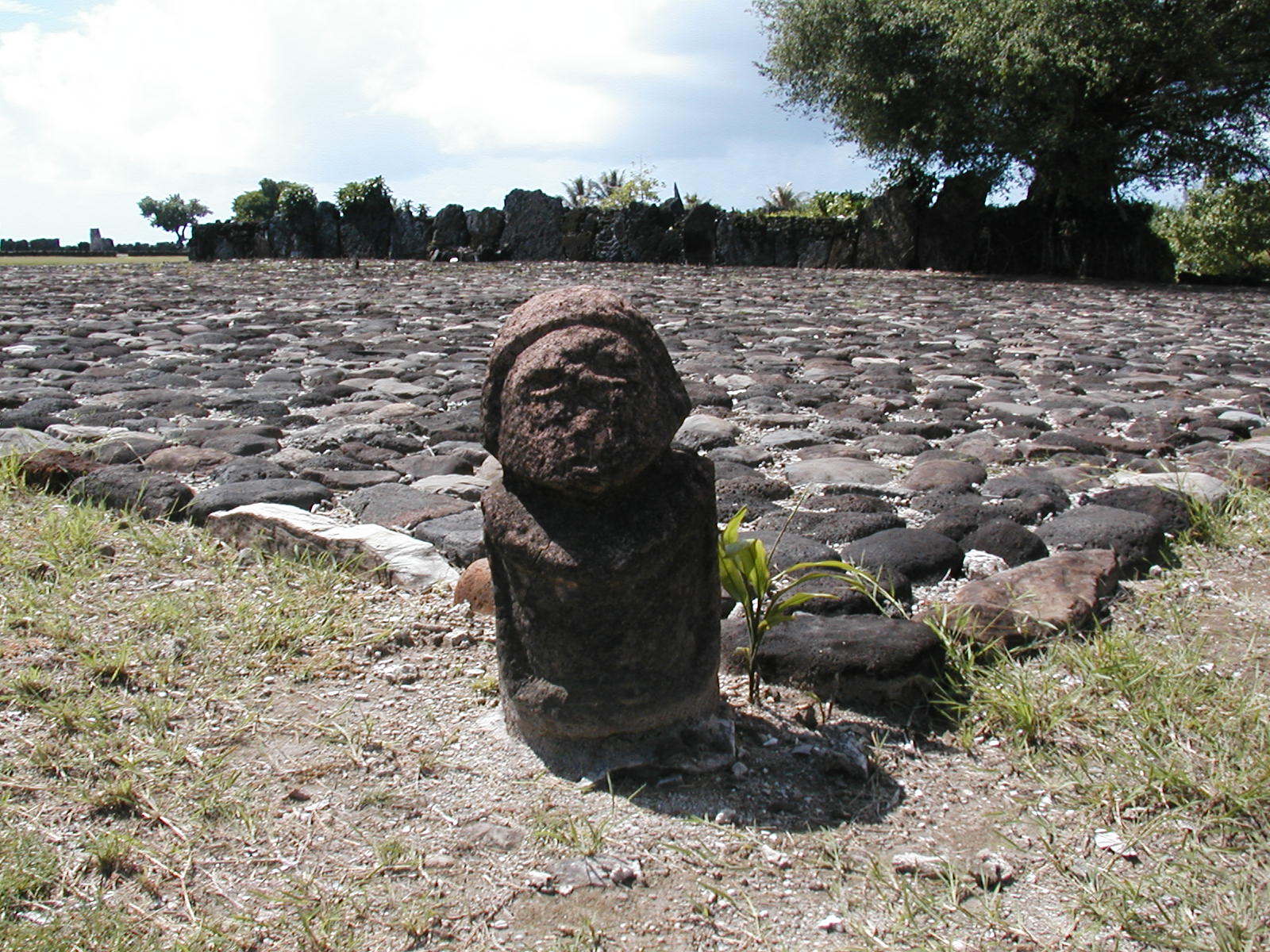
Genetics has since traced the voyaging routes in fine detail. A 2021 Nature study led by Alexander Ioannidis reconstructed the settlement sequence from the genomes of living Pacific islanders, mapping a serial expansion outward from central East Polynesia — precisely the region tradition names as Hawaiki. Within that region, Ra'iatea (whose older name is Havai'i, a direct cognate of Hawaiki) held the paramount marae of Taputapuatea, an inter-island religious and political centre. UNESCO inscribed it as a World Heritage Site in 2017, and tradition records that when voyagers founded new marae on distant islands they carried a stone from Taputapuatea to consecrate them — a ritual practice that physically links the scattered islands back to a single ancestral hearth.
- The Lapita expansion reaching the Tonga-Samoa-Fiji homeland region roughly 3,000 years ago
- High-precision dating (Wilmshurst, Anderson 2011) showing rapid late settlement from the Society Islands outward
- The 2021 Nature genomic study (Ioannidis) mapping expansion outward from central East Polynesia
- Ra'iatea's older name Havai'i being a direct linguistic cognate of Hawaiki
- Taputapuatea marae as a documented inter-island ritual centre from which founding stones were carried