Myth & Memory · Traditional associations: western Tibet

Shambhala

A hidden Buddhist kingdom of enlightenment beyond the Himalayas — read by its own tradition as inner and symbolic, and by outsiders as a real land to be conquered or found.

Mainstream: Kalachakra tradition placing Shambhala in Buddhist literature from the early 11th century ADAlternative: Reinterpreted by Western occultists and expeditions from the 1920s onward as a physical hidden kingdom to be found31.07°, 81.31°

At a glance

Shambhala
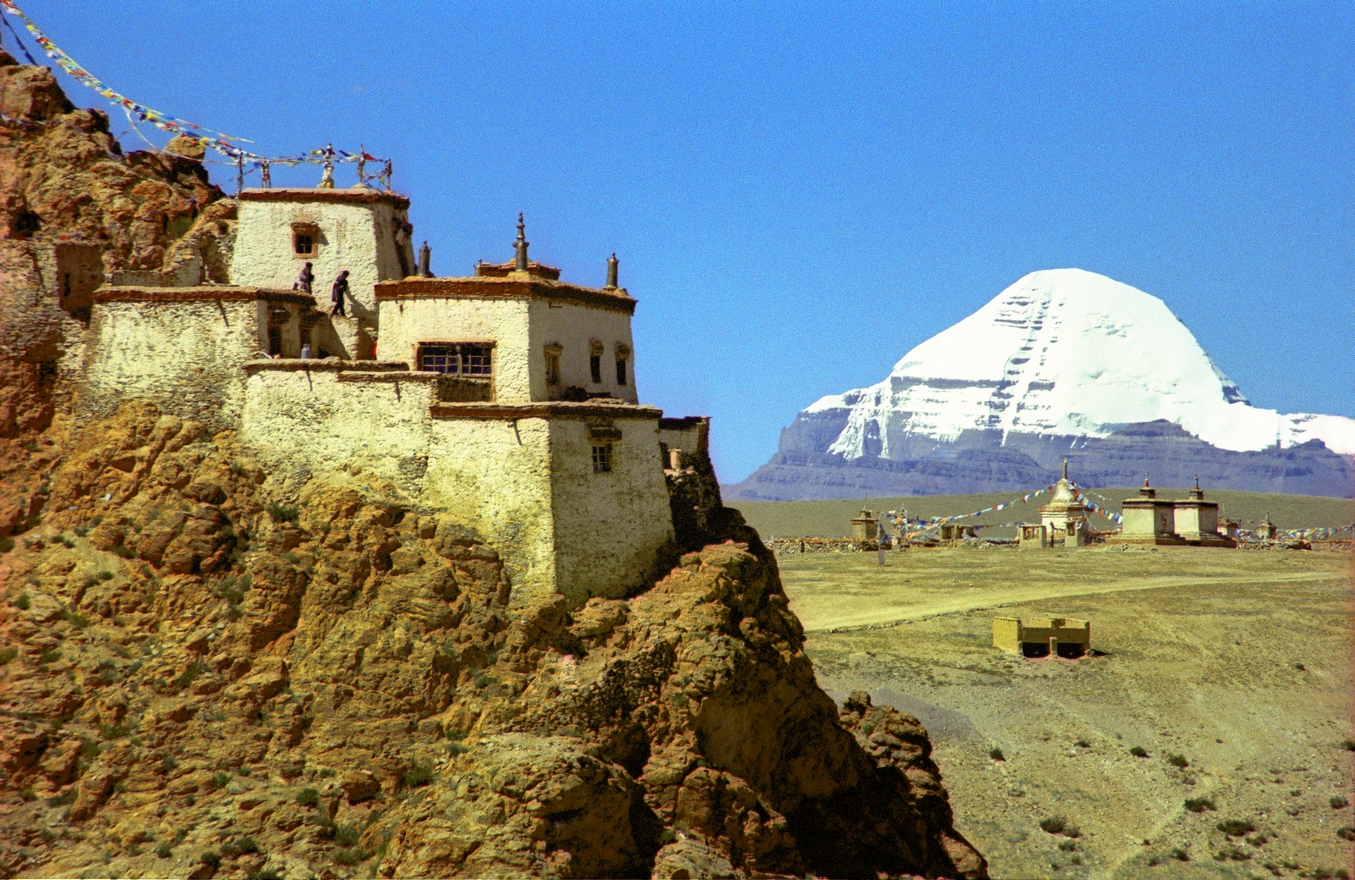
Photo: Jan Reurink · CC BY 2.0

Shambhala is a hidden kingdom of Tibetan Buddhist tradition, described in the Kalachakra ('Wheel of Time') teachings as a realm of enlightened rulers, ringed by snow mountains, from which a future king will emerge to renew the Dharma. Within Buddhism it is understood on multiple levels at once — as a place, as a state of mind, and as a map of meditative practice. In the twentieth century Shambhala was seized upon by Theosophists, occultists and even a Nazi expedition as a literal lost kingdom or hidden master-race homeland, and it was fictionalised as 'Shangri-La'. It stands here as a legend whose meaning is genuinely contested — and a warning about what happens when a spiritual symbol is read as a treasure map.

See it on the globe →
The mainstream view

What archaeology says

Scholars of Buddhism place Shambhala firmly within the Kalachakra tantric tradition, which entered Tibetan Buddhism in the early eleventh century. Texts such as the Kalachakra Tantra and its commentaries describe Shambhala as a kingdom of lotus-shaped design ruled by a line of enlightened kings (the Kalki or Rigden kings), and include a prophecy that a future king will ride out to defeat the forces of ignorance and inaugurate an age of peace. Buddhist scholars including Edwin Bernbaum (author of The Way to Shambhala) and John Newman stress that the tradition itself reads Shambhala on 'outer, inner and other' levels: an outer land reachable only by those with the right karmic and spiritual attainment, an inner meaning referring to the subtle body, and a practice meaning referring to meditation.

The 14th Dalai Lama has articulated this directly, describing Shambhala at a Kalachakra initiation as a pure land in the human realm that cannot simply be found as an ordinary country on a map. In other words, mainstream Buddhist scholarship does not treat Shambhala as a lost city awaiting an archaeological expedition; it treats it as a real element of a sophisticated religious cosmology, primarily symbolic and contemplative, even where it retains a notionally geographical location somewhere north of Tibet or India.

Key evidence cited
  • Shambhala's origin in the Kalachakra Tantra and its commentaries within eleventh-century Tibetan Buddhism
  • The tradition's own 'outer, inner and other' reading of Shambhala as land, subtle body and meditation
  • Scholarship by Edwin Bernbaum and John Newman treating it as symbolic cosmology, not lost geography
  • The 14th Dalai Lama describing Shambhala as a pure land not findable as an ordinary country
  • The neyig guidebook genre framing the route to Shambhala as an inner, contemplative journey
The alternative view

What the skeptics propose

The 'alternative' history of Shambhala is largely the story of outsiders literalising it. In the West, Helena Blavatsky's Theosophy folded Shambhala into a mythology of hidden Masters, and the Polish adventurer Ferdynand Ossendowski popularised a related subterranean kingdom, Agharti, in his 1922 book Beasts, Men and Gods. The Russian painter and mystic Nicholas Roerich, with his wife Helena, led Central Asian expeditions between 1925 and 1928 explicitly bound up with the search for Shambhala and a coming new age. Most notoriously, elements within Nazi Germany took an interest in Tibet: Ernst Schäfer's 1938-39 SS-backed expedition, though genuinely a scientific and surveying mission, has become entangled in later legends that it hunted for Shambhala or an Aryan homeland.

The most enduring transformation was fictional. In 1933 the novelist James Hilton published Lost Horizon, whose serene Himalayan valley of 'Shangri-La' is a lightly secularised Shambhala; the name entered global culture as a synonym for any hidden earthly paradise. These appropriations share a common move: they strip Shambhala of its Buddhist symbolic framework and recast it as a concealed physical place holding hidden power, whether occult wisdom, racial destiny or utopian escape.

From the standpoint of the tradition, these searches were looking in the wrong direction. Buddhist teachers hold that Shambhala's guidebooks (the neyig) describe an inner journey using the language of an outer one, and that no amount of trekking will locate a kingdom whose real gateway is the practitioner's own mind. The genuinely open question is therefore not 'where is Shambhala on the map' but how a symbolic realm keeps generating literal expeditions.

Key evidence cited
  • Theosophy (Blavatsky) recasting Shambhala as a home of hidden Masters
  • Ossendowski's 1922 popularising of the underground kingdom Agharti
  • Nicholas and Helena Roerich's 1925-28 Central Asian expeditions tied to the search for Shambhala
  • The legends attaching Shambhala and an Aryan homeland to Ernst Schäfer's 1938-39 Nazi Tibet expedition
  • James Hilton's 1933 Lost Horizon fictionalising Shambhala as the paradise valley of Shangri-La

Genuinely open questions

  1. How did a symbolic Buddhist realm come to generate so many literal Western expeditions to find it?
  2. How much genuine interest in Shambhala lay behind the Schäfer expedition versus later sensational myth-making?
  3. Where, if anywhere, did the tradition ever intend a real geographical location beyond its inner meaning?

Worth knowing

The word 'Shangri-La', now painted on hotels, retreats and a US presidential lodge (later renamed Camp David), was coined by novelist James Hilton in 1933 as a fictionalised Shambhala — so a Buddhist symbol of inner awakening survives in English mainly as a brand for luxury escape.