What archaeology says
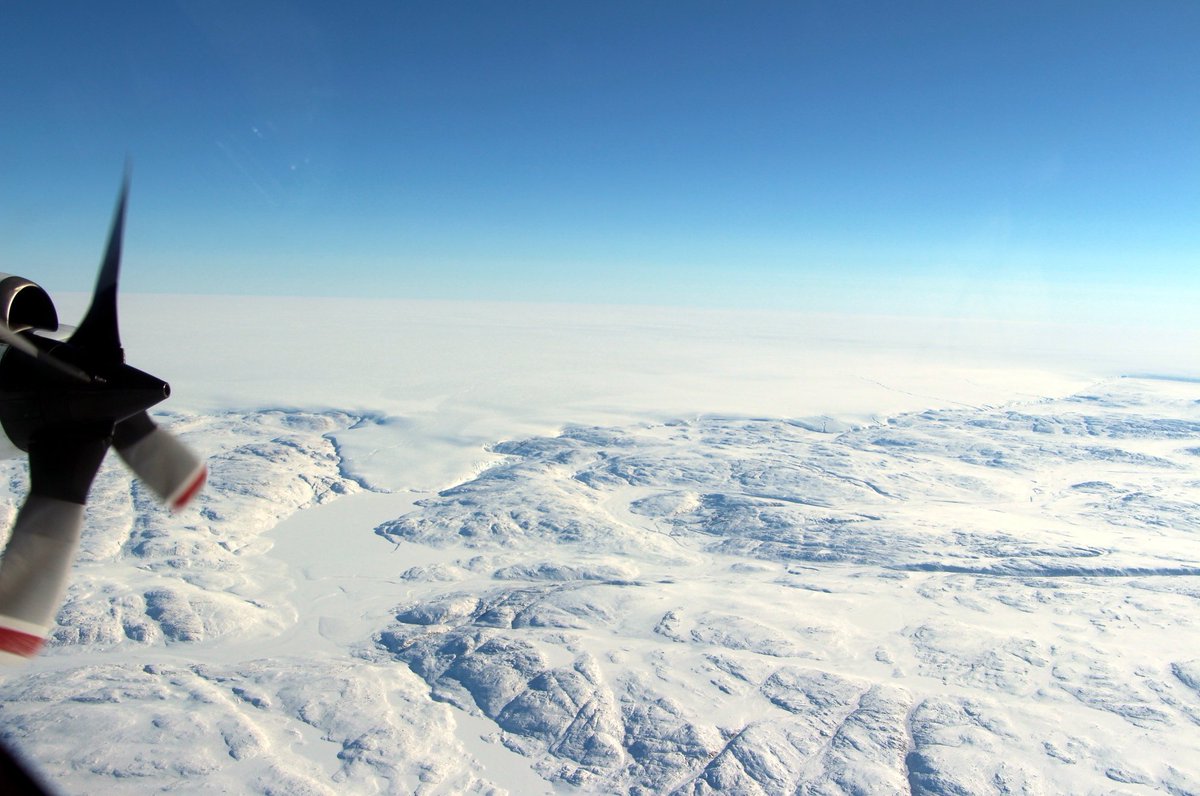
The discovery paper by Kurt Kjaer of the Natural History Museum of Denmark, with NASA glaciologist Joseph MacGregor and colleagues, was careful about age: the crater post-dated the Palaeoproterozoic bedrock and its sharp morphology was consistent with anything from three million years old to — provocatively — the end of the last ice age. That window overlapped the Younger Dryas, and the authors acknowledged the possibility, igniting headlines. But radiometric dating settled the matter. In 2022, Gavin Kenny of the Swedish Museum of Natural History and colleagues published in Science Advances two independent clocks run in two different laboratories: uranium-lead dating of shocked zircon in Stockholm and argon-argon dating of impact-melt sand in Copenhagen (under geochronologist Michael Storey). Both converged on 57.99 plus or minus 0.54 million years — the Late Palaeocene, roughly eight million years after the dinosaur-killing Chicxulub impact.
At 58 million years old, Hiawatha struck a Greenland that was ice-free temperate rainforest, and any climatic effects must be sought in Palaeocene records, not the Pleistocene. Researchers now investigate whether it relates to carbon-cycle wobbles near the Palaeocene-Eocene boundary. The crater's youthful appearance turned out to be a lesson in how slowly landscapes erode under certain conditions, and how deceptive 'freshness' can be. For the mainstream, Hiawatha is also a methodological parable: a bold hypothesis was aired, tested against hard isotopic evidence, and revised without rancour — precisely how science is supposed to work.
- Uranium-lead dating of shocked zircons giving c. 58 million years (Kenny et al., Science Advances 2022)
- Independent argon-argon dating of impact-melt sand converging on the same Late Palaeocene age
- Shocked quartz and melt-rock clasts in glaciofluvial sediment confirming a genuine impact origin
- Geochemistry indicating a fractionated iron asteroid over a kilometre across
- Reinterpretation of the 'disturbed' basal ice as ordinary glacial deformation, not impact damage