Catastrophe & Climate · Continental shelf edge off More, Norwegian Sea (tsunami deposits ring the North Sea)

The Storegga Slide

One of the largest submarine landslides on Earth sent a tsunami over the last of Doggerland.

Mainstream: c. 6200 BC (about 8150 years ago)Alternative: c. 6200 BC, seen as the final drowning of a lost land64.00°, 4.00°

At a glance

The Storegga Slide
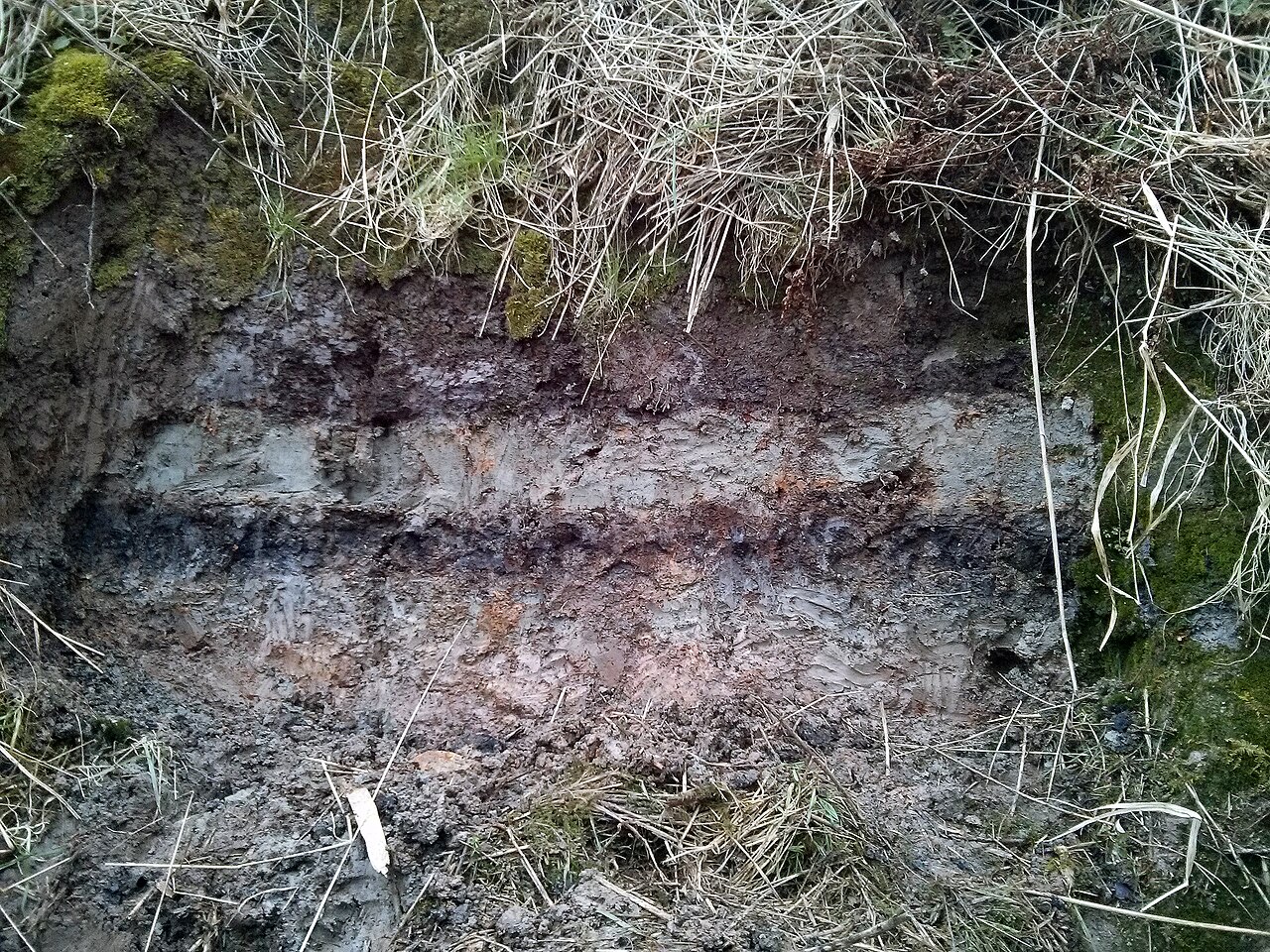
Photo: Stozy10 · CC BY-SA 3.0

Off the coast of Norway, a slab of continental slope roughly the size of a small country collapsed and slid into the deep, displacing enough water to send a tsunami racing across the North Sea. Its deposits are found up glens in Scotland and along the Norwegian coast, and it struck at the very time the North Sea land bridge of Doggerland was making its final retreat beneath the waves.

See it on the globe →
The mainstream view

What archaeology says

The Storegga Slide is a real and well-mapped catastrophe. Around 8,150 years ago some 3,000 cubic kilometres of sediment detached from the Norwegian continental margin and flowed downslope, probably destabilised by gas hydrates and by sediment loaded on during the last glaciation. The collapse generated a tsunami whose run-up sediments have been dated and traced.

Those deposits are unmistakable in the field. In eastern Scotland a sand layer within coastal peat records a wave that reached several metres above the tide line and pushed many kilometres inland around the Montrose Basin and the Firth of Forth; similar layers occur in Norway, the Shetlands and elsewhere. Radiocarbon dating of plant material in the tsunami sand gives a tight age near 6200-6100 BC.

Bernhard Weninger and colleagues argued in 2008 that the wave delivered the coup de grace to the low-lying remnants of Doggerland, the drowned plain that once joined Britain to the continent. More recent work, including studies by Jon Hill and by Vincent Gaffney's team, has modelled the wave and reassessed how catastrophic it truly was for the last Mesolithic inhabitants.

Key evidence cited
  • Sonar and coring map a vast slide scar and debris apron on the Norwegian margin, involving thousands of cubic kilometres of sediment.
  • A distinctive tsunami sand layer sits within coastal peat in eastern Scotland, Norway, Shetland and Denmark.
  • The Montrose Basin and Firth of Forth deposits show run-up several metres above the contemporary tide and kilometres inland.
  • Radiocarbon dates on plant material in the deposit cluster tightly around 6200-6100 BC (about 8150 years ago).
  • Weninger and colleagues (2008) linked the wave to the final inundation of Doggerland's surviving lowlands.
  • Independent tsunami modelling reproduces wave heights and inundation broadly matching the field deposits.
The alternative view

What the skeptics propose

Storegga is the rare case where alternative and mainstream accounts largely converge: even sober archaeologists describe it as the drowning of a lost world. Doggerland was a genuine inhabited landscape of rivers, marsh and coast where Mesolithic people hunted and fished, and the sea had been swallowing it for millennia before the wave arrived. Popular and alternative writers, Graham Hancock among them, use it as a vivid, defensible example of a real submerged human land lost to catastrophe.

The looser claims begin when Storegga is enlisted as a template for grander lost civilisations, or merged with flood myths and with the Younger Dryas impact story to suggest a single global deluge. There is no evidence that Doggerland held a city or an advanced culture, and the slide is separated from the Younger Dryas by thousands of years.

Fairly stated, the strong version rests on real ground and needs little embellishment. Its honest limit is that a drowned hunter-gatherer plain is not a drowned Atlantis, and conflating the two blurs a well-dated event with speculation.

Key evidence cited
  • Doggerland was a real, populated landscape, confirmed by trawled bones, tools and preserved peat from the North Sea bed.
  • Sea level was already rising fast, so a single great wave over a low plain is a plausible final blow.
  • The event is precisely dated, unlike most legendary floods, giving alternative writers a solid anchor.
  • Coastal Mesolithic sites around the North Sea show disruption in the same broad period.
  • The scale, a country-sized slide and an ocean-crossing wave, matches the mythic register of deluge stories.
  • Submerged worlds like Doggerland are cited as proof that whole inhabited lands can vanish and be forgotten.

Genuinely open questions

  1. How much of already-shrinking Doggerland actually survived to be drowned by the wave rather than by ordinary sea-level rise?
  2. Was the tsunami a sudden extinction of local communities, or a survivable if terrifying event?
  3. Could earlier or later Storegga-type slides have produced additional, less-recognised tsunamis?
  4. How large were the human populations exposed on the exposed North Sea coasts at the time?

Worth knowing

Fishing trawlers still haul up mammoth bones, antler tools and lumps of ancient peat from Doggerland, giving museums pieces of a country that no longer exists.