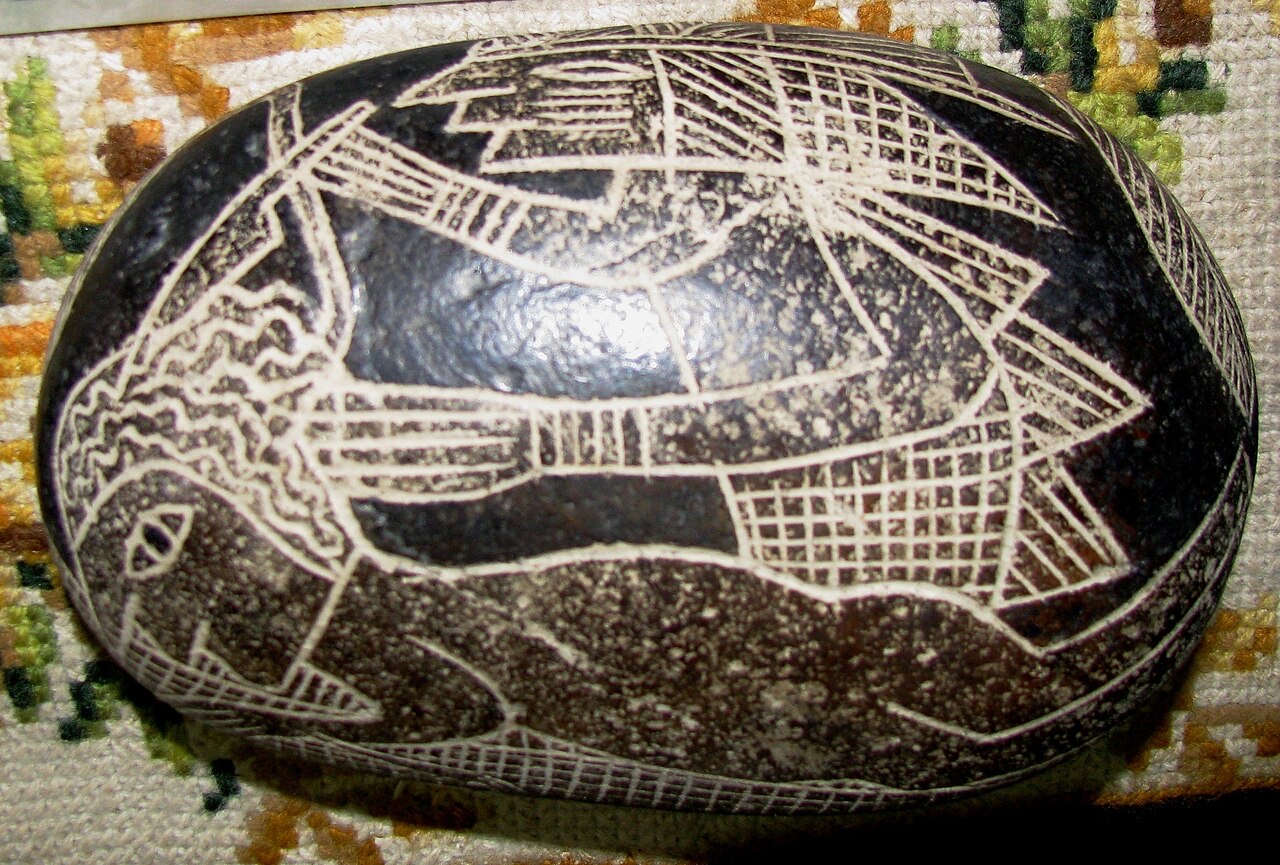
Ancient Technology · Ica, Peru; Cabrera collection at the Museo de Piedras Grabadas, Ica

Ica Stones

Thousands of engraved stones showing men riding dinosaurs — and a farmer who confessed to making them

Mainstream: Carved mostly in the 20th centuryAlternative: Claimed as records of a 'Gliptolithic' people who lived alongside dinosaurs-14.07°, -75.73°

At a glance

Ica Stones
Photo: Brattarb · CC BY-SA 3.0

From the 1960s onward, the Peruvian physician Javier Cabrera Darquea amassed a collection that eventually exceeded ten thousand engraved andesite stones from the Ica region, displayed in his private museum on Ica's Plaza de Armas. The engravings show startling scenes: men hunting or riding dinosaurs, heart transplants and brain surgery, telescopes, maps of unknown continents. Cabrera argued they were the library of an immensely ancient 'Gliptolithic' humanity. The stones' chief supplier, farmer Basilio Uschuya, told journalists — and demonstrated on camera — that he carved them himself with a dental drill, using comics, magazines and schoolbooks for inspiration, then aged them with donkey dung and boot polish.

See it on the globe →
The mainstream view

What archaeology says

Archaeologists class the Ica stones as modern folk craft turned hoax. The stones have no stratigraphic provenance: none has ever been excavated by an archaeologist from a sealed pre-Columbian context, and every documented specimen traces back through dealers and farmers, principally Basilio Uschuya and his wife Irma Gutierrez de Aparcana. In 1973 Uschuya told Erich von Daeniken the stones were fakes, and in a 1977 BBC documentary he carved one on camera and explained the ageing process; Peruvian authorities investigating the illegal sale of antiquities accepted the confession — selling fakes to tourists is not a crime, whereas trafficking real antiquities is, a legal incentive sceptics and believers read in opposite directions.

Physical examination supports recent manufacture. Engravings cut through the stones' natural varnish show fresh, unweathered grooves under magnification, and a laboratory examination arranged for von Daeniken found no meaningful patina in the incisions. The imagery is also anachronistic on its own terms: the dinosaurs reproduce mid-twentieth-century reconstructions — upright, tail-dragging sauropods and kangaroo-posed theropods — errors palaeontology has since corrected, which dates the artists' sources rather than the animals.

Skeptical investigators from Ken Feder to Massimo Polidoro treat the collection as a case study in how a hoax can outgrow its makers once a credentialed patron stakes his reputation on it.

Key evidence cited
  • Basilio Uschuya confessed repeatedly, and carved a stone on camera for a 1977 BBC documentary using a dental drill
  • No Ica stone has ever been recovered from a documented archaeological excavation
  • Incisions show no aged patina under magnification, unlike the weathered natural varnish they cut through
  • The dinosaur imagery copies outdated mid-twentieth-century reconstructions, complete with posture errors since corrected
  • The collection ballooned from dozens to over ten thousand stones precisely while Cabrera was known to be buying
  • Uschuya named his sources — comics, magazines, schoolbooks — and his ageing recipe of dung and shoe polish
The alternative view

What the skeptics propose

Javier Cabrera, a respected Ica physician from a prominent family, spent three decades arguing the stones were genuine. In his book The Message of the Engraved Stones of Ica (1976) he proposed that a cognitively advanced 'Gliptolithic' humanity lived in the region in the remote past — he spoke of millions of years — coexisting with Mesozoic fauna, mastering surgery and astronomy, and finally departing Earth, leaving the stones as an encyclopaedia. He held that Uschuya's confession was coerced by the antiquities law: admitting forgery was the only way to keep selling stones without prison.

Creationist authors later adopted the stones selectively, arguing the dinosaur scenes support recent human-dinosaur coexistence; Dennis Swift, a Baptist minister and author of Secrets of the Ica Stones and Nazca Lines, is the most active advocate, claiming some stones were found in tombs by early Spanish chroniclers and that a few genuinely old engraved stones exist in the Ica Regional Museum. Ancient-astronaut writers, following von Daeniken's early enthusiasm, kept the collection in the paranormal canon even after his own informant confessed.

Current status: the Cabrera museum still exhibits the collection in Ica, maintained by his daughter, and the stones remain popular in creationist and lost-civilisation media. No peer-reviewed study has ever authenticated an Ica stone, and the confessions, imagery anachronisms and absence of provenance leave the alternative case resting almost entirely on Cabrera's testimony and Swift's disputed tomb claims.

Key evidence cited
  • Cabrera argued a peasant family could not plausibly have produced ten thousand varied, iconographically consistent engravings
  • Uschuya's confession conveniently shielded him from prosecution under Peru's antiquities laws, so its sincerity is arguable
  • Dennis Swift claims a small number of engraved stones were excavated at Ica-area sites and reported by Spanish chroniclers
  • Supporters point to a 1560s chronicle reference to strange engraved stones from the region, suggesting a genuine older tradition
  • Some stones allegedly show accurate anatomical detail — such as dinosaur skin patterns — argued to predate their scientific discovery
  • The sheer thematic range, from surgery to star maps, is held to exceed what tourist-driven forgery would bother to invent

Genuinely open questions

  1. Do any genuinely pre-Columbian engraved stones exist within or behind the modern corpus, as even some sceptics allow is possible?
  2. How many hands actually produced the collection — Uschuya alone could hardly have carved ten thousand stones?
  3. What becomes of the Cabrera museum's collection, which Peru has never formally studied, catalogued or repatriated?
  4. Why did Cabrera, a trained physician, stake his career on the stones — sincere belief, or something more complicated?

Worth knowing

When asked by a journalist why he had claimed the stones were ancient, Uschuya reportedly replied that making them was easier than farming — and that carving fakes was legal, while selling real antiquities was not.