What archaeology says
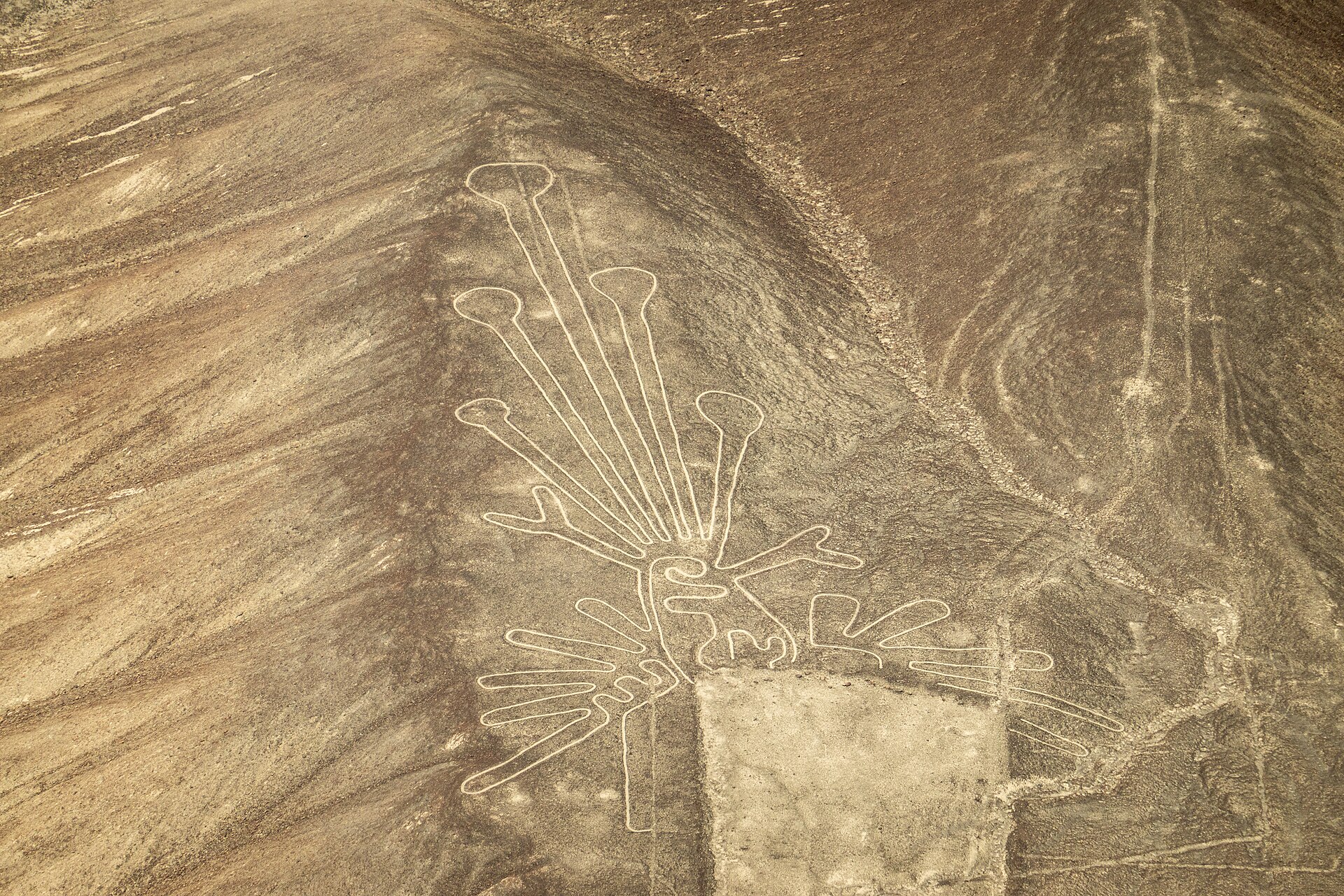
The Palpa geoglyphs have been the focus of long-term, systematic research, above all by Markus Reindel and Johny Isla of the German Archaeological Institute (later joined by drone-survey work with Masato Sakai of Yamagata University). Beginning in the 1990s, their teams documented and excavated hundreds of sites and established a developmental sequence: many Palpa figures were made by the Paracas and Topara cultures, roughly between 400 BC and the turn of the era, which places them earlier than the majority of the classic Nazca-plain geoglyphs. Peru's Ministry of Culture likewise attributes the Palpa geoglyphs to the Paracas and Topara peoples of that early window.
This earlier, hillside phase reshapes the Nazca story. It shows that the tradition did not begin with vast figures aimed at the heavens but with images placed for terrestrial viewers — set on slopes above settlements, depicting human and mythical figures in a style continuous with Paracas iconography seen on textiles and pottery. From that foundation the practice appears to have shifted, in the later Nazca period, onto the open plain and toward the enormous line-and-figure geoglyphs that made the region famous. The Reloj Solar and similar features fit a broader interpretation of the geoglyphs as bound up with ritual, water and agricultural fertility in an intensely arid land — concerns for which archaeologists such as Reindel and Isla have argued the lines were walked, gathered at and maintained as part of ceremonial life.
In short, mainstream research treats Palpa not as a lesser annex of Nazca but as its older root — the phase that reveals where the whole extraordinary tradition came from.
- Decades of survey and excavation at Palpa by Markus Reindel and Johny Isla of the German Archaeological Institute
- Attribution of many figures to the Paracas and Topara cultures (c. 400 BC – AD 1), earlier than most Nazca geoglyphs
- Hilltop and hillside placement angled toward valley settlements, showing they were made for ground-level human viewers
- Iconographic continuity with Paracas textiles and pottery anchoring the figures in a known cultural sequence
- A developmental sequence linking early hillside figures to the later flat-plain Nazca tradition