What archaeology says
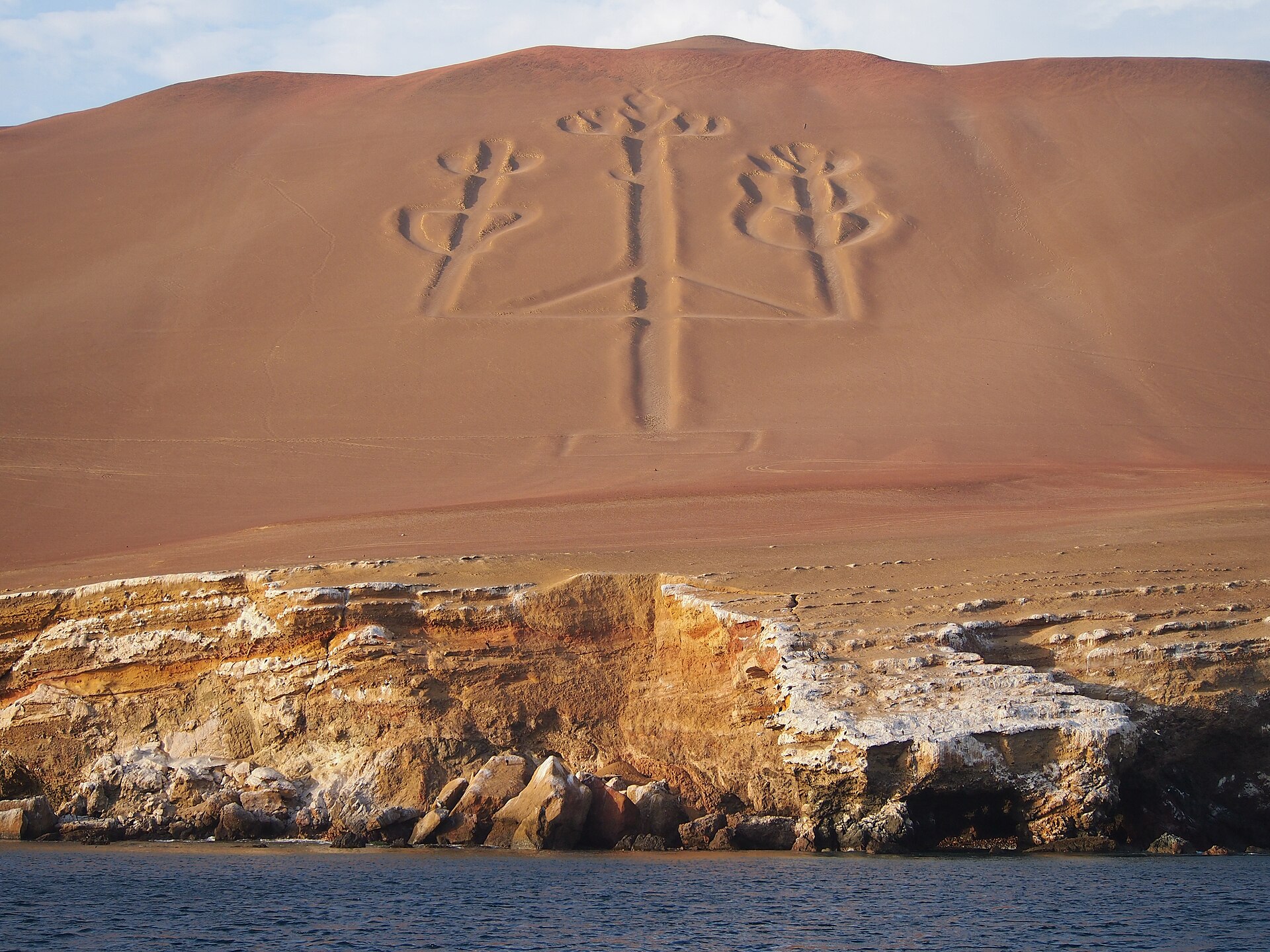
The mainstream position dates the Candelabra to the Paracas culture around 200 BC, based on the pioneering fieldwork of the German-Peruvian archaeologist Maria Reiche — better known for her lifelong study of the Nazca Lines — who examined the geoglyph and recorded Paracas-style pottery in its vicinity that dates to about that period. The direct link between the figure and the pottery cannot be absolutely proven, since a geoglyph carries no date of its own, but the association places it firmly within the coastal cultural sequence of the region rather than in any exotic timeframe.
Interpretively, archaeologists are cautious. The most widely accepted reading treats the Candelabra as a coastal marker and ritual symbol: its unmistakable, seaward-facing form would have served as a landmark for fishing communities and coastal navigators, while its scale and effort point to religious or ceremonial significance for the Paracas people who lived along this shore. Because no text or tradition explains it, professionals generally decline to fix a single meaning, treating the beacon and the sacred-symbol functions as compatible and mutually reinforcing rather than as rival certainties.
The Candelabra's importance also lies in what it shows about the deeper roots of the region's geoglyph tradition. Made by the Paracas rather than the later Nazca, and designed for viewing from the sea rather than the sky, it is part of the evidence that hillside and slope geoglyphs meant to be seen by human eyes preceded and coexisted with the famous flat-desert figures — a point that connects it to the older Palpa geoglyphs inland.
- Paracas-style pottery recorded near the geoglyph by Maria Reiche, dated to around 200 BC
- Location in the coastal heartland of the Paracas culture, famous for its textiles and burials
- Seaward orientation and 19 km visibility consistent with a coastal landmark for fishing and navigation
- Trench cut into a stable, salt-crusted slope in a windless microclimate, explaining millennia of preservation
- Fit within a regional tradition of hillside and slope geoglyphs made for viewing by human eyes