What archaeology says
The mega-sites were doubted for decades — Soviet aerial photography and geophysics seemed too good to be true — but magnetometry surveys in the 2000s and 2010s, by the Durham-Kyiv team at Nebelivka and a Kiel University team under Johannes Müller at Maidanetske, confirmed thousands of burnt-house anomalies in planned concentric layouts. Radiocarbon dating places Nebelivka's main occupation around 4000-3950 BC, before urban Uruk. The core debate is what these places were. Videiko and the Kyiv school have argued for proto-cities with populations in the tens of thousands; Müller's team estimated up to 17,000 at Maidanetske; Chapman and Gaydarska counter with a 'low-density' model in which only part of the plan was occupied at once, perhaps functioning as seasonal assembly places or pilgrimage centres.
Because the mega-sites lack palaces, temples, rich graves, writing and any visible ruling class, they pose a direct challenge to the classic checklist of urbanism. David Graeber and David Wengrow made them a centrepiece of The Dawn of Everything, arguing they show that thousands of people could self-organise city-scale life without kings or bureaucrats — a claim that is heterodox but grounded in the excavated evidence.
The deliberate house-burning, demonstrated experimentally to require huge quantities of added fuel, is generally read as ritual 'killing' of houses at the end of their lives, and the abandonment of the whole phenomenon by c. 3600 BC is attributed to some blend of ecological strain, social fission and climate shift — with no consensus yet.
- Complete magnetometry plans of Nebelivka and Maidanetske showing thousands of structures in planned concentric rings
- Radiocarbon dating placing Nebelivka's main phase c. 4000-3950 BC, earlier than urban Uruk
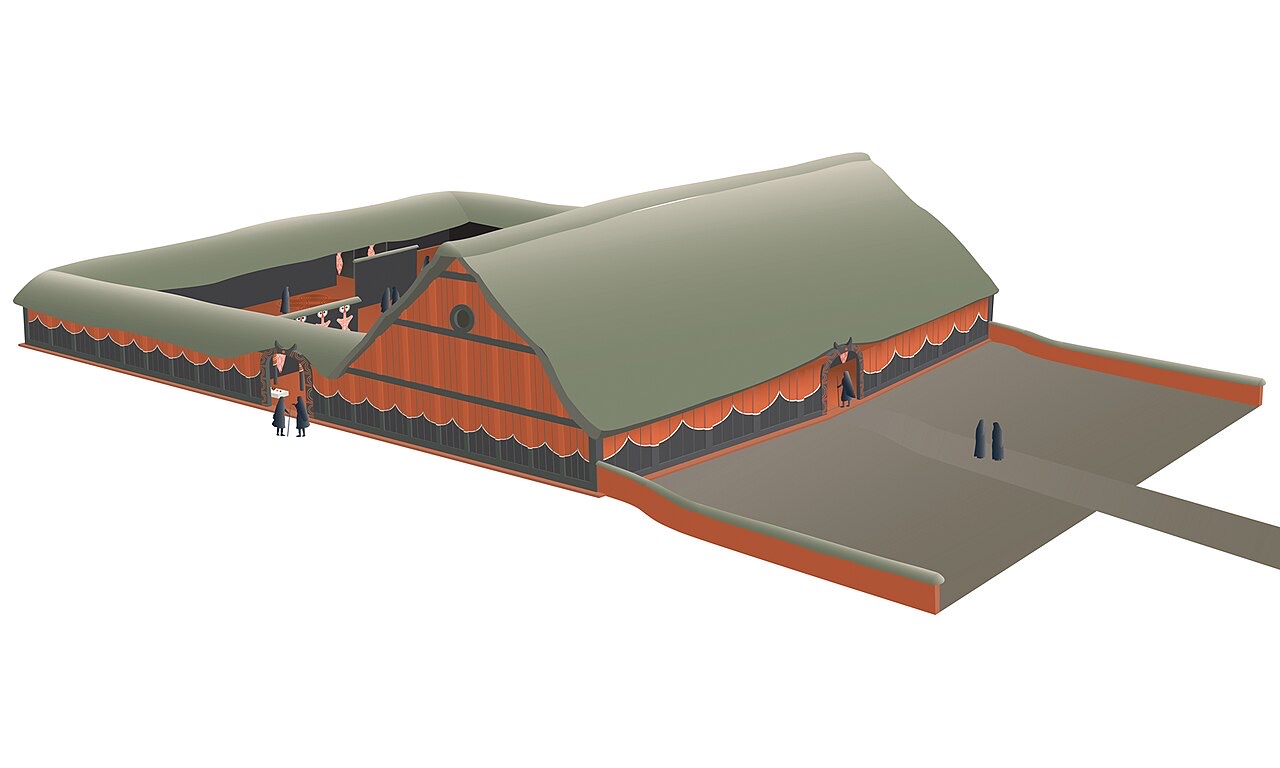
- The 1,200-square-metre Nebelivka mega-structure, the largest known Trypillia public building
- A 5.9-kilometre perimeter ditch too slight for defence, implying a symbolic boundary
- Experimental house-burnings showing the fires required deliberate, fuel-intensive effort
- Absence of palaces, elite burials and administrative tools despite city-scale settlement plans