Lost Worlds · Sicilian Channel, c. 60 km south of Sicily, Italy

Pantelleria Vecchia Bank 'Monolith'

A 12-metre stone with three neat holes, resting 40 metres down on a drowned island — Mesolithic monument or tsunami-tossed beachrock?

Mainstream: Limestone formed c. 40,000 years ago; the bank was an island progressively drowned by rising seas, submerging c. 9,300 years agoAlternative: Claimed to be a 12-metre monolith cut, drilled and erected by Mesolithic islanders before c. 7350 BC37.17°, 12.11°

At a glance

Pantelleria Vecchia Bank 'Monolith'
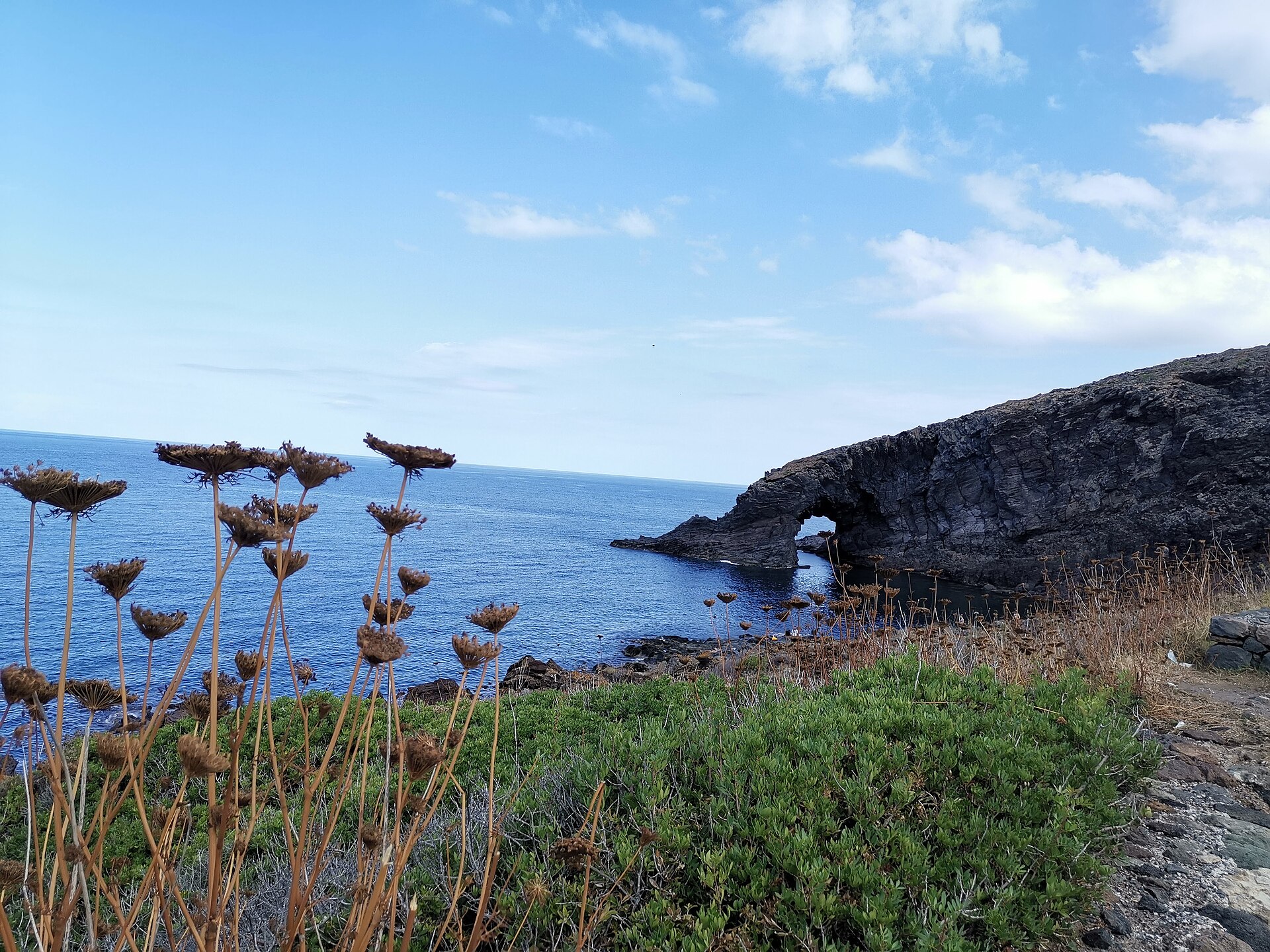
Photo: Nathill2512 · CC BY-SA 4.0

In 2015, oceanographers Emanuele Lodolo (OGS Trieste) and Zvi Ben-Avraham (Tel Aviv University) reported a startling find from a routine seafloor survey of the Pantelleria Vecchia Bank, a shallow bank in the Sicilian Channel that was an island before post-glacial sea-level rise drowned it about 9,300 years ago. Lying broken in two at 40 metres depth was a regular, elongated limestone block 12 metres long and weighing an estimated 15 tonnes, pierced by three holes of similar diameter — one, 60 centimetres across, passing right through the stone. Publishing in the Journal of Archaeological Science: Reports, they argued it was a monolith shaped and erected by the island's Mesolithic inhabitants. Others see nothing but cracked and storm-shifted beachrock. The debate is a rare, live test case in how science distinguishes human work from geology on the seabed.

See it on the globe →
The mainstream view

What archaeology says

The cautious mainstream position is that the 'monolith' is probably natural. Sceptical geologists and archaeologists note that the block is local sedimentary calcirudite, radiocarbon-dated from included shell to about 40,000 years old, consistent with the surrounding beachrock formations; that elongated, joint-bounded slabs with surprisingly straight edges are exactly what fractured, wave-worked beachrock produces; and that circular holes in coastal limestone are routinely bored by marine molluscs, scoured by pebbles rotating in currents, or dissolved along weaknesses. A 2024 reassessment in the Journal of Marine Science and Engineering examined the Sicilian Channel cases and concluded the features are natural, suggesting the block is a slab of neighbouring eroded beachrock broken off and shifted by storm waves or a tsunami around 9,500–9,200 years ago, and criticising the original dating argument as resting on sea-level assumptions rather than archaeological evidence.

The wider context also gives pause. No stone tools, hearths, bones or any other unambiguous trace of human presence has been recovered from the bank, and a Mesolithic monument of this scale would be exceptional: mainland megalith-building traditions are millennia younger, and moving a 15-tonne stone would be a remarkable feat for small foraging bands, though defenders note Göbekli Tepe proves pre-agricultural societies could work megaliths.

Notably, the discoverers themselves have grown more measured. In a 2023 Scientific Reports paper on two enigmatic rock ridges nearby — one almost exactly ten times the length of the other, meeting at close to a right angle — Lodolo and colleagues wrote plainly that their data 'do not conclusively reveal either a natural or anthropogenic origin', while observing that such a concentration of geometrically regular structures in one small area is curious. That is how the question currently stands: intriguing geometry, no artefacts, verdict open but leaning natural in most published assessments.

Key evidence cited
  • The block is local-type calcirudite beachrock c. 40,000 years old, matching nearby natural formations
  • Straight-edged slabs and rounded holes are known products of jointing, mollusc boring and current scour
  • No stone tools, bones, hearths or other archaeological material found anywhere on the bank
  • A 2024 Journal of Marine Science and Engineering reassessment concluded the features are natural, storm- or tsunami-moved beachrock
  • The discoverers' own 2023 paper on nearby ridges concedes the evidence is inconclusive
The alternative view

What the skeptics propose

The case for human workmanship was made not by fringe authors but in a peer-reviewed journal. Lodolo and Ben-Avraham argued that the block's regular shape, relatively smooth surfaces and straight edges have no analogue in the surrounding outcrops; that the three holes are of similar diameter, which random boring or scour should not produce; and that the through-hole is positioned near one end, where a socket or lever-hole would be useful. Crucially, the stone's composition differs from the immediately adjacent bedrock, implying to them that it was transported — and they wrote that 'there are no reasonable known natural processes that may produce these elements' in combination. Palaeogeographic reconstruction shows the find-spot stood 20–30 metres above sea level on an archipelago between Sicily and Tunisia until the early Holocene, so people could certainly have stood there.

If correct, the implications are significant rather than heretical: a 15-tonne worked monolith from before 7350 BC would show that Mesolithic Mediterranean islanders organised heavy communal labour thousands of years before the classic megalithic cultures of Malta and Atlantic Europe, and it would spotlight the drowned continental shelves — where post-glacial coastlines, and presumably their most important settlements, now lie underwater — as archaeology's great blind spot. Writers such as Graham Hancock have folded the monolith into exactly that argument: that evidence for sophisticated Ice Age and early Holocene coastal peoples is systematically missing because it is 40 metres down.

Sceptics respond that extraordinary claims parked at diving depth in murky water tend to stay unresolved, and that the burden of proof lies with the anthropogenic camp: one associated flint blade, one percussion scar, one post-hole would transform the case. Both sides, to their credit, agree on the remedy — systematic underwater survey of the bank with modern robotics, which has yet to be funded.

Key evidence cited
  • Three holes of similar diameter, one 60 cm bore passing clean through the 12-metre block
  • Regular shape and straight edges argued to lack natural analogues in surrounding outcrops (Lodolo & Ben-Avraham 2015)
  • Composition differing from adjacent bedrock, suggesting the stone was transported before submergence
  • The site stood well above sea level on a habitable archipelago until c. 9,300 years ago
  • Nearby ridges with curious geometry — one ten times the other's length, meeting near a right angle

Genuinely open questions

  1. Can micro-analysis of the holes distinguish tool percussion or drilling from bio-erosion and scour?
  2. Is there any buried archaeological material — flints, charcoal, post-holes — in the sediments of the drowned island?
  3. What formed the two geometric ridges nearby, and are they related to the monolith at all?

Worth knowing

When the monolith was supposedly erected, you could in principle have walked, waded and island-hopped much of the way from Sicily towards Tunisia — the Sicilian Channel was an archipelago of islands that the rising post-glacial sea picked off one by one.