Belief & Society · Sassari, Sardinia, Italy

Monte d'Accoddi

A four-thousand-BC stepped platform in Sardinia that looks, for all the world, like a ziggurat.

Mainstream: c. 4000-3650 BC, rebuilt c. 3500-3000 BC (Ozieri culture)Alternative: Date accepted; contested is how a Mesopotamian-style ziggurat form arose in Neolithic Sardinia40.79°, 8.45°

At a glance

Monte d'Accoddi
Photo: Gianni Careddu · CC BY-SA 3.0

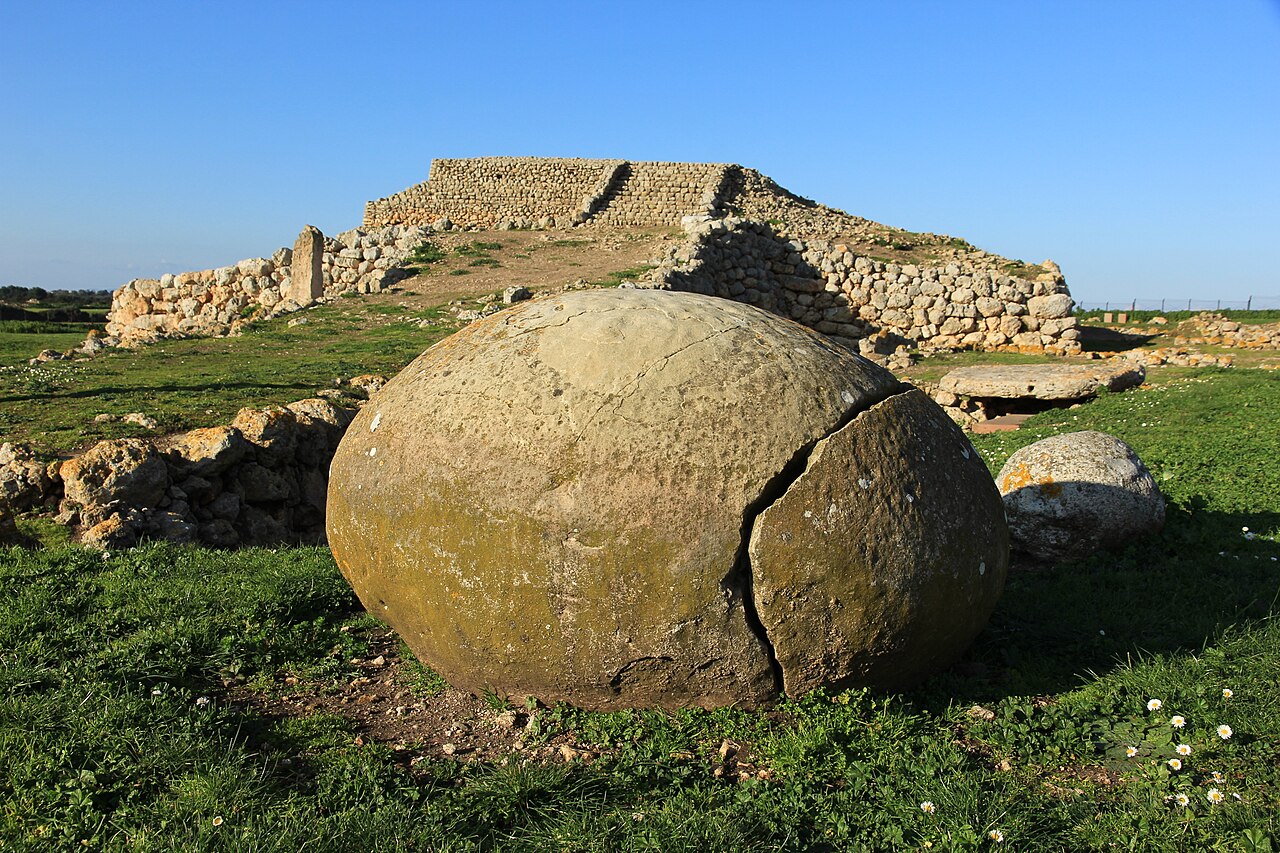
In the flat Nurra plain between Sassari and Porto Torres in northern Sardinia stands Monte d'Accoddi, a truncated stepped platform of earth and stone reached by a 42-metre ramp — often called the ziggurat of Europe. First raised around 4000-3650 BC by the Ozieri culture and rebuilt as a larger stepped monument around 3500-3000 BC, it measures about 36 by 29 metres and once stood some 10 metres high. Nothing else like it is known anywhere in the prehistoric western Mediterranean. Rediscovered in 1954, it was excavated by Ercole Contu and later Santo Tinè, and partially reconstructed in the 1980s.

See it on the globe →
The mainstream view

What archaeology says

Archaeologists interpret Monte d'Accoddi as an open-air sanctuary — an altar-platform rather than a tomb or dwelling. The first monument, dated by radiocarbon to roughly 4000-3650 BC, was a platform supporting a red-painted shrine; after a destruction episode, perhaps by fire, it was entombed within a second, larger stepped structure of the Sub-Ozieri phase around 3500-3000 BC, with its long processional ramp. Around the monument Contu's excavations of the 1950s and Tinè's campaigns of 1979-1990 found hearths, animal sacrifice remains, carved stelae, female figurines and quantities of decorated Ozieri pottery, with activity continuing until abandonment around 1800 BC.

The ziggurat comparison is not a fringe invention — excavators themselves used the word, and scholars have noted formal parallels with early Mesopotamian temple platforms such as the White Temple terrace at Uruk, which is broadly contemporary with the second phase. The mainstream position, however, is convergence rather than contact: ramped platforms are a natural architectural solution for raising a shrine above a plain, and there is no material evidence — no imports, no Near Eastern objects — of a fourth-millennium connection between Sardinia and Mesopotamia.

Alongside the platform stand a menhir over four metres tall, dolmen-like slabs interpreted as offering tables, and a large boulder carved into an egg-like sphere, all consistent with the rich megalithic and ritual traditions of Neolithic Sardinia.

Key evidence cited
  • Radiocarbon dates placing the first platform at c. 4000-3650 BC within the local Ozieri culture
  • Continuous local material culture — Ozieri pottery, figurines, stelae — with no Near Eastern imports
  • Excavations by Ercole Contu (1954-58) and Santo Tinè (1979-1990) documenting two building phases
  • Animal sacrifice remains and hearths consistent with an open-air sanctuary
  • Ramped platforms arise independently in many cultures as a way to elevate a shrine
The alternative view

What the skeptics propose

The alternative conversation around Monte d'Accoddi starts from its sheer isolation as a type: one stepped temple-platform with a ceremonial ramp, alone in Europe, built at the same broad horizon as the earliest ziggurat platforms of Sumer. Diffusionist writers argue that so specific an architectural package — platform, ramp, summit shrine — is unlikely to be reinvented independently, and propose seaborne contact or shared inheritance from a common source, pointing to Sardinia's later reputation as home of the seafaring Sherden of Bronze Age records.

The journalist Sergio Frau, in his book Le Colonne d'Ercole (2002), folded Monte d'Accoddi into a larger heterodox thesis: that the Pillars of Hercules originally stood at the Strait of Sicily, making Sardinia the great island beyond them — Plato's Atlantis — later devastated by a tsunami. Frau's ideas drew serious public debate in Italy, including a UNESCO-hosted symposium, though most archaeologists and geologists reject the tsunami evidence as read.

Others focus on the sky. Archaeoastronomical studies have noted that the ramp lies close to the meridian and have proposed solstitial and lunar sightlines from the platform, with the carved stone sphere and menhirs read as instruments of a sophisticated observational cult. Here the distance between camps is small — mainstream researchers also accept ritual astronomy at the site; they simply resist importing Sumerians to explain it.

Key evidence cited
  • Unique ziggurat-like form with no antecedent or descendant anywhere in Europe
  • Broad contemporaneity with the earliest Mesopotamian temple platforms such as Uruk's
  • Sergio Frau's argument placing Sardinia at the centre of a lost Mediterranean civilisation
  • Proposed astronomical alignments of the ramp, menhirs and carved sphere
  • Sardinia's deep and precocious megalithic tradition, suggesting wide maritime contacts

Genuinely open questions

  1. Why was this form of monument built once in Europe, here, and never repeated?
  2. What destroyed the first red-painted shrine, prompting the ziggurat-like rebuild?
  3. Do the proposed astronomical alignments reflect design or coincidence?
  4. What was the function of the carved stone sphere and the giant menhirs beside the ramp?

Worth knowing

Beside the ramp sits a large prehistoric boulder painstakingly carved into the shape of an egg — and nobody knows why.