What archaeology says
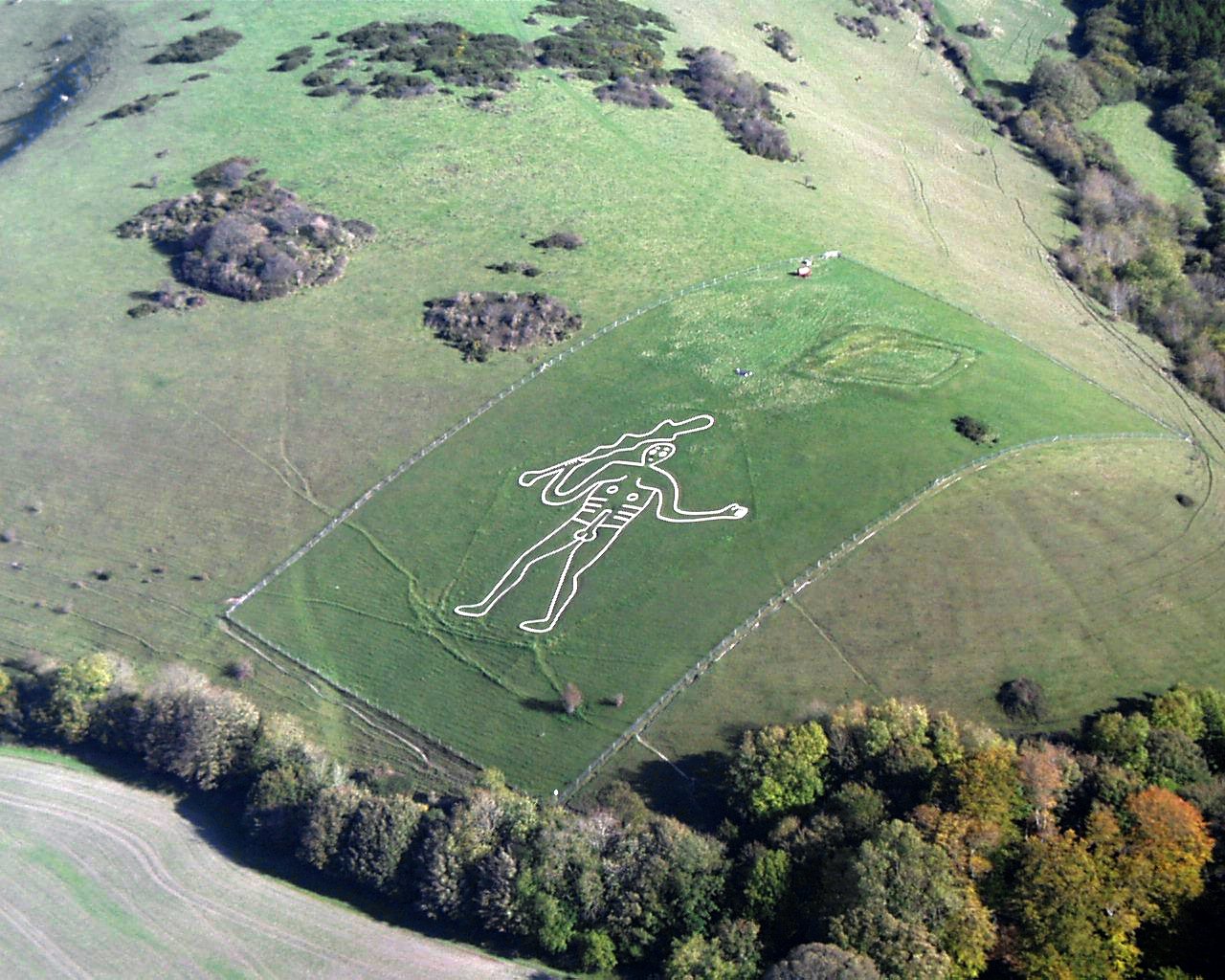
In 2020 the National Trust, which has owned the giant since 1920, commissioned the first scientific dating of the figure. Senior archaeologist Martin Papworth excavated small trenches at the giant's elbows and feet, and Phillip Toms of the University of Gloucestershire applied optically stimulated luminescence dating to the deepest chalk layers. The results, announced in May 2021, were a genuine shock: the earliest material dated to AD 700–1100, meaning the giant is late Saxon or early medieval — too late to be prehistoric or Roman, and far too early to be a Stuart-era satire. Supporting evidence came from microscopic snail shells in the sediments belonging to species only introduced to Britain in the medieval period. Papworth suggested the figure may then have been neglected and grassed over for centuries, explaining why surveys such as John Norden's in 1617 fail to mention it before its sudden documentary appearance in 1694.
The dating transformed the interpretive landscape. In a 2024 study in the journal Speculum, Oxford medievalists Helen Gittos and Thomas Morcom argued the giant was originally an image of Hercules — the club is his standard attribute, and a National Trust geophysical survey suggests his free arm once carried a cloak, plausibly the Nemean lion's skin — cut as a landmark and muster station for West Saxon armies during the Viking wars. The site commands major routeways, fresh springs and a royal estate, exactly the assets a muster point required, and Hercules enjoyed a documented revival in Anglo-Saxon learned culture.
Gittos and Morcom further proposed that the monks of Cerne Abbey, founded at the foot of the hill in 987, later reinterpreted the embarrassing pagan strongman as their local hermit saint Eadwold, who was said to have planted his staff on the hill. The giant thus becomes a rare case study in how one image can be serially re-read — Hercules to saint to satire to fertility idol — while the chalk itself stayed put.
- 2021 OSL dates from the deepest chalk layers bracketing creation to AD 700–1100 (Toms and Papworth)
- Medieval-introduced snail species found in the figure's earliest sediment layers
- Gittos and Morcom's 2024 case for a Hercules image at a West Saxon muster site (Speculum)
- Geophysical evidence of a cloak over the left arm, matching Hercules' lion-skin iconography
- An 11th-century life of St Eadwold apparently alluding to the figure on the hill above Cerne