What archaeology says
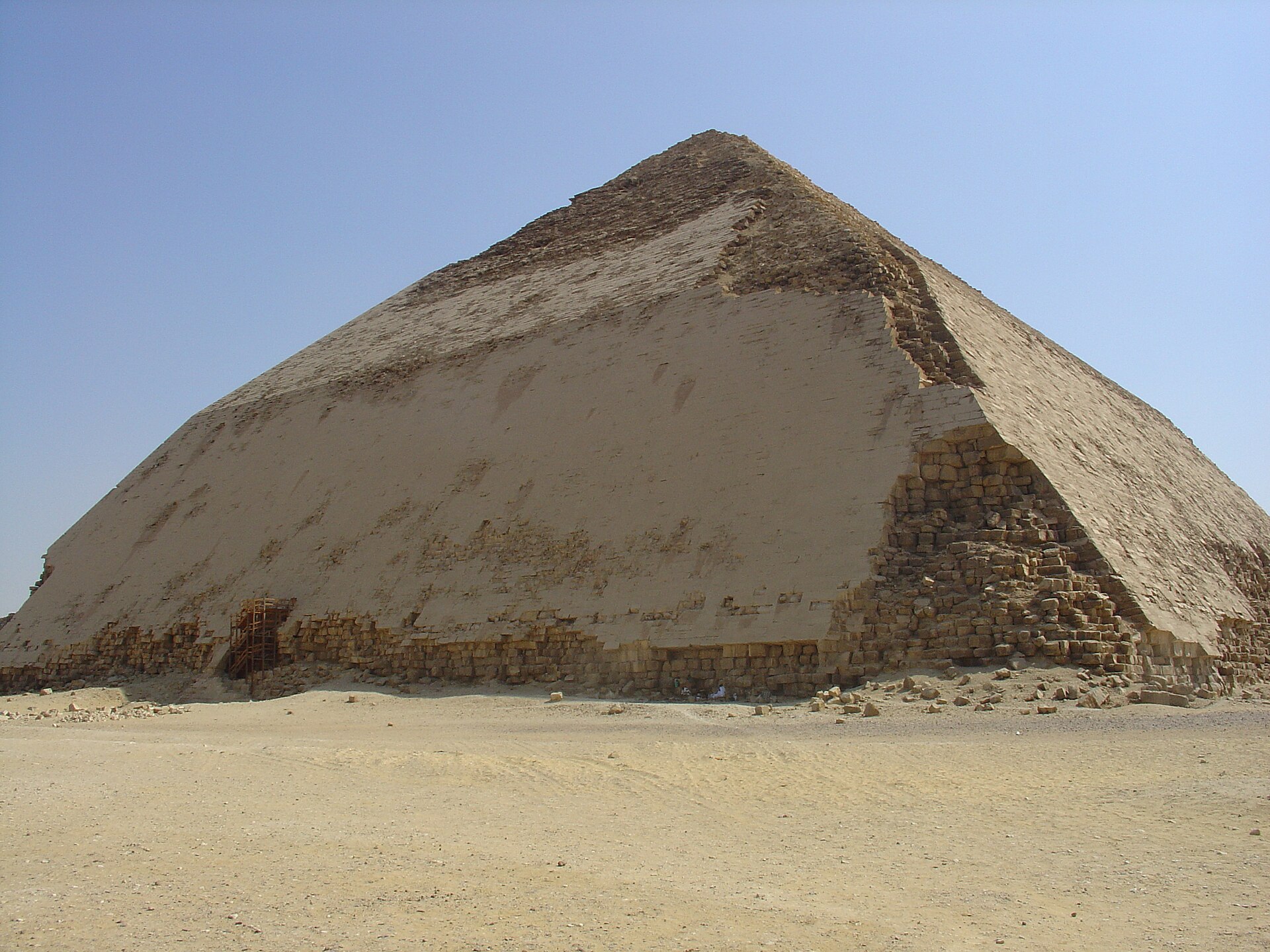
Egyptologists read Dahshur as the decisive chapter in the evolution of the true pyramid. Sneferu began the Bent Pyramid at an ambitious angle on unstable desert clays; cracking and subsidence appeared in the corridors and chambers (visible today as cedar-log bracing and plaster repairs), and the builders first eased the slope of the lower section, then finished the top at a much safer 43 degrees. Rather than trust the compromised monument, Sneferu started again nearby, building the Red Pyramid at the gentler angle from the outset. Quarry marks in red ochre naming Sneferu and dated work-gang inscriptions (referring to years of his cattle-count census) were found on casing and core blocks of both pyramids, and a decree of Pepi I later exempted the towns of 'the two pyramids of Sneferu' from taxes — anchoring ownership and date about as firmly as Old Kingdom evidence allows.
The Bent Pyramid was explored by John Perring in 1839 and systematically excavated by Ahmed Fakhry in the 1950s, who uncovered its valley temple with reliefs of Sneferu; a stela bearing the king's name stood beside its satellite pyramid. It is also the only major pyramid with two separate entrances and internal systems — one from the north, one from the west — which most Egyptologists interpret as evolving design and ritual requirements during a troubled build. The Red Pyramid's corbelled chambers, roofed with eleven-plus courses of overlapping stone, solved the structural problems, and fragmentary human remains found in its upper chamber may (though this is uncertain) be Sneferu himself. The site reopened fully to visitors in 2019, and ongoing excavation of the Dahshur necropolis continues to produce Old and Middle Kingdom tombs, coffins and mummies.
- Red-ochre quarry marks and dated work-gang inscriptions naming Sneferu on blocks of both pyramids
- A decree of Pepi I exempting the towns of 'the two pyramids of Sneferu' from taxation
- Visible structural distress in the Bent Pyramid — cracks, subsidence and cedar-log shoring — explaining the angle change
- Ahmed Fakhry's 1950s excavation of the Bent Pyramid's valley temple with reliefs and a stela of Sneferu
- A clear engineering progression from Meidum through the Bent Pyramid to the successful Red Pyramid