Ancient Technology · Corpus from Saqqara, Abydos and Naqada, Egypt; the scanned vases largely in private collections

Predynastic Stone Vases & the Vase Scan Project

Hard-stone vases measured to thousandths of an inch — evidence of lost machine tools, ancient patience, or the antiquities market's newest problem?

Mainstream: c. 4000–2800 BC (Naqada I to Early Dynastic; tens of thousands excavated, notably under the Step Pyramid)Alternative: Products of a lost, technologically advanced culture long before dynastic Egypt — with sceptics countering that the most 'precise' examples may be modern29.88°, 31.20°

At a glance

Predynastic Stone Vases & the Vase Scan Project
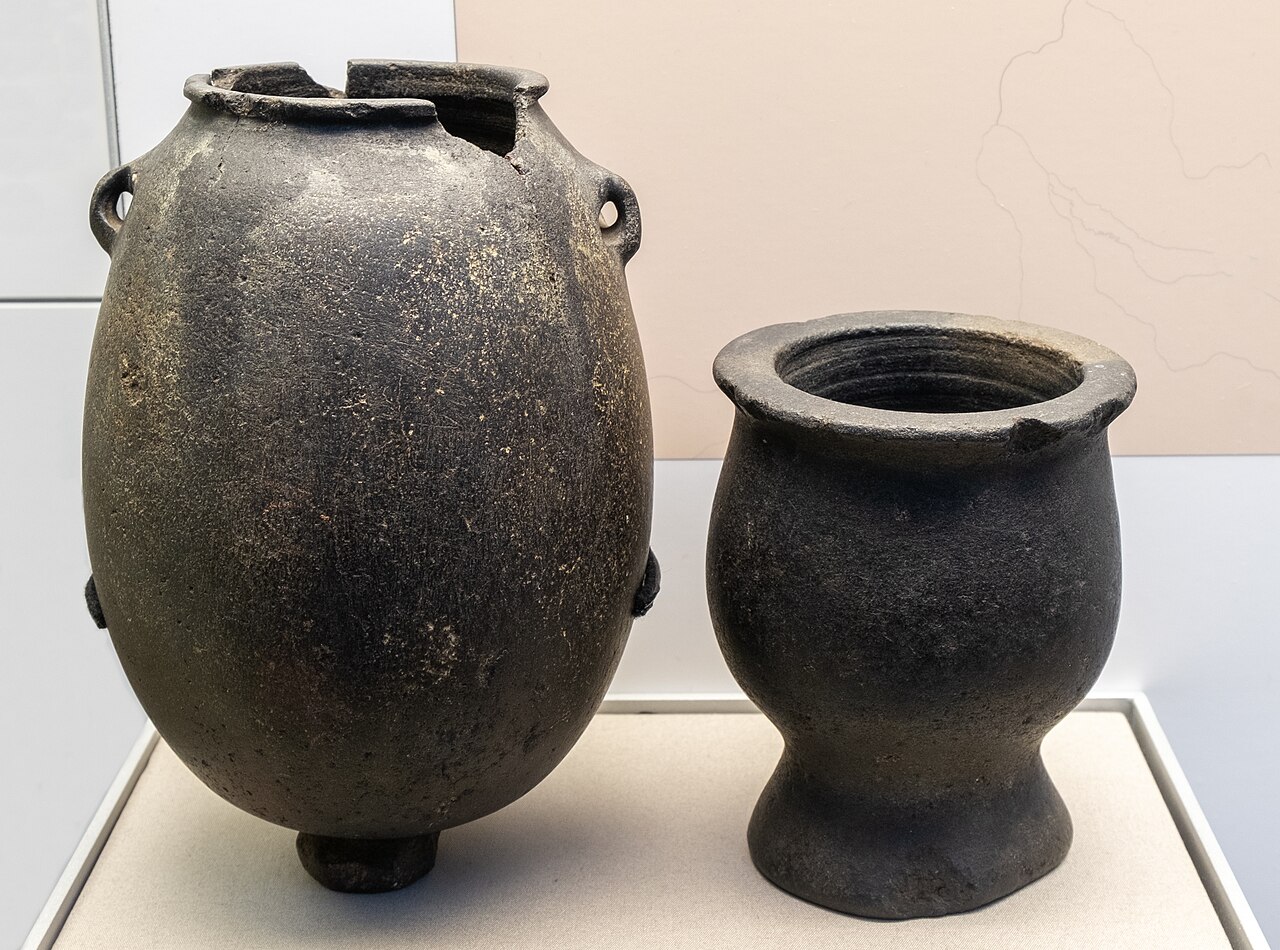
Photo: Anthony Huan · CC BY-SA 2.0

Predynastic and Early Dynastic Egypt produced stone vessels on an industrial scale: bowls, jars and vases ground from granite, diorite, basalt, schist and rock crystal, thousands of years before iron tools. More than 40,000 of them were sealed in the galleries beneath Djoser's Step Pyramid at Saqqara alone. Since 2023 a handful of such vases — mostly unprovenanced pieces in private collections — have been put through industrial metrology: structured-light and CT scanning to tolerances of thousandths of an inch. The results, publicised by Ben van Kerkwyk's UnchartedX channel and the Artifact Foundation, ignited one of the liveliest ancient-technology debates of the decade: are these the signatures of rotary machining in deep antiquity, of astonishing handcraft, or of modern lathes passing off replicas as ancient?

See it on the globe →
The mainstream view

What archaeology says

Egyptologists place the hard-stone vessel industry firmly within the Predynastic and Early Dynastic sequence (roughly Naqada I through the 2nd Dynasty), on the strength of enormous provenanced corpora: cemetery assemblages from Naqada and Abydos, and the tens of thousands of vessels from the Step Pyramid galleries, many inscribed with early royal names. Experimental work — most systematically by Denys Stocks — has shown how flint borers, copper tubes, sand abrasive and slow rotation against grinding blocks can hollow and shape even granite, and unfinished vessels showing every production stage are known from excavated workshops.

The precision claims received a formal answer in 2025, when Max Fomitchev-Zamilov published a metrological study in npj Heritage Science. Scanning 19 provenanced Predynastic vessels from the Petrie Museum alongside modern lathe-turned and modern hand-ground comparators, he found the ancient vessels form a distinctive signature — good outer concentricity with poor circularity, and the reverse inside — consistent with hand grinding and boring, and statistically distinct from machine-turned work. Two unprovenanced private-collection vases he tested clustered with the modern machine-made group, and he concluded the ultra-precise outliers driving the controversy are best explained as recent manufacture. Notably, Fomitchev-Zamilov had earlier published measurements sympathetic to the precision claims and publicly retracted them after expanding his sample — a reversal sceptics such as archaeologist Flint Dibble highlight as the scientific process working correctly.

Beneath the metrology sits the provenance problem: the headline vases were bought on the antiquities market, without archaeological context. For most archaeologists that means their date — and even their Egyptian origin — cannot be established at all, while Egypt's modern craft workshops demonstrably produce hard-stone replicas good enough to confound authentication.

Key evidence cited
  • Tens of thousands of provenanced vessels (Step Pyramid galleries, Naqada and Abydos cemeteries) anchor the industry to c. 4000–2800 BC.
  • Denys Stocks' replication experiments produced comparable work with flint, copper, sand abrasive and slow rotation.
  • The 2025 npj Heritage Science study found provenanced Petrie Museum vessels match hand grinding, not lathe turning.
  • Two headline unprovenanced vases clustered statistically with modern machine-made comparators.
  • The most-cited vases lack archaeological context, and modern Egyptian workshops produce convincing hard-stone replicas.
The alternative view

What the skeptics propose

The modern debate began when Ben van Kerkwyk (UnchartedX) had a privately owned granite vase scanned by an industrial metrology firm in 2022–23. The reported results startled even sceptical engineers: surfaces round and concentric to a few thousandths of an inch, handle lugs aligned to the vessel's axis with machine-like symmetry, and wall thicknesses more uniform than seems plausible for hand grinding. The Artifact Foundation — working with collectors including Matt Beall and Adam Young — has since scanned dozens more, reporting recurring geometric relationships (including pi and golden-ratio proportions) and precision they argue implies rotary fixturing: the vase turning about a fixed axis while a guided tool worked both surfaces, a lathe in all but name.

Proponents argue the corpus problem cuts both ways: the finest provenanced vessels sit in Cairo, Turin and Boston, largely unscanned, while the Petrie Museum pieces Fomitchev-Zamilov measured were, in their view, Flinders Petrie's teaching stock rather than the industry's best work — and they report their own Petrie scans found more precise examples his protocol missed. Christopher Dunn, whose 'lost machining' argument has run since the 1990s, points out that the vase claims are continuous with drill cores and sawn granite from securely dynastic contexts, so precision cannot simply be quarantined as a private-collection artefact. Some pieces also carry documented collection histories reaching back decades — the Teddy Kollek collection among them — which proponents argue predate any plausible market for precision forgeries.

Van Kerkwyk's own position, restated in 2026 against the 'modern fakes' verdict, is narrower than often reported: not that the vases are impossible to make today, but that making them by hand in granite is extraordinarily difficult — and that a circularity-only metric discards exactly the attributes (wall uniformity, internal geometry, lug symmetry) where he argues the anomaly lives. For the alternative camp the vases are the portable, measurable end of a lost toolkit whose fixed installations they see at the Serapeum, Abu Ghurab and Giza.

Key evidence cited
  • Industrial metrology reports tolerances of a few thousandths of an inch on scanned granite vases.
  • Handle lugs and internal surfaces aligned to the rotational axis suggest work about a fixed centre.
  • Claimed recurring geometric proportions (pi, phi) across independently scanned vessels.
  • Some scanned vases carry collection histories (e.g. Teddy Kollek's) reaching back to the 1960s, before precision forgery seems plausible.
  • Continuity with precision anomalies from provenanced dynastic contexts: drill cores, sawn basalt and the Serapeum boxes.

Genuinely open questions

  1. Will the great provenanced collections in Cairo, Turin and Boston submit their finest vessels to the same metrology?
  2. Can authentication science (tool-mark analysis, weathering, residues) reliably separate ancient vessels from modern replicas?
  3. What tolerances can a master craftsman actually reach in granite by hand — and has anyone fully replicated a headline vase, start to finish, on record?
  4. If a single ultra-precise vase were securely excavated from a sealed Predynastic context, how would the argument change?

Worth knowing

The debate's sharpest twist came from inside: Max Fomitchev-Zamilov, the physicist whose early measurements electrified the precision camp, expanded his sample, reversed his conclusion, published in a Nature-portfolio journal — and then had precision replicas manufactured to order, arguing the surest sign of a modern vase is that it measures like one.