Origins of Civilisation · Altai Mountains, near the Anui River, southern Siberia, Russia

Denisova Cave

A whole new human species conjured from a finger bone, and a bracelet that will not sit still in time.

Mainstream: c. 40,000 years ago for the ornament-bearing layersAlternative: c. 65,000-100,000+ years ago for the 'advanced' bracelet51.40°, 84.68°

At a glance

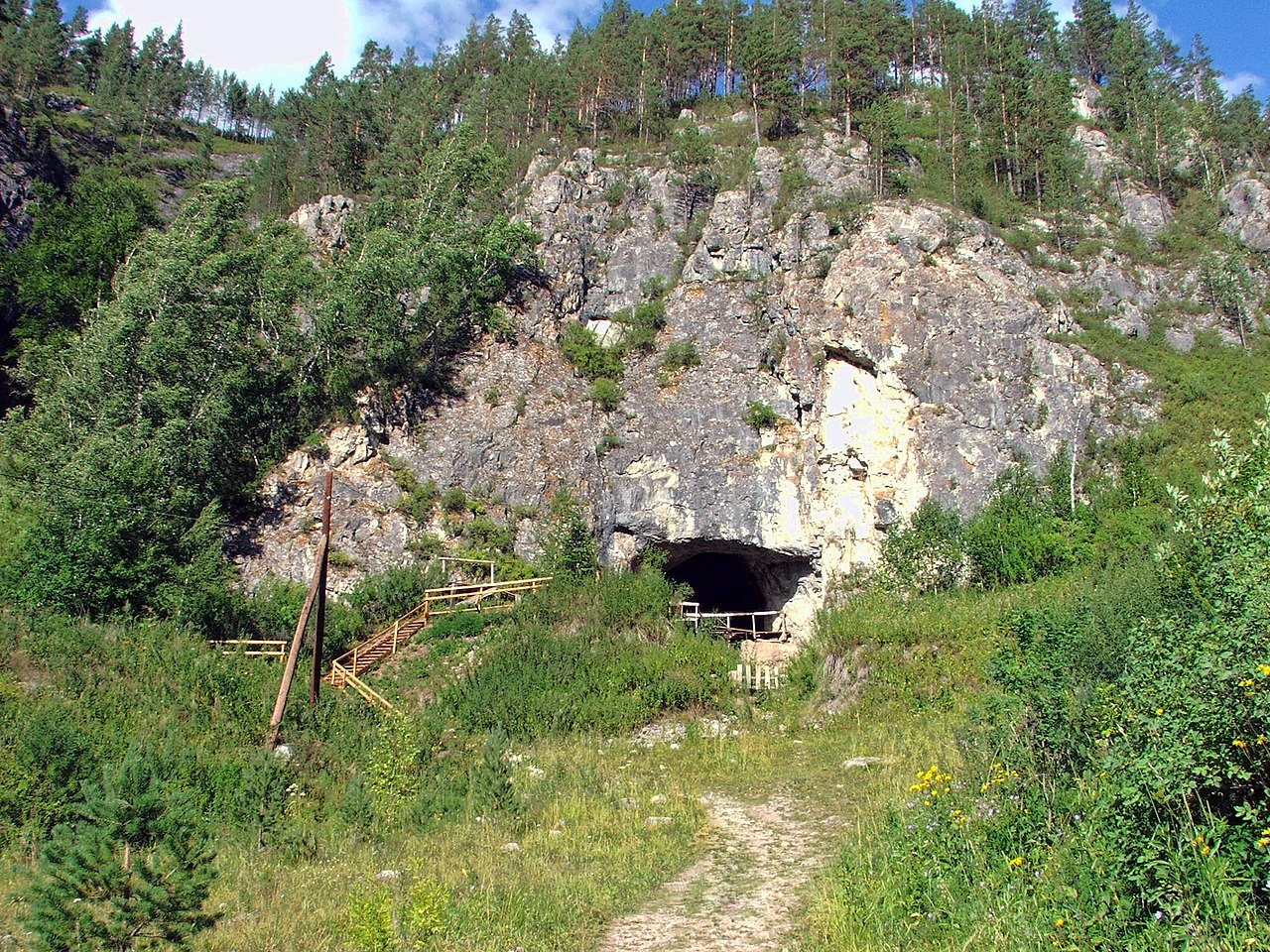
Denisova Cave
Photo: Aleksey Demin · CC BY-SA 4.0

Denisova Cave in the Altai is one of the most extraordinary sites in human evolution. In 2010, DNA from a single juvenile finger bone revealed an entirely new human population - the Denisovans - previously unknown from any fossil. The cave has since yielded Neanderthal remains, a first-generation Neanderthal-Denisovan hybrid, and a famous polished stone bracelet whose age and maker are hotly debated, with some claims placing sophisticated ornament-making far earlier than expected.

See it on the globe →
The mainstream view

What archaeology says

Denisova is a genuine scientific landmark. The 2010 identification of Denisovans from ancient DNA in a finger bone - later supported by teeth and a jaw fragment from Tibet - established a third major human lineage alongside modern humans and Neanderthals, and showed that Denisovan DNA survives today in living Melanesian and East Asian populations. A meticulous dating programme by Katerina Douka, Tom Higham and colleagues built a chronology showing the cave was occupied at various times by Denisovans and Neanderthals across more than a hundred thousand years.

The famous chloritolite bracelet is where mainstream caution sets in. It was found in layer 11, which contains an Initial Upper Palaeolithic assemblage generally dated to around the 40,000-year range, and its polished, bored and ground manufacture is sophisticated. The disputed part is whether the bracelet truly belongs to the deepest, oldest part of that layer - which some Russian researchers suggested could push it toward or beyond the range where it would predate the arrival of modern humans - or whether it sits higher and younger. Stratigraphic mixing in a long-occupied cave with burrowing and disturbance makes precise placement genuinely difficult.

The consensus treats the bracelet as a real and remarkable object of roughly Initial Upper Palaeolithic age, while regarding the most extreme early dates and the confident attribution to Denisovans as unproven.

Key evidence cited
  • Ancient DNA from a finger bone identified Denisovans as a distinct human lineage in 2010.
  • Denisovan ancestry survives in living Melanesian and East Asian populations.
  • A first-generation Neanderthal-Denisovan hybrid individual was identified from the cave.
  • A large dating programme reconstructed occupation spanning over 100,000 years.
  • The bracelet's layer 11 is generally dated to roughly the 40,000-year Initial Upper Palaeolithic range.
The alternative view

What the skeptics propose

The alternative excitement centres on the claim, publicised especially by Russian media reporting the work of researchers at the site, that the bracelet is far older than expected and was made by Denisovans using drilling and grinding techniques supposedly too advanced for its age - figures of 65,000 and even 100,000-plus years have circulated. In this telling, Denisovans were a technologically precocious lost species, capable of fine jewellery long before modern humans are thought to have made comparable objects, and the cave becomes evidence that the standard story of who invented "modern" behaviour is wrong.

For the broader alternative-history readership, Denisova is attractive because it is a case where mainstream science itself produced a genuine surprise - an unknown human species from a scrap of bone - which is taken as licence to believe that other, stranger surprises remain suppressed or undiscovered. The bracelet is folded into arguments that advanced technology existed far earlier than orthodox timelines allow.

The current standing is that the Denisovans are entirely real and accepted, while the sensational early dates for the bracelet and its confident species attribution are not. The object is fascinating; the 100,000-year headline is not established.

Key evidence cited
  • Russian researchers suggested the bracelet could belong to the oldest part of its layer, pushing it much earlier.
  • The bracelet shows drilling, boring and grinding techniques argued to be surprisingly advanced.
  • Circulated dates of 65,000 and 100,000-plus years would predate comparable modern-human ornaments.
  • The discovery of an unknown species from a single bone shows major surprises are possible.
  • Proponents attribute the ornament to technologically precocious Denisovans.

Genuinely open questions

  1. Does the bracelet belong to the oldest, deepest part of layer 11, or a younger position within it?
  2. Who made the ornament - Denisovans, Neanderthals or early modern humans?
  3. How much has burrowing and disturbance mixed the cave's long stratigraphy?
  4. What did the full anatomy of a Denisovan look like, given how few skeletal remains exist?

Worth knowing

For years the entire species known as Denisovans was defined almost entirely by DNA rather than bones - a whole branch of humanity reconstructed from a fingertip fragment, a couple of teeth and, later, a jaw found on the Tibetan Plateau.