Ancient Engineering · Mount Kuylyum, Kemerovo Oblast, Siberia, Russia

Gornaya Shoria Megaliths

Siberia's 'super-megaliths' — blocks that would dwarf Baalbek, if anyone had actually built them.

Mainstream: Natural granite-syenite outcrops — the rock itself is millions of years old; no archaeological construction date existsAlternative: Claimed by proponents to be walls built by an unknown civilisation more than 100,000 years ago53.25°, 88.54°

At a glance

Gornaya Shoria Megaliths
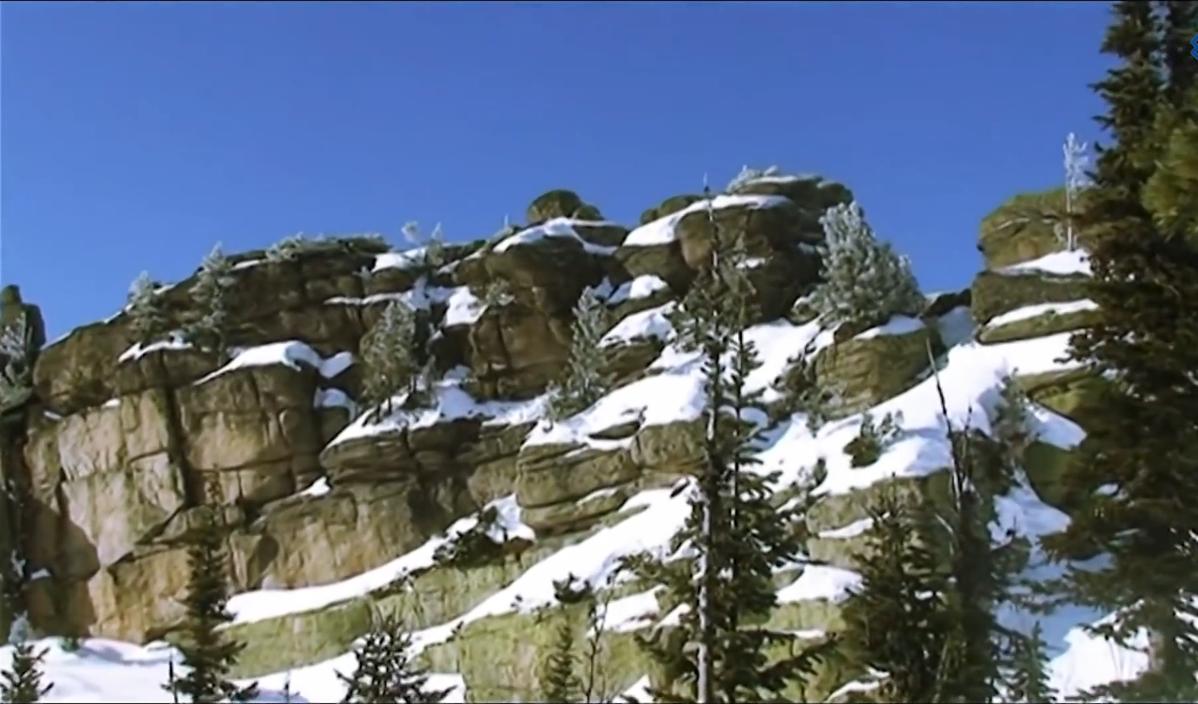
Photo: Василий Яр · CC BY 3.0

High on Mount Kuylyum in Gornaya Shoria, a remote taiga region of southern Siberia about eight kilometres from the village of Orton, ridgelines are crowned by walls of enormous rectangular granite blocks, some estimated at up to 20 metres long and thousands of tonnes, stacked in courses that photograph uncannily like cyclopean masonry. Publicised after expeditions in 2013 and 2014, the formations were hailed in alternative media as 'super-megaliths' — the largest building blocks on Earth, proof of a Siberian civilisation of staggering antiquity. Geologists who examined the images and the site saw something else entirely: a textbook display of how granite naturally fractures into rectangular blocks. The dispute has made Gornaya Shoria a defining case study in reading the line between architecture and geology.

See it on the globe →
The mainstream view

What archaeology says

To geologists, the Kuylyum outcrops are classic tors — residual masses of fractured bedrock left upstanding as the surrounding rock weathered and eroded away, described in the technical literature as denudated ridges. Granites and syenites routinely develop orthogonal joint sets: families of natural fractures intersecting at close to 90 degrees, produced by tectonic stress and by the expansion of the rock mass as kilometres of overburden erode away. Where such joints slice a granite body, they carve it into rectangular, block-like masses that can be arbitrarily large; subsequent spheroidal weathering rounds edges and opens the joints into 'seams', completing the illusion of stacked masonry. The American geoarchaeologist Paul V. Heinrich analysed the published photographs and identified precisely these processes, noting that comparable natural 'walls' occur worldwide, and Russian geologists reached the same verdict. The often-cited magnetic anomalies at the site are unremarkable in igneous terrain, where magnetite-bearing rock commonly deflects compasses.

Just as telling is what the site lacks. Surveys of the area have produced no artefacts, no occupation layers, no quarries, no transport routes and no cultural material of any kind associated with the blocks — nothing but weathered granite and soil. Archaeology of the wider region indicates human presence only from around the end of the last Ice Age, and no known society, at any date, has moved stones in the multi-thousand-tonne class the claims require; the heaviest block humans are securely known to have transported, at Baalbek, is under a thousand tonnes. In the mainstream reading, the sheer impossibility of the logistics is itself the diagnosis: blocks this size are found only where nature made them in place.

Key evidence cited
  • Orthogonal joint sets in granite naturally produce rectangular, wall-like blocks at any scale
  • Geoarchaeologist Paul Heinrich identified the formations as tors and denudated ridges from published photos
  • No artefacts, quarries, tool marks or occupation debris have been found in association with the blocks
  • Magnetic quirks are routine in magnetite-bearing igneous rock and need no technological explanation
  • The claimed block weights exceed anything any known society has ever moved, by multiples
The alternative view

What the skeptics propose

The site burst into public awareness through a 2013 expedition led by the Russian writer and alternative historian Georgy Sidorov, with striking photographs circulated by Valery Uvarov, a St Petersburg-based author and self-described head of a department of UFO research and palaeotechnology, who declared the formations artificial. Sidorov and Uvarov argued that the flat faces, right-angle corners and coursed, wall-like stacking of the blocks — some estimated by the team at 3,000 tonnes or more — could not be natural, and proposed the remains of a colossal structure raised by an unknown civilisation, possibly more than 100,000 years ago, later shattered by cataclysm. English-language researchers such as John Jensen helped the claims go global, and follow-up visits in 2014 kept the story alive.

The expeditions also reported physical anomalies: compasses allegedly deflected near the blocks, with negative magnetic readings interpreted as the residue of ancient energy technologies embedded in the 'masonry'. Proponents draw comparisons with the polygonal walls of Peru and the trilithon of Baalbek, arguing that Gornaya Shoria simply extends a worldwide megalithic tradition to a scale mainstream archaeology refuses to contemplate. Critics respond that every cited feature — rectangularity, flat joint faces, apparent coursing, even the magnetics — is a documented product of granite weathering, that the blocks show no tool marks or extraction scars, and that claims requiring stones several times heavier than anything verifiably moved by humans need more than photographs. Even some sympathetic alternative researchers have concluded the site is natural, and it is notable that no excavation or peer-reviewed study supporting artificiality has ever appeared.

Key evidence cited
  • Flat faces, right-angle corners and course-like stacking that photograph like cyclopean masonry
  • Blocks estimated by the 2013 expedition at up to 3,000 tonnes, dwarfing Baalbek's trilithon
  • Reported compass deflections and negative magnetic anomalies around the formations
  • Sidorov and Uvarov's argument that the regularity is too systematic for erosion
  • Visual parallels drawn with accepted megalithic masonry at Baalbek, Cusco and elsewhere

Genuinely open questions

  1. Would systematic excavation around the outcrops settle the question to everyone's satisfaction?
  2. What exactly produces the reported magnetic readings, and have they been independently measured?
  3. Why do some natural tor formations mimic masonry so much more convincingly than others?

Worth knowing

If the largest Gornaya Shoria blocks really had been quarried and placed, at an estimated 3,000-plus tonnes each they would be roughly twice the weight of the heaviest stone block humans are known to have ever moved — which is precisely why geologists are confident nobody moved them.