What archaeology says
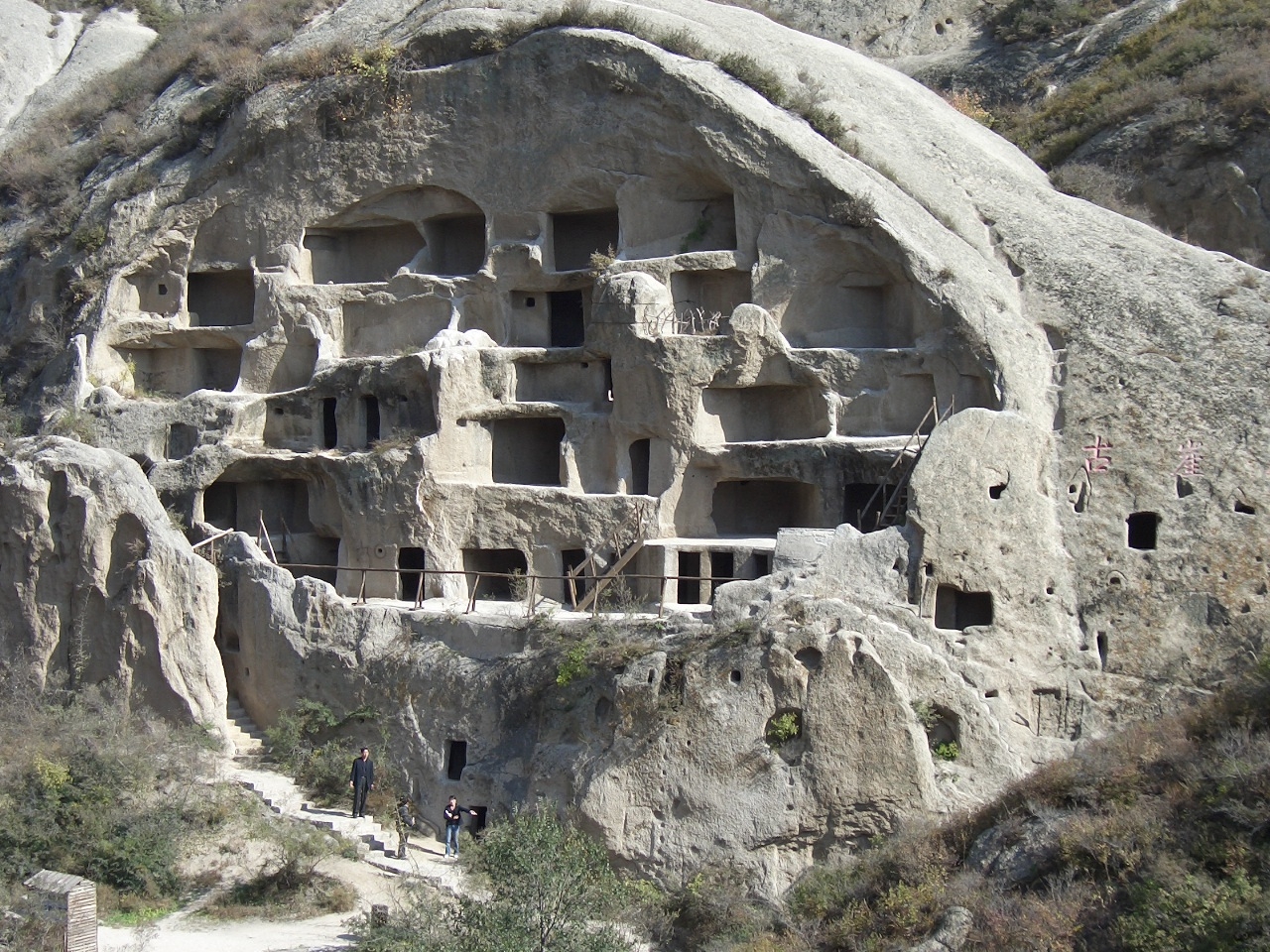
The position most often cited by Chinese archaeologists and heritage authorities is that Guyaju was cut in the late Tang dynasty or the Five Dynasties period (roughly the ninth to tenth centuries AD) by the Kumo Xi, a nomadic people related to the Khitan — the 'Xiyi' or Western Xi branch of whom are recorded fleeing into the Jundu Mountains around Yanqing after military defeats in the early tenth century. The theory fits the geography (a defensible, hidden gorge on the steppe frontier), the period's chronic insecurity, and the one thin documentary thread available: Liao-era records placing displaced Xi groups in exactly this region. The kang bed-stoves suit a population wintering in place, and the rooms' domestic fittings indicate genuine long-term habitation rather than temporary refuge.
A rival scholarly camp argues for an official Tang project — a fortified granary or garrison station — noting that cutting hundreds of orderly rooms in granite implies iron tools in quantity, disciplined labour and central financing beyond a refugee band's means. Others push the origin back to the Han dynasty, reading the site as a military outpost linked to beacon-tower defence lines against the Xiongnu; proponents point to the site's sightlines and to Han garrison practice in frontier commanderies.
Crucially, mainstream researchers are candid that none of these theories is proven. The Yanqing survey teams found no organics for radiocarbon dating and no diagnostic artefacts, so the date bracket of 'roughly 1,000 to 2,000 years old' rests on tool marks, architectural typology and regional history. Guyaju is that rare thing in Chinese archaeology: a major site the sources simply never noticed.
- Liao-era records placing displaced Xi (Kumo Xi) groups in the Yanqing mountains in the early tenth century
- Kang bed-stoves with flues, lampstands and storage niches indicating organised long-term habitation
- Tool marks consistent with iron chisels, pointing to the Iron Age or later
- The defensible hidden-gorge setting matching frontier insecurity of the Tang–Five Dynasties era
- Architectural order and uniformity suggesting planned, centrally organised excavation