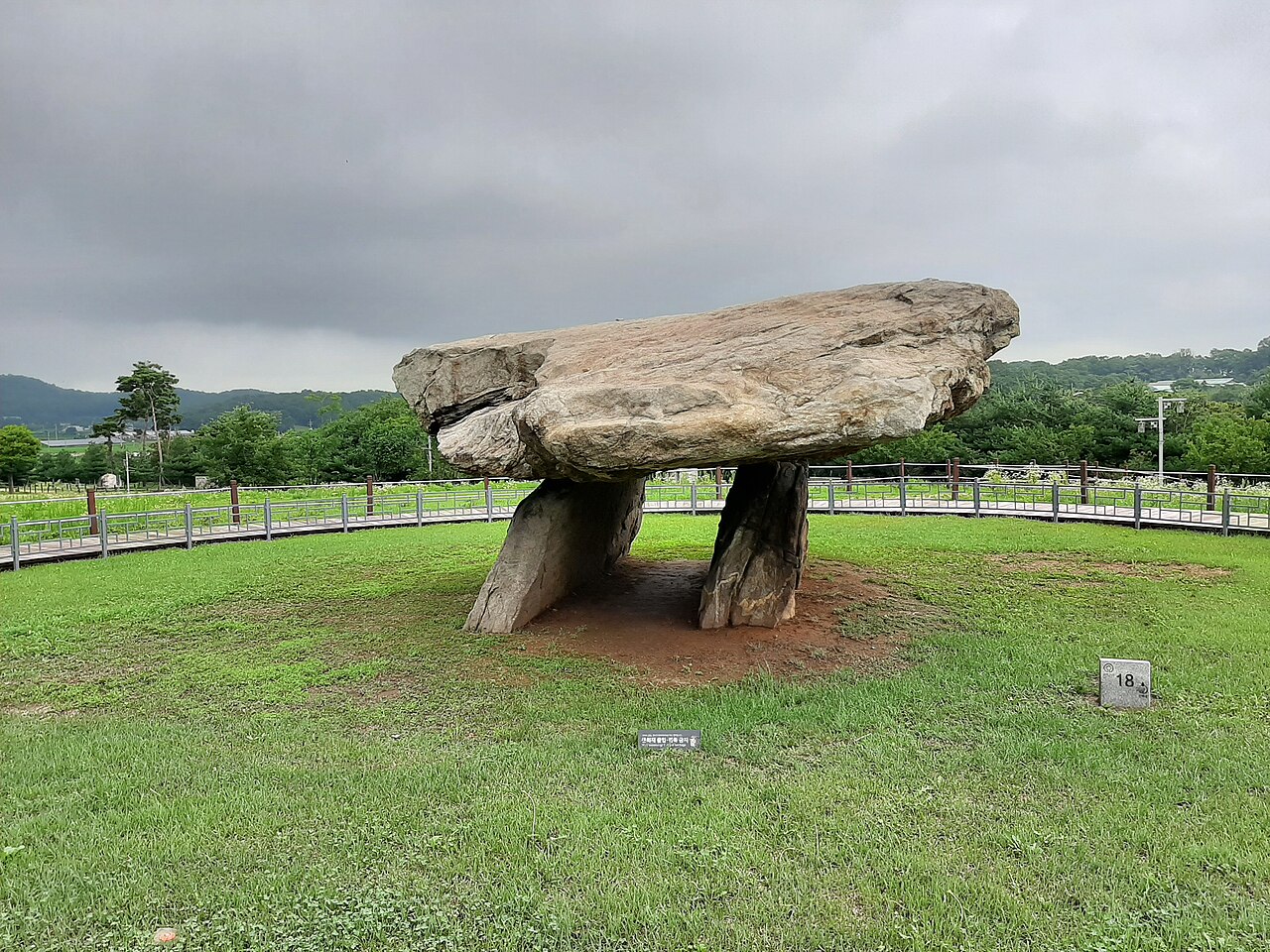
What archaeology says
Korean archaeologists date the dolmens primarily to the Bronze Age, roughly the first millennium BC, on the basis of grave goods — polished stone daggers, bronze artefacts, red burnished pottery — found beneath and around them, together with radiocarbon dates from associated settlements. The dolmens are understood as burial and ceremonial monuments of increasingly stratified farming communities: the labour needed to quarry, move and raise multi-tonne capstones signalled the power of emerging elites.
Quarries have been identified near several dolmen fields — at Hwasun, source outcrops sit within a few hundred metres of the monuments — and the working model involves splitting slabs from bedrock using wooden wedges swollen with water, then moving them on log rollers and earthen ramps with rope teams. Experiments in Korea have shown modest teams can move surprisingly large slabs this way.
The density is explained demographically and geologically: fertile rice-farming basins supported large populations, suitable granite and gneiss outcrops were everywhere, and the practice remained in fashion for centuries — long after megalith building had ceased in Europe, which is why comparisons across continents can mislead.
- Grave goods beneath dolmens — stone daggers, bronze items, burnished pottery — consistently date to the first millennium BC
- Identified quarries sit close to dolmen fields, with split-slab extraction traces
- UNESCO inscription (2000) recognises Gochang, Hwasun and Ganghwa as the densest, most varied dolmen concentrations anywhere
- Korean hauling experiments show rope teams and log rollers can move multi-tonne slabs
- Dolmen types form regional sequences (northern table, southern go-board) matching cultural zones
- Associated settlement sites radiocarbon-date to the Korean Bronze Age